

Carriers Wait Longer for Payment Than Other Industries
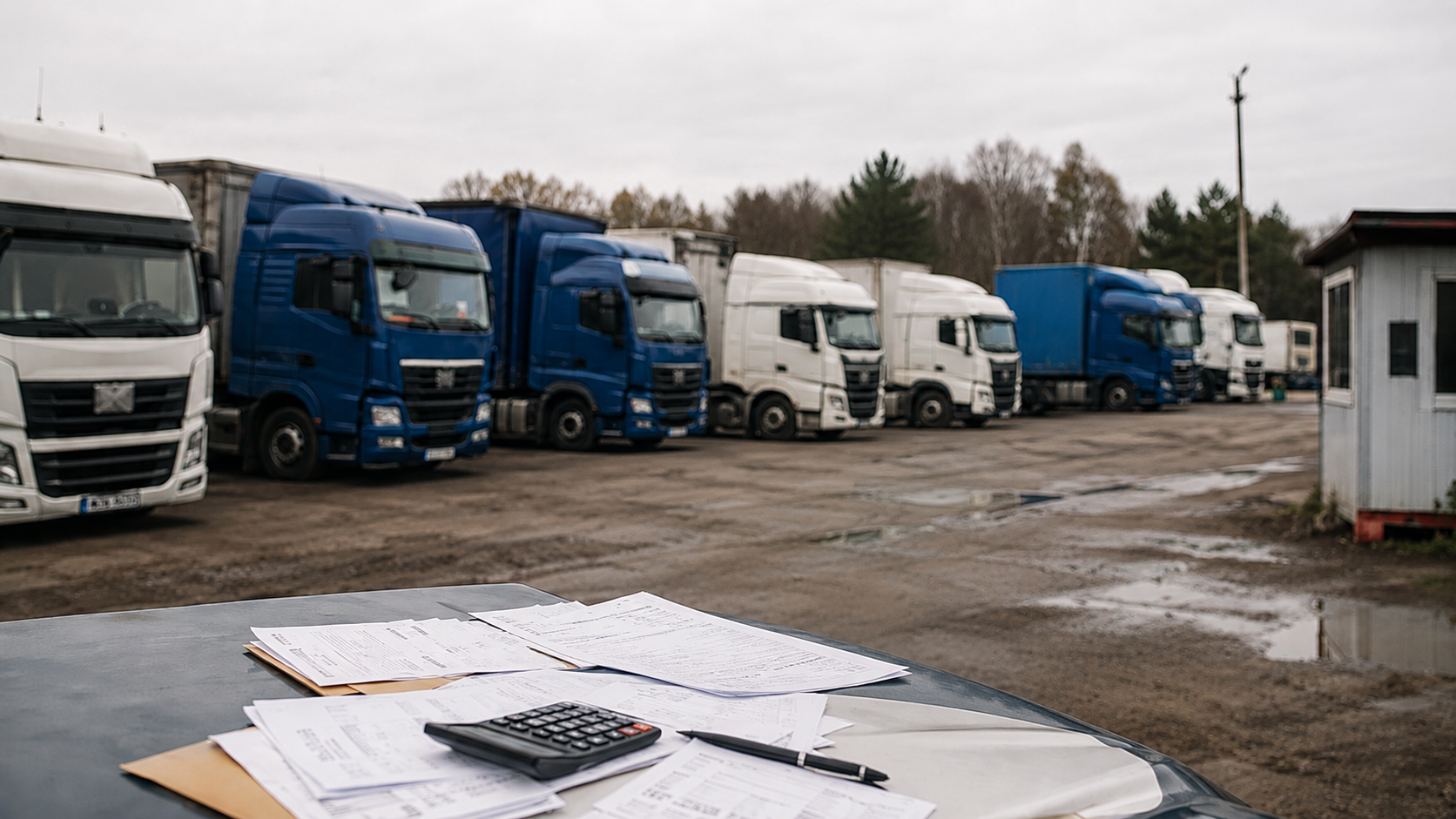
The problems facing Poland’s road transport sector are increasingly linked not to a lack of orders, but to insufficient working capital. Companies finance shipments upfront and receive payment long after most operating costs have been incurred.
According to Faktura.pl data for the second quarter of 2026, the average payment period stated on invoices issued by small and medium-sized businesses was 13.6 days. In transport and warehousing, it reached 21.9 days—the longest period among the sectors examined.
The payment date stated on an invoice does not always reflect when the money actually reaches the carrier. Some transport companies wait two, three or even four months. During that period, they must continue paying for diesel, road tolls, leasing, insurance, vehicle maintenance and driver wages.
Freight Services Become Credit for Customers
Long settlement periods effectively force transport companies to finance their customers. The carrier covers the full cost of a shipment first and only later receives reimbursement and its operating margin.
A company with several trucks may be able to manage one late payment. When dozens of completed shipments remain unpaid at the same time, the operator can quickly run out of money for new journeys.
This creates a financial cycle in which a carrier may still have orders, vehicles and drivers but cannot continue operating because its funds remain locked in unpaid invoices.
Contract Terms Are Often Imposed on Carriers
The imbalance between small transport operators and large forwarders or shippers makes the problem more severe.
A Transport i Logistyka Polska survey found that 95% of participating carriers considered current transport-contract provisions unfavourable or unfair. Many companies also reported having little practical ability to negotiate the terms offered to them.
More than 93% of carriers regularly encounter payment periods ranging from more than 30 to 60 days. Meanwhile, 42.3% said they had encountered terms requiring them to wait more than 120 days after completing a transport service.
For an industry with high fixed costs, waiting four months for payment creates a major financial risk, particularly when the customer pays even later than the agreed deadline.
Another 1,234 Companies Left the Market in Three Months
Financial pressure is already affecting the number of active carriers.
According to Poland’s Association of International Road Carriers, ZMPD, the number of Polish companies operating in international road transport fell by 1,327 in 2025. Another 1,234 businesses ceased operations during the first quarter of 2026.
The figures do not necessarily represent court-declared bankruptcies alone. They may also include companies that abandoned international operations, closed voluntarily or lost the ability to continue trading.
Nevertheless, the scale of the decline shows how rapidly the financial resilience of Polish carriers is weakening. Almost as many companies left the market in three months as during the whole of the previous year.
Small Carriers Face the Greatest Risk
Poland’s road freight market remains highly fragmented. According to the Polish Economic Institute, 84% of companies holding an EU Community licence operated no more than ten vehicles.
Small operators have more difficulty obtaining bank financing, building cash reserves and distributing risk across a large customer base. When invoices remain unpaid, they continue to face almost the same mandatory expenses but have far less capital than major logistics groups.
The Polish Economic Institute says the sector’s traditional competitive model, based on relatively low operating costs and high flexibility, is gradually weakening. Carriers face simultaneous pressure from rising wages, driver shortages, competition from non-EU operators and growing regulatory requirements.
Higher Truck Registrations Do Not End the Crisis
The market is not moving in only one direction. Registrations of new trucks over 3.5 tonnes in Poland increased by approximately 26% year on year during the first half of 2026.
Some transport companies are still renewing fleets and investing in expansion. However, registrations may also have been accelerated by new EU requirements covering vehicle safety, noise standards, software and onboard equipment. Dealers and fleet owners had an incentive to register vehicles with older approvals before the new rules took effect.
The increase in truck registrations therefore does not mean that the financial position of the entire industry has improved. Large operators can expand at the same time that small family-owned carriers are leaving the market.
Payment Discipline Becomes a Condition for Survival
The widening gap between completing a shipment and receiving payment is becoming one of the main risks for road carriers.
A contract that appears profitable on paper can still create serious problems when the company must finance the work independently for several months. As operating costs rise and customers delay payment, more capital is required simply to maintain the same transport capacity.
If the trend continues, consolidation in the Polish market could accelerate. Large operators with access to credit and financial reserves will be better positioned to buy equipment and accept new orders, while smaller carriers may reduce their fleets, abandon international routes or cease operating altogether.
Shippers may also feel the consequences. A decline in the number of independent carriers could reduce available truck capacity and make the market increasingly dependent on a smaller group of large transport companies.
Read also: European Road Freight Market Returns to Growth Despite Rising Costs