

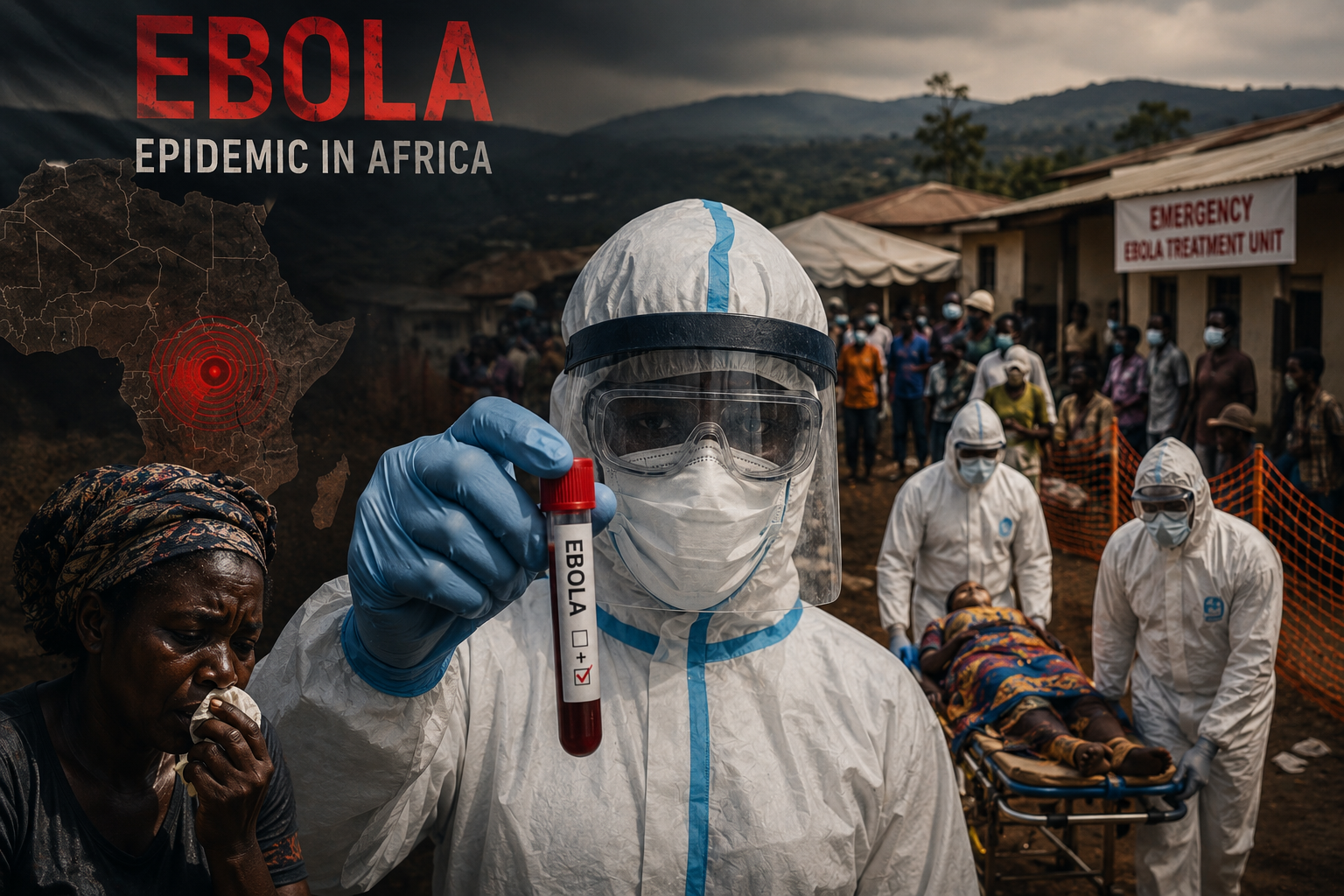
When the WHO states that the current Ebola outbreak is spreading faster than previous ones, it is no longer just another alarming statistic. It is a warning that Central Africa could be facing one of the most severe epidemics in decades.
The Democratic Republic of the Congo remains the epicenter of the outbreak. According to official figures, nearly 2,500 confirmed cases have been recorded, with around 1,000 fatalities. Several dozen additional cases have been reported in neighboring Uganda. However, health experts believe the true scale of the outbreak is likely far greater than official data suggests.
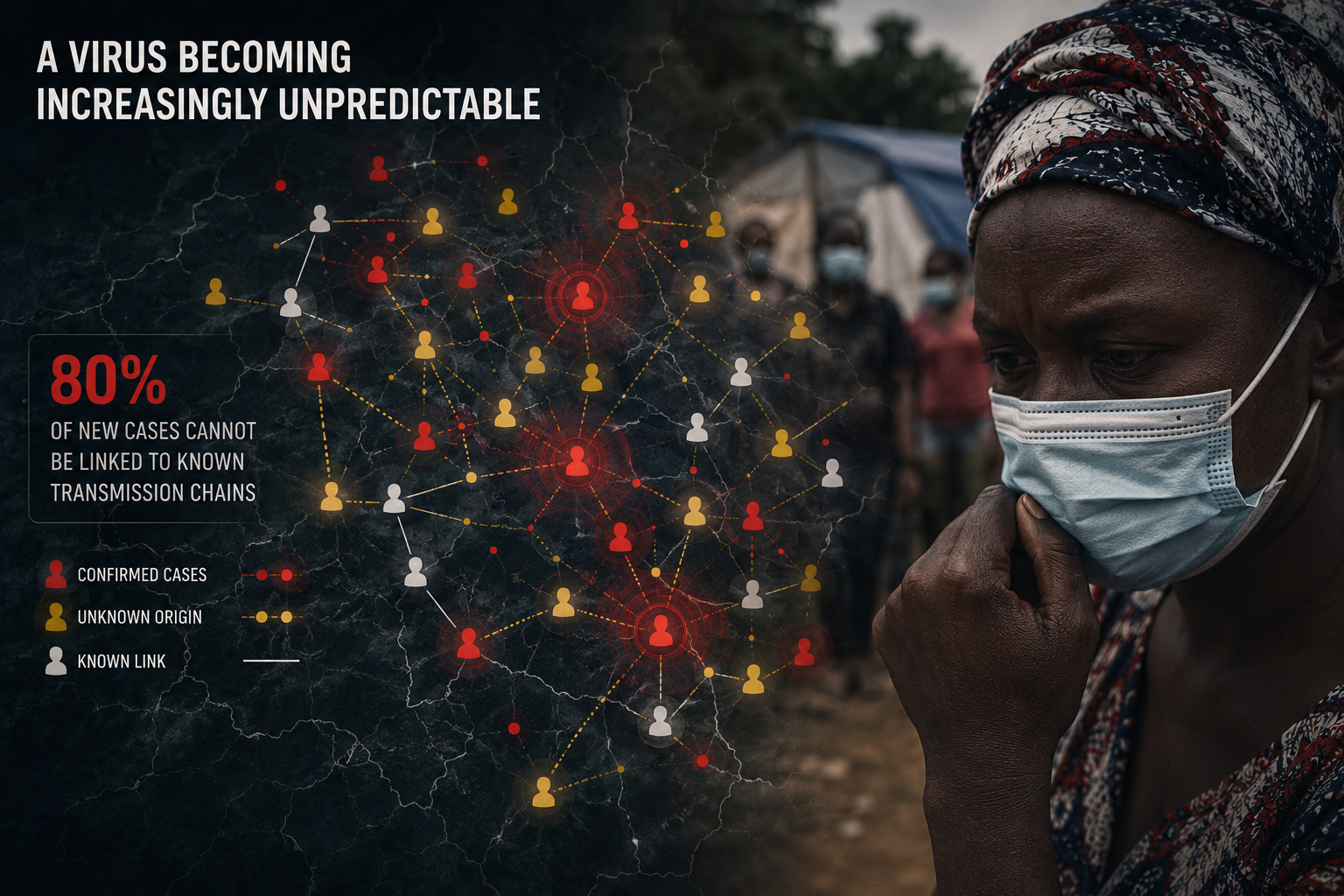
A Virus Becoming Increasingly Unpredictable
What concerns epidemiologists most is not only the number of infections but the way the virus is spreading. Around 80% of newly confirmed cases cannot be linked to known transmission chains, indicating that the virus is circulating undetected. In many instances, patients are identified only after the disease has already spread within families and entire communities.
According to the WHO, the actual number of infections could be several times higher than the officially reported figures.
Why Containing Ebola Is Becoming More Difficult Every Day
The fight against the virus is being complicated by far more than medical challenges. Eastern regions of the DRC have endured years of armed conflict, forcing large numbers of people to flee their homes. Many now live in overcrowded displacement camps where access to healthcare is limited — or, in some areas, virtually nonexistent.
The situation is further aggravated by attacks on healthcare facilities and medical teams. As a result, many patients seek treatment too late, while health workers struggle to identify and isolate new outbreaks before they spread.
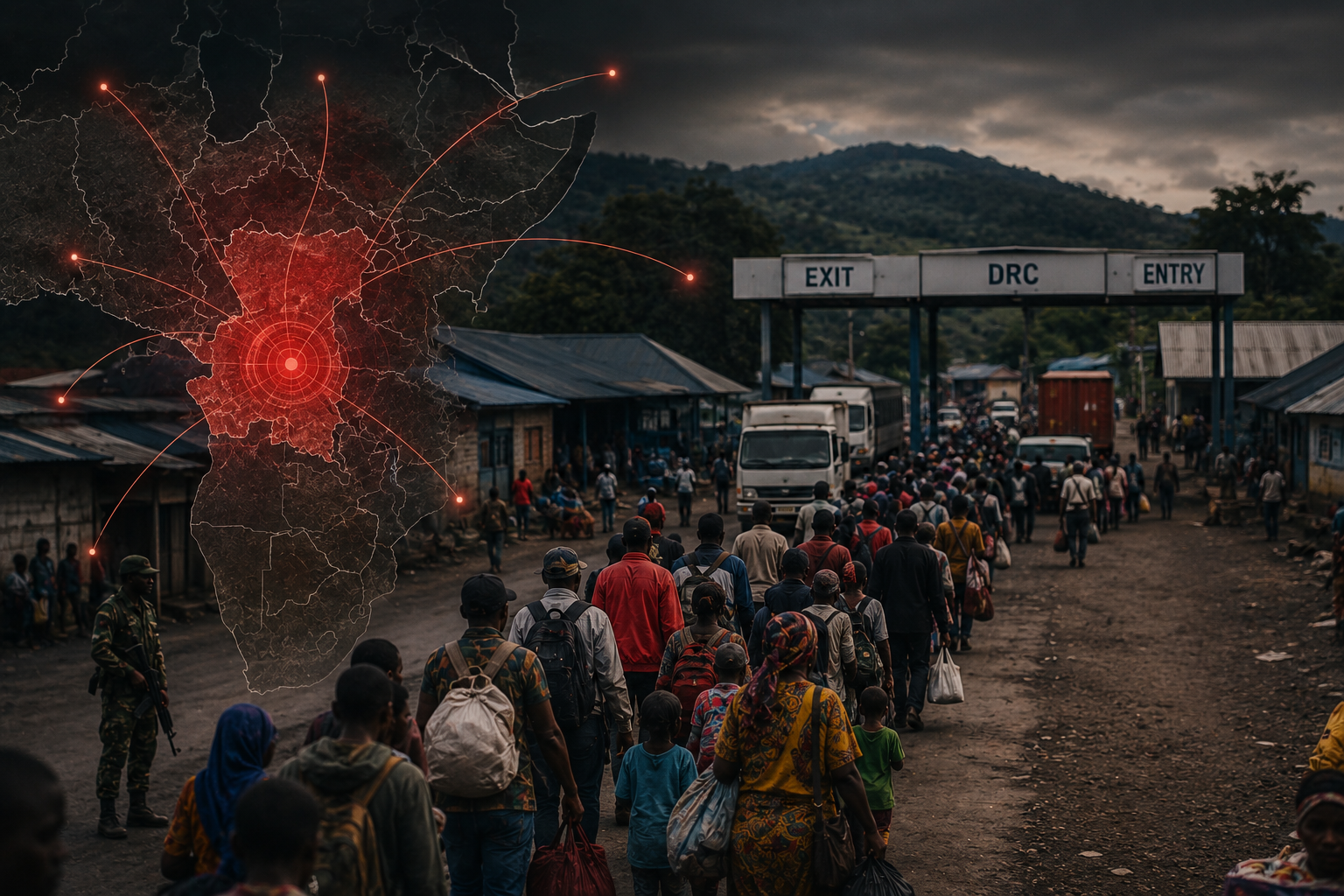
The Threat Extends Beyond a Single Country
Public health experts warn that the danger is no longer confined to the Democratic Republic of the Congo. Population movements, cross-border trade, and major transport corridors are creating conditions for the virus to spread across neighboring countries.
For this reason, the WHO, the International Organization for Migration (IOM), and the Africa Centres for Disease Control and Prevention (Africa CDC) are calling for increased healthcare funding, stronger epidemiological surveillance, and faster international response measures.
As health authorities continue their efforts to contain the outbreak, one crucial question remains: Can the virus be stopped before this epidemic becomes one of the most devastating Ebola outbreaks ever recorded?
K2cargo.news will continue to monitor developments closely and provide timely updates based on verified information from official sources.
Read also: Экологическая катастрофа в Непале: опасные бактерии обнаружены в питьевой воде