

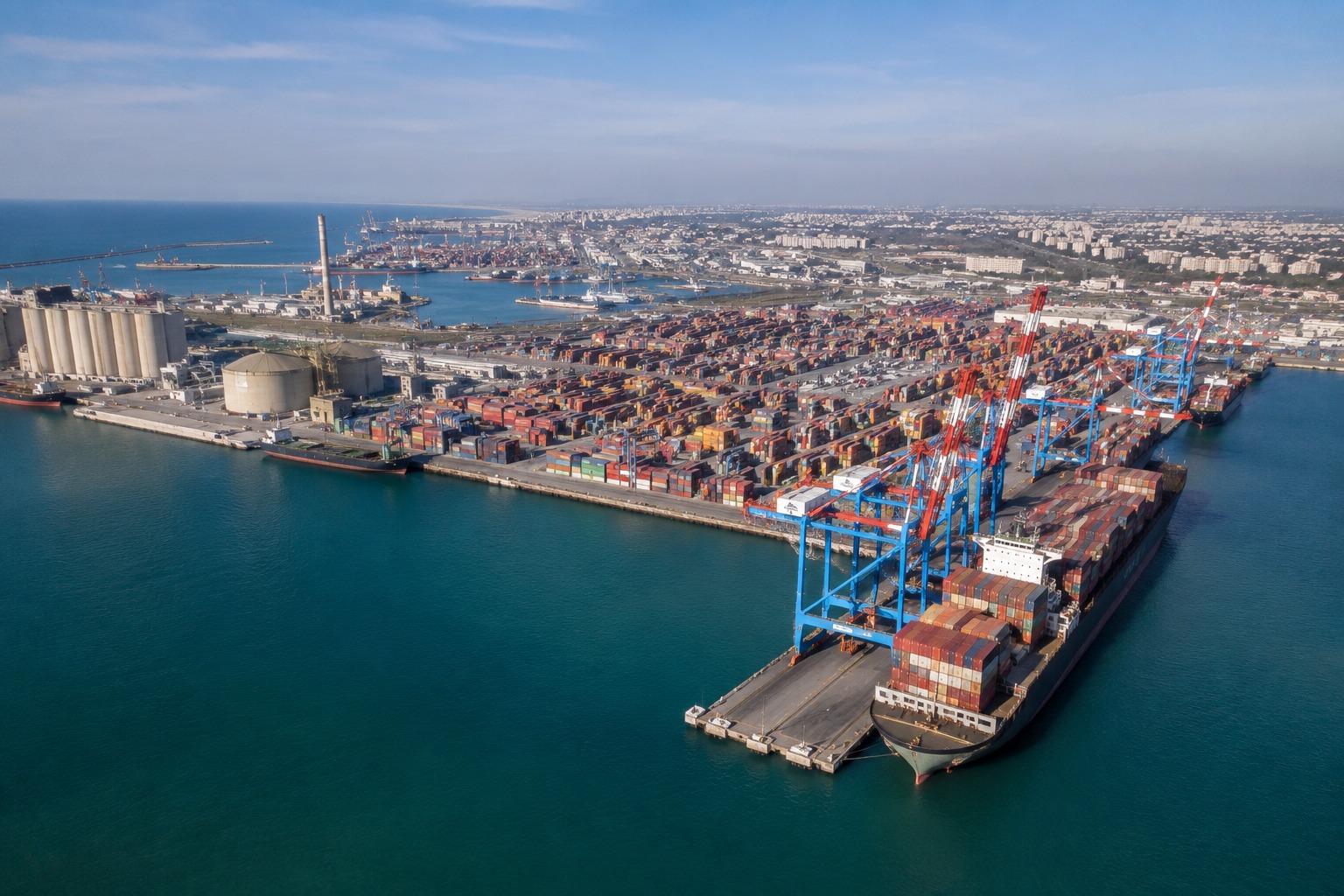
Israel’s Ashdod Port has concluded the first quarter of 2026 with record financial results, reinforcing its position as one of the most important logistics hubs in the Eastern Mediterranean.
According to figures released by the port authority, revenue reached NIS 331 million, representing a 10% increase compared with the same period last year.
The results were achieved amid ongoing geopolitical tensions in the Middle East, elevated security risks, and continued pressure on global supply chains. Despite these challenges, the port maintained strong cargo volumes and further strengthened its position within the Israeli logistics market.
Vehicle Imports Drive Growth
The most significant performance was recorded in the automotive logistics segment.
During the first three months of the year, approximately 30,000 vehicles were handled through the port, marking a remarkable 66% increase compared with the first quarter of 2025.
The growth reflects a recovery in demand for imported vehicles in Israel and confirms Ashdod’s role as one of the country’s primary gateways for automotive imports.
Container Business Remains Resilient
The container sector continued to demonstrate resilience despite increasing competition among both public and private terminals.
Container throughput reached approximately 186,000 TEUs during the quarter, allowing the port to maintain a market share of 38.6%.
These stable container volumes are particularly noteworthy given the ongoing disruptions to shipping routes through the Strait of Hormuz and the broader restructuring of international trade lanes.
Bulk Cargo Volumes Continue to Rise
Additional support for the port’s financial performance came from the bulk cargo segment.
Bulk cargo throughput increased to 2.39 million tonnes, compared with 2.27 million tonnes during the same period last year. Market share in this segment rose to 50.7%, effectively making Ashdod the leading bulk cargo gateway in Israel.
The growth was driven primarily by imports of industrial raw materials, construction commodities, and energy-related cargoes.
Net Profit Declines Due to One-Time Expenses
Although revenue increased, net profit declined compared with the previous year.
Port management attributed the decrease to one-off expenditures, including special employee compensation payments and additional costs associated with maintaining operations under heightened security conditions.
Operational performance, however, remained strong, with positive trends in cargo handling volumes, terminal utilisation, and equipment productivity.
Continued Investment in Infrastructure and Technology
Modernisation remains a central component of Ashdod Port’s long-term strategy.
Throughout the quarter, the port continued investing in berth upgrades, cargo-handling equipment, terminal automation, digital cargo management systems, cybersecurity enhancements, and environmental sustainability initiatives.
Management believes that further automation will significantly increase throughput capacity without requiring major physical expansion of the port’s footprint.
Shaul Schneider Confirmed for a Second Term
A further sign of stability came with the decision by Israel’s Government Companies Appointments Committee to approve a second term for Chairman Shaul Schneider.
During his first term, the port improved both its valuation and operational efficiency while successfully navigating a period marked by regional instability and unprecedented global logistics disruptions.
Strategic Importance for Global Trade
Against the backdrop of continuing tensions across the Middle East, Ashdod Port’s performance carries significance beyond Israel’s borders.
The port remains a critical component of the Eastern Mediterranean transportation network, facilitating trade flows between Europe, Asia, and the Gulf region.
Its strong operational results demonstrate that modern port facilities can maintain high levels of efficiency even during periods of geopolitical uncertainty through sustained investment in technology, infrastructure, and risk management.
For international shipping lines and cargo owners, Ashdod’s performance serves as an important indicator that major logistics gateways in the region continue to operate reliably despite ongoing challenges affecting global supply chains.