

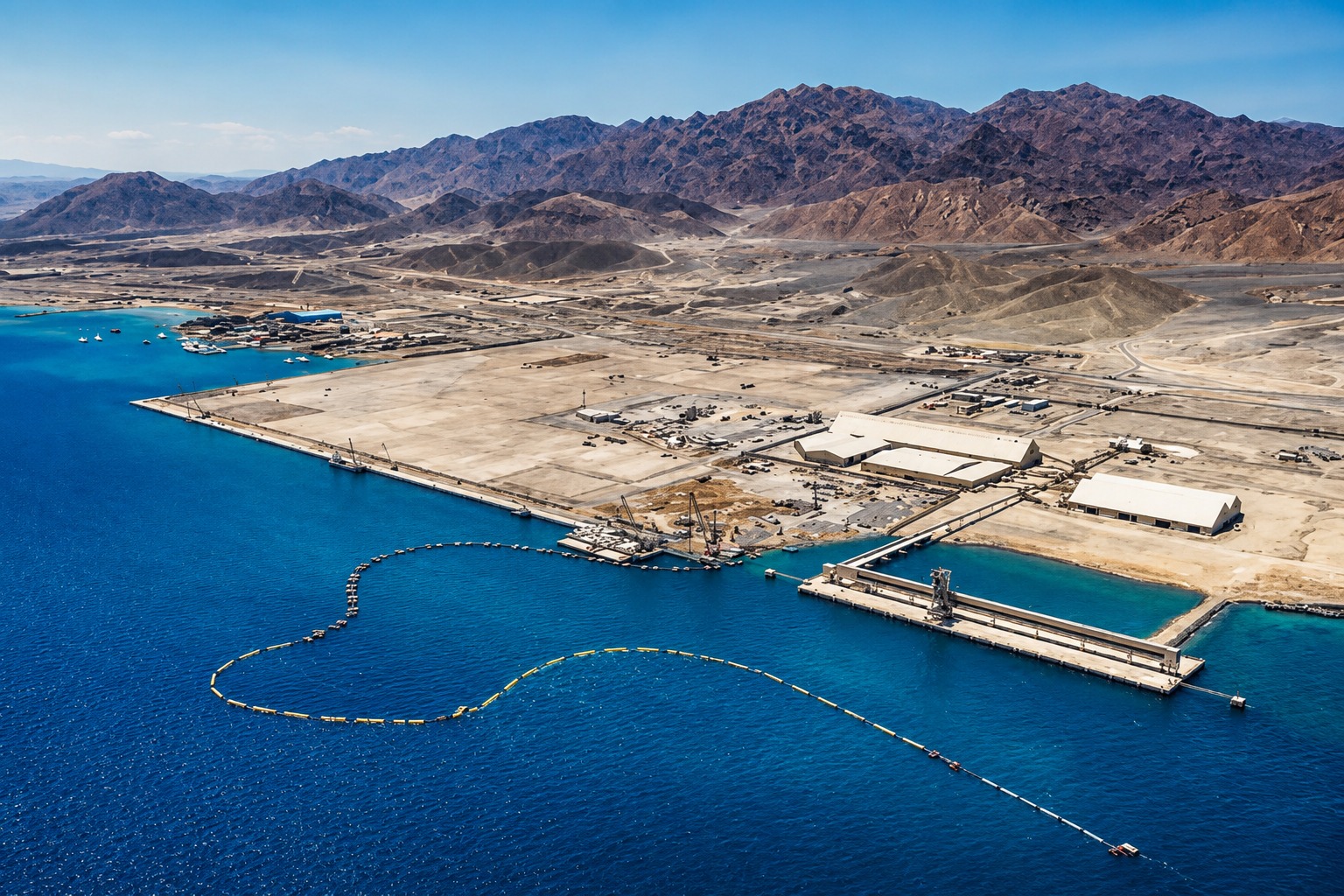
On June 9, Egypt officially commenced commercial trial operations at the new Safaga 2 multipurpose terminal located at Safaga Port on the Red Sea coast. The approximately $200 million project has been developed by AD Ports Group of the United Arab Emirates under a 30-year concession agreement signed with Egypt’s Red Sea Ports Authority.
The new terminal is regarded as one of the cornerstone projects in Cairo’s strategy to transform Egypt into a leading regional transportation and logistics hub.
A New Maritime Gateway for Upper Egypt
Safaga 2 will become the first international terminal of its kind dedicated to serving Upper Egypt, a region home to more than 35 million people and rich in industrial, agricultural, and mineral resources.
Egyptian officials believe the facility will significantly reduce transportation costs for businesses operating in the country’s southern provinces while providing more direct access to global maritime trade routes.
Egyptian Minister of Transport Kamel El-Wazir stated that the terminal will serve as a vital maritime gateway for the industrial development of Upper Egypt. The project is also considered a key component of the “Golden Triangle” initiative, a major economic zone focused on mining, mineral processing, manufacturing, and industrial expansion in southern Egypt.
A Major Infrastructure Development
The terminal covers approximately 810,000 square metres and features a quay extending more than one kilometre with a depth of up to 17 metres. These specifications enable the facility to accommodate large container vessels, general cargo ships, and specialised maritime transport.
The terminal’s planned capacity includes:
- Handling up to 450,000 TEU annually during the first phase;
- Future expansion capacity of up to 2 million TEU per year;
- Processing up to 5 million tonnes of general and bulk cargo annually;
- Potential expansion to 7 million tonnes of cargo per year;
- Handling up to 1 million tonnes of liquid bulk cargo;
- Accommodating up to 50,000 Ro-Ro vehicles annually.
During the trial operations phase, the terminal has already received its first vessels, including a car carrier transporting 5,000 vehicles and a container ship carrying more than 2,600 TEU.
Advanced Technology and Sustainability Focus
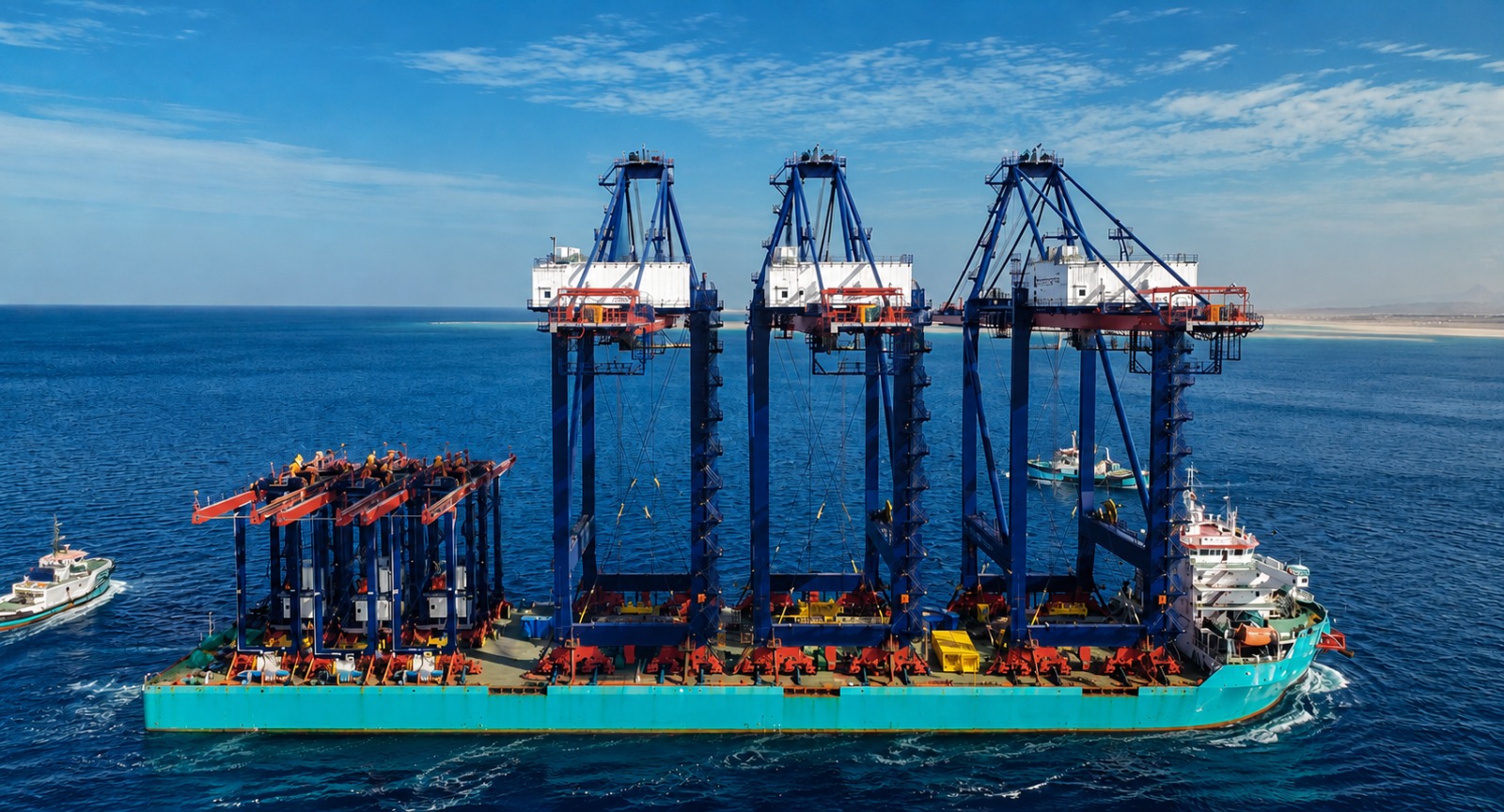
To ensure high operational efficiency, the facility has been equipped with three state-of-the-art Ship-to-Shore (STS) container cranes and six hybrid Rubber-Tyred Gantry (RTG) cranes featuring intelligent control systems. The equipment is designed to accelerate cargo handling operations and reduce vessel turnaround times.
Environmental sustainability has been incorporated into the project through:
- Energy-efficient technologies;
- Solar panel installations on administrative buildings;
- Shore power infrastructure for visiting vessels;
- Buildings designed to LEED Net Zero standards;
- Carbon reduction and energy optimisation systems.
According to project developers, construction activities generated more than 1,000 jobs, while several hundred permanent positions are expected once the terminal reaches full operational capacity.
A Key Component of a New International Trade Corridor
The strategic importance of Safaga 2 is further enhanced by its integration into the Safaga–Qena–Abu Tartour logistics corridor, which forms part of Egypt’s national programme to establish eight international transport corridors.
Through this route, Egypt aims to connect:
- The Gulf states;
- The Red Sea maritime network;
- Mediterranean ports;
- Major European markets.
The terminal is also expected to play a significant role in the proposed Southern Arabian Trade Corridor, which could eventually link major Saudi Arabian ports, including NEOM and Jeddah, with European destinations through Egypt’s transportation infrastructure.
Strengthening Trade Links with East Africa
One of the project’s primary objectives is to expand trade relations between Egypt and East African nations.
A dedicated international logistics zone is planned around the terminal to support containerised cargo, general freight, and industrial shipments. The development is expected to increase Egyptian exports, attract investment into warehousing and manufacturing, and strengthen Egypt’s position as a strategic transit hub connecting Africa, the Middle East, Asia, and Europe.
Why It Matters for Global Logistics
The launch of Safaga 2 comes at a time when global supply chains are undergoing significant transformation and businesses are actively seeking alternative transportation routes. As governments and companies work to reduce reliance on traditional trade corridors, new logistics infrastructure projects are becoming increasingly important.
For Egypt, the new terminal represents:
- A stronger role in international trade;
- Accelerated industrial development in Upper Egypt;
- Increased investment in logistics, warehousing, and manufacturing;
- Expanded trade opportunities with East African markets;
- Enhanced competitiveness of Egypt’s Red Sea ports.
For the global logistics industry, Safaga 2 represents another major growth node within the Red Sea region. As international cargo flows continue to recover and diversify, the terminal is expected to play an increasingly important role in facilitating trade between Asia, the Middle East, Africa, and Europe in the years ahead.