

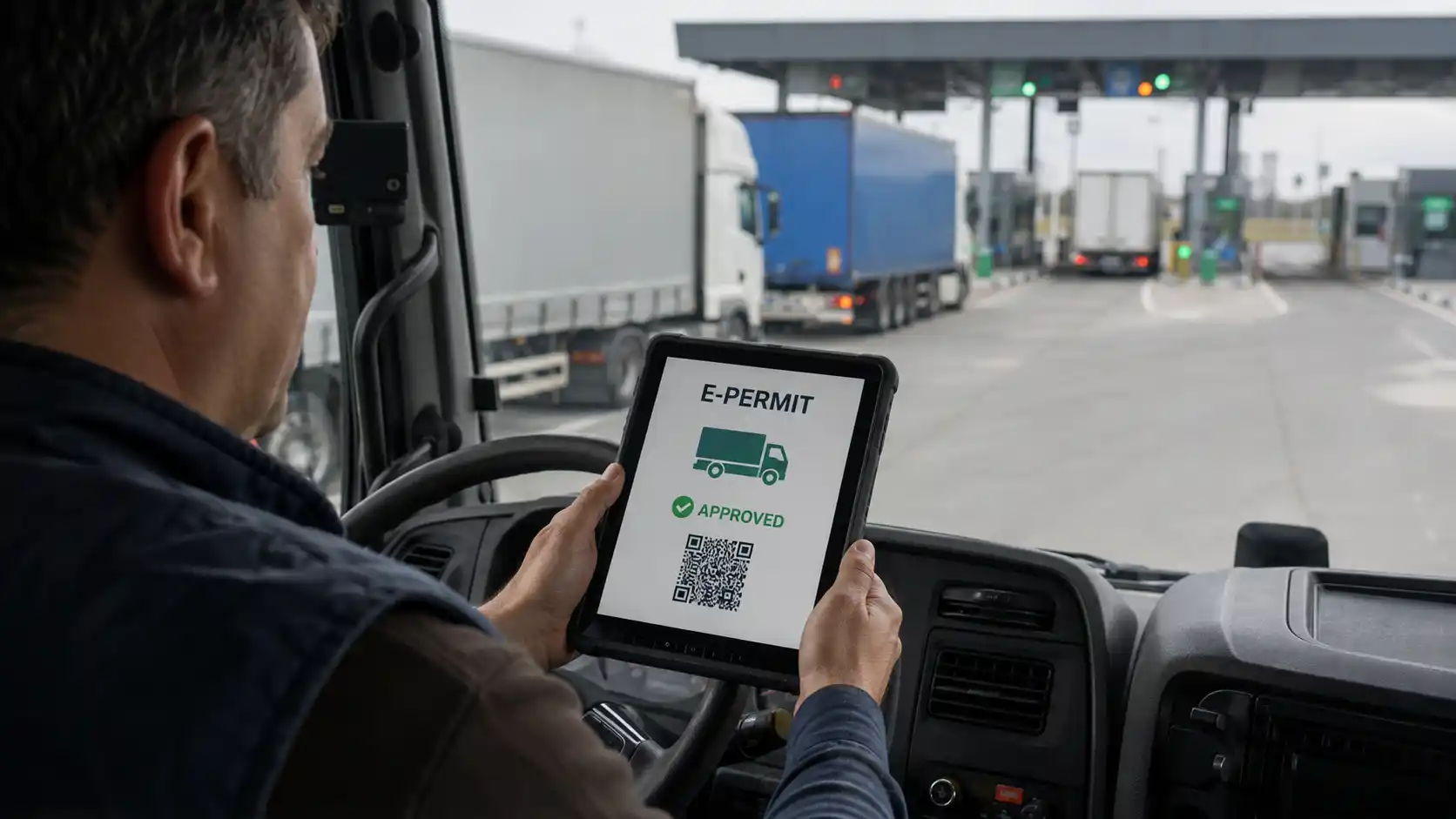
Paper Permits Replaced by Digital Documents
Uzbekistan and Georgia have introduced the E-Permit system for international road freight transport. National carriers will now receive the relevant permits exclusively in electronic form based on submitted applications.
According to an announcement by Uzbekistan’s Ministry of Transport, paper permit forms for operations involving Georgia have been removed from the documents distributed to carriers.
The electronic procedure covers three categories:
- bilateral freight operations between Uzbekistan and Georgia;
- transit transport through either country;
- shipments to and from third countries.
“The system is expected to accelerate permit issuance, reduce the use of paper documents and minimize the human factor,” the ministry said
Cooperation Memorandum Signed in July
The two countries established the legal and organizational basis for E-Permit during Uzbek President Shavkat Mirziyoyev’s visit to Georgia in early July 2026.
According to the official website of the President of Uzbekistan, the parties signed a memorandum on implementing the E-Permit electronic permit exchange system on July 3. They also concluded an agreement on cooperation and administrative assistance in customs matters.
The transition to actual electronic permit issuance shows that the two countries moved from signing the memorandum to implementing the system within a relatively short period.
What Changes for Road Carriers
Paper-based procedures could require permits to be physically collected, recorded, stored and delivered to drivers. Lost documents, filling errors or delays in distributing permit quotas created additional administrative risks.
E-Permit is intended to simplify this process. A carrier submits an application and receives the relevant authorization electronically, reducing paperwork and making permit allocation more transparent.
The principal expected benefits include:
- faster access to transport permits;
- fewer operations involving paper documents;
- a lower risk of permits being lost or damaged;
- easier monitoring of application status;
- less dependence on manual processing;
- more efficient planning of international trips.
The digital format does not remove other regulatory obligations. Carriers must still comply with customs requirements, vehicle weight and dimension limits, drivers’ working-time rules and market-access conditions.
Accurate application data will therefore remain essential. An incorrect vehicle registration number, permit category or route could still delay a shipment, even under a fully digital procedure.
Digitalization Supports South Caucasus Routes
Cooperation with Georgia has broader strategic importance for Uzbekistan. Georgian territory and Black Sea ports provide Central Asian cargo with access to Türkiye and European markets.
Electronic permit exchange is particularly useful for complex routes involving several borders and transport modes. Reducing the time spent obtaining and transferring paper documents can make it easier to coordinate the road leg with railway, ferry and port operations.
The system also supports Uzbekistan’s strategy of diversifying its international transport corridors. Digital procedures may improve the competitiveness of routes through the Caspian Sea, Azerbaijan and Georgia, although their overall performance will continue to depend on tariffs, border capacity and coordination among corridor participants.
Practical Results Will Depend on System Integration
The main measure of E-Permit’s effectiveness will not be the elimination of paper forms itself, but the actual reduction in permit-processing and shipment preparation times.
This will require a stable digital platform, timely data exchange between the two countries and the ability of transport and border authorities to verify permits without demanding parallel paper documentation.
During the transition, carriers should confirm their access to the system, train dispatch and compliance personnel, and introduce internal checks for application data. If implemented consistently, E-Permit can reduce administrative costs and make freight operations between Uzbekistan and Georgia more predictable.