

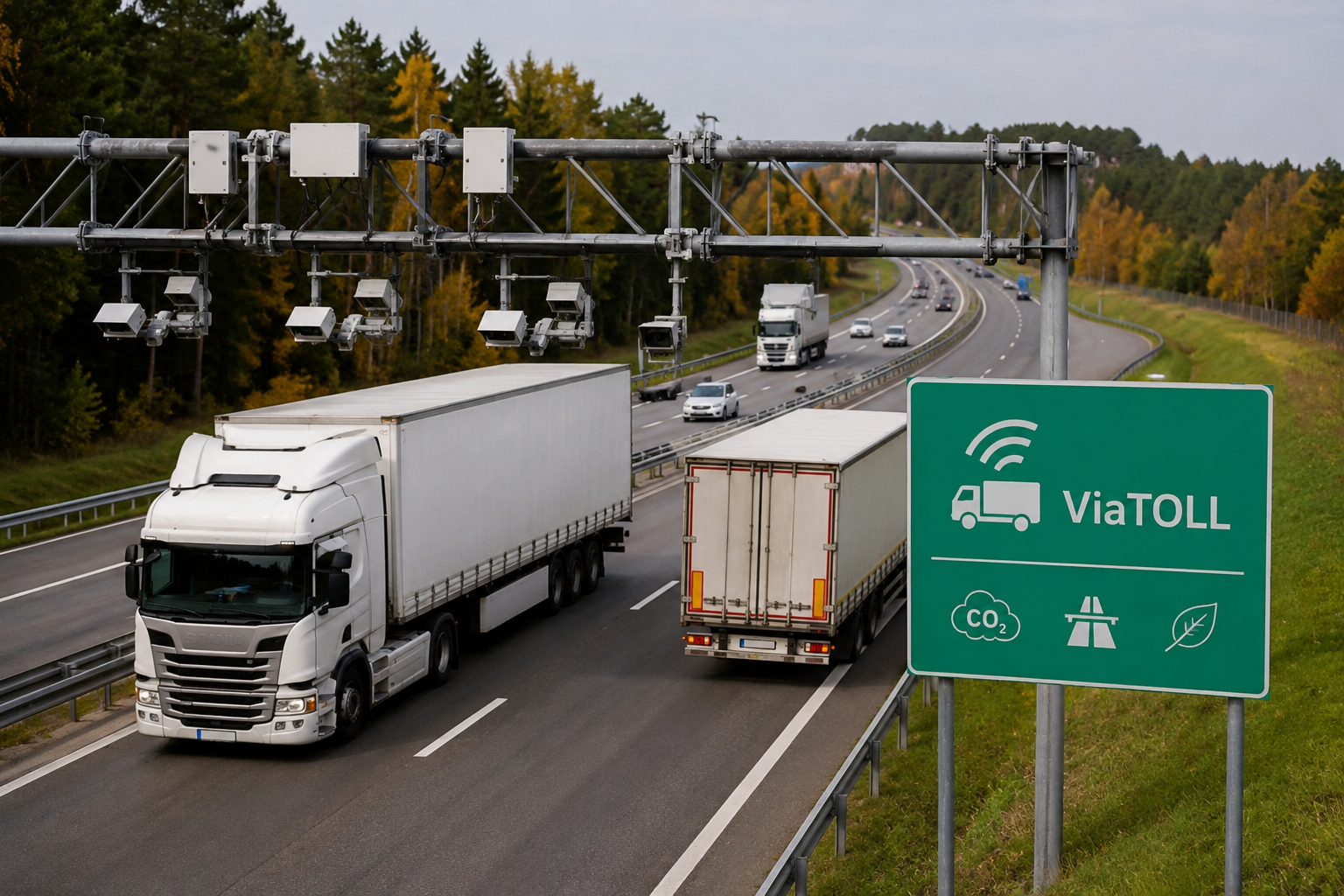
Lithuania is set to significantly reform its road charging system for commercial transport. The Lithuanian Transport Safety Administration (LTSA) has approved a new electronic tolling model called Via Toll, which will come into force next year and replace the existing vignette-based system.
The reform is part of the country’s broader effort to create a fairer and more environmentally focused approach to road charging while aligning national regulations with upcoming European Union requirements.
Under the new system, road tolls will apply to passenger and freight vehicles in categories M2, M3, N1, N2, and N3 operating on designated toll roads. Passenger cars (M1 category) will remain exempt from the scheme.
Authorities have also introduced a number of exemptions and discounts. Emergency and special-purpose vehicles will not be required to pay road charges, while agricultural machinery and environmentally friendly vehicles powered by electricity, hydrogen, or biomethane will benefit from reduced rates of approximately 40–50%.
The new toll structure will consist of two main components: infrastructure costs and vehicle CO₂ emissions. As a result, operators using roads more intensively and generating higher emissions will pay higher charges.
According to the approved tariff model, a EURO VI truck weighing more than 12 tonnes with up to three axles will pay an average of €0.111 per kilometer. For EURO VI buses with 35–60 seats and trucks weighing more than five tonnes, the average toll will be significantly lower at €0.061 per kilometer.
Lithuanian authorities emphasize that the new model is designed to make road charging more equitable by linking costs directly to road usage and environmental impact. Revenue generated through the system will be directed toward the maintenance, modernization, and expansion of the national road network.
The transition also serves as preparation for the broader European shift toward distance-based road charging systems. Under current EU plans, kilometer-based tolling is expected to become the standard approach across member states by 2030.
The need for more effective toll collection is highlighted by enforcement data from Lithuania. In 2025, fixed roadside monitoring systems recorded and transferred 758,096 cases of unpaid road charges to the national administrative violations register, demonstrating the scale of compliance challenges under the existing system.
With Via Toll, Lithuania aims not only to improve revenue collection but also to encourage cleaner transport technologies and create a more transparent, usage-based framework for commercial road transport.
Read also: Mercedes-Benz Actros L: TRANSTIRA Orders More Than 500 Trucks