

Drivers Can Check Parking Availability in Advance
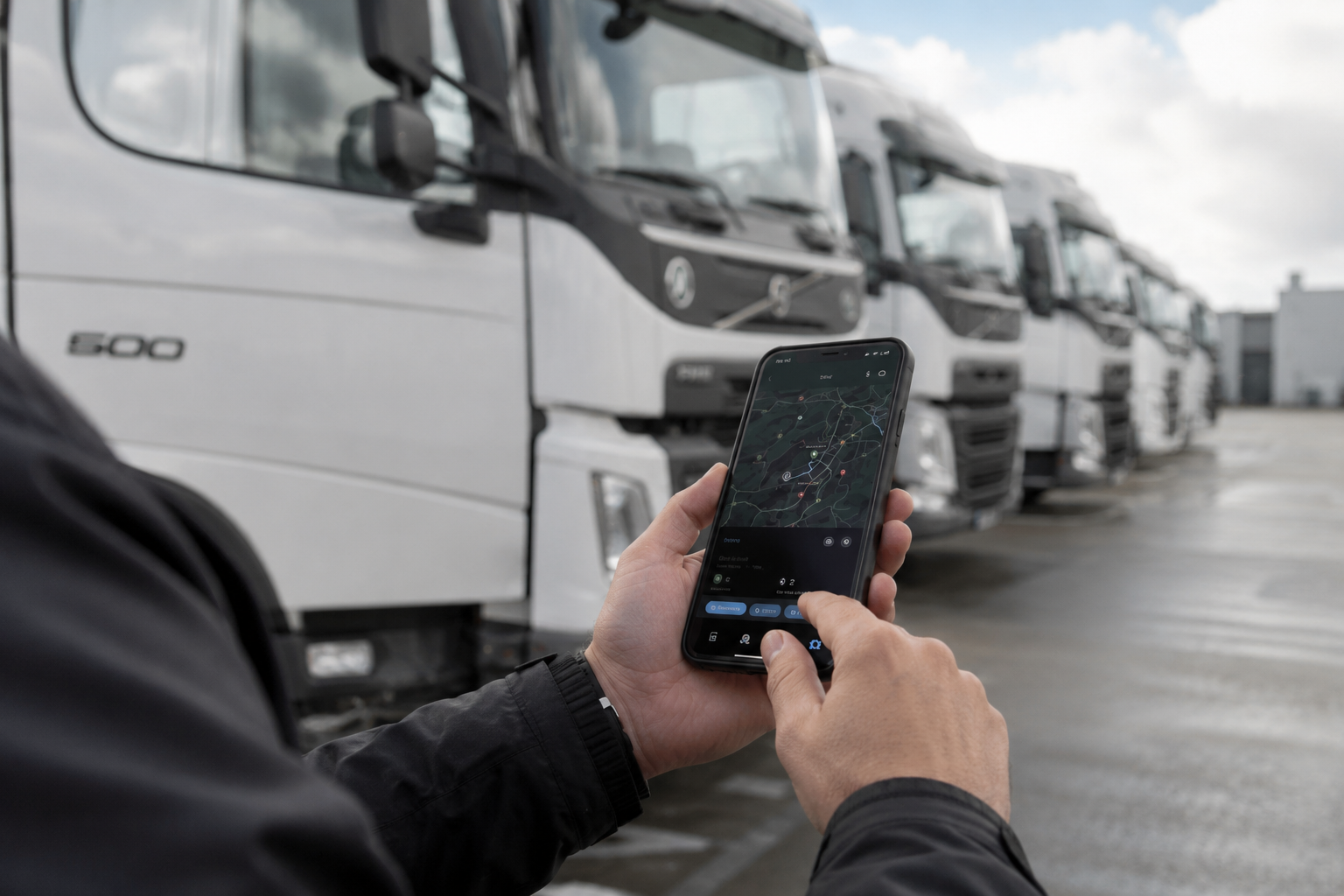
Mercedes-Benz Trucks is expanding its Remote 3.0 mobile app with a new feature designed to help truck drivers find available parking spaces.
According to Daimler Truck, drivers will be able to check the estimated occupancy of parking areas in advance and select a suitable location for their next stop. The app can then provide navigation to the chosen parking area.
The tool is particularly relevant to long-haul operations, where finding a place for mandatory rest periods can become a significant part of route planning.
Mercedes-Benz Trucks expects better parking information to reduce unnecessary mileage, limit search traffic around overcrowded rest areas and make freight journeys more predictable.
Germany Is Short Around 20,000 Truck Parking Spaces
The shortage of parking infrastructure remains one of the major problems facing German road freight transport.
According to ADAC, citing official estimates, Germany still lacks around 20,000 truck parking spaces along its motorway network.
ADAC inspections have shown that many rest areas are already overloaded by around 10 p.m. As a result, drivers are often forced to park outside marked spaces and, in some cases, near entrances, exits or other potentially dangerous locations.
The shortage also affects compliance with European driving and rest-time requirements. Drivers must stop within legally defined periods, meaning a lengthy search for parking can increase the risk of exceeding permitted driving time.
Toll-System Data Helps Estimate Occupancy
The new feature initially operates in Germany and uses information from the country’s digital truck Parking Information Service, known as SID.
The service was officially launched by Germany’s Federal Ministry of Transport in June 2026. Parking occupancy is calculated primarily using pseudonymized position data from onboard units installed in trucks for road-toll collection.
The system compares truck movements with the location and capacity of motorway rest areas to estimate current occupancy.
SID currently covers around 1,850 public rest areas along Germany’s federal motorway network. Its data is available for integration into third-party navigation, telematics and mobile applications.
Austria Is the Next Market
Mercedes-Benz Trucks has also started expanding the parking information service to Austria.
Further European countries are expected to follow. This is particularly relevant for international carriers because shortages of secure truck parking are not limited to Germany and affect several of the EU’s main freight corridors.
A service capable of showing parking availability across national borders could make it easier for drivers to organize rest periods during international journeys.
Digital information, however, does not create additional parking capacity. It can improve the use of existing infrastructure, while addressing the structural shortage will still require new and expanded truck parking facilities.
Remote 3.0 Combines Truck and Route Information
Parking search is the latest expansion of the Mercedes-Benz Trucks digital ecosystem.
The Remote 3.0 app already gives drivers smartphone access to vehicle information, including mileage, tire status, doors and locking systems, as well as other operating data.
For electric trucks, the app also provides information on traction-battery charge, remaining range and charging status. Drivers can receive charging notifications and use preconditioning functions.
Its integrated map also provides access to charging infrastructure and other useful locations.
For the long-haul eActros 600, combining information about charging, remaining range and parking availability is particularly relevant because mandatory driver breaks can also be used for battery charging.
Digital Services Become a Competitive Factor
The new feature demonstrates how competition between truck manufacturers is increasingly extending beyond the vehicle itself.
Navigation, telematics, charging services, remote vehicle monitoring and tools that help drivers organize their working time are becoming more important to transport companies.
With truck parking capacity remaining limited, advance occupancy information can help reduce unproductive mileage and allow fleet operators to plan international journeys more efficiently.
Read also: Spain Builds Covered Truck Parking for 383 Trucks