

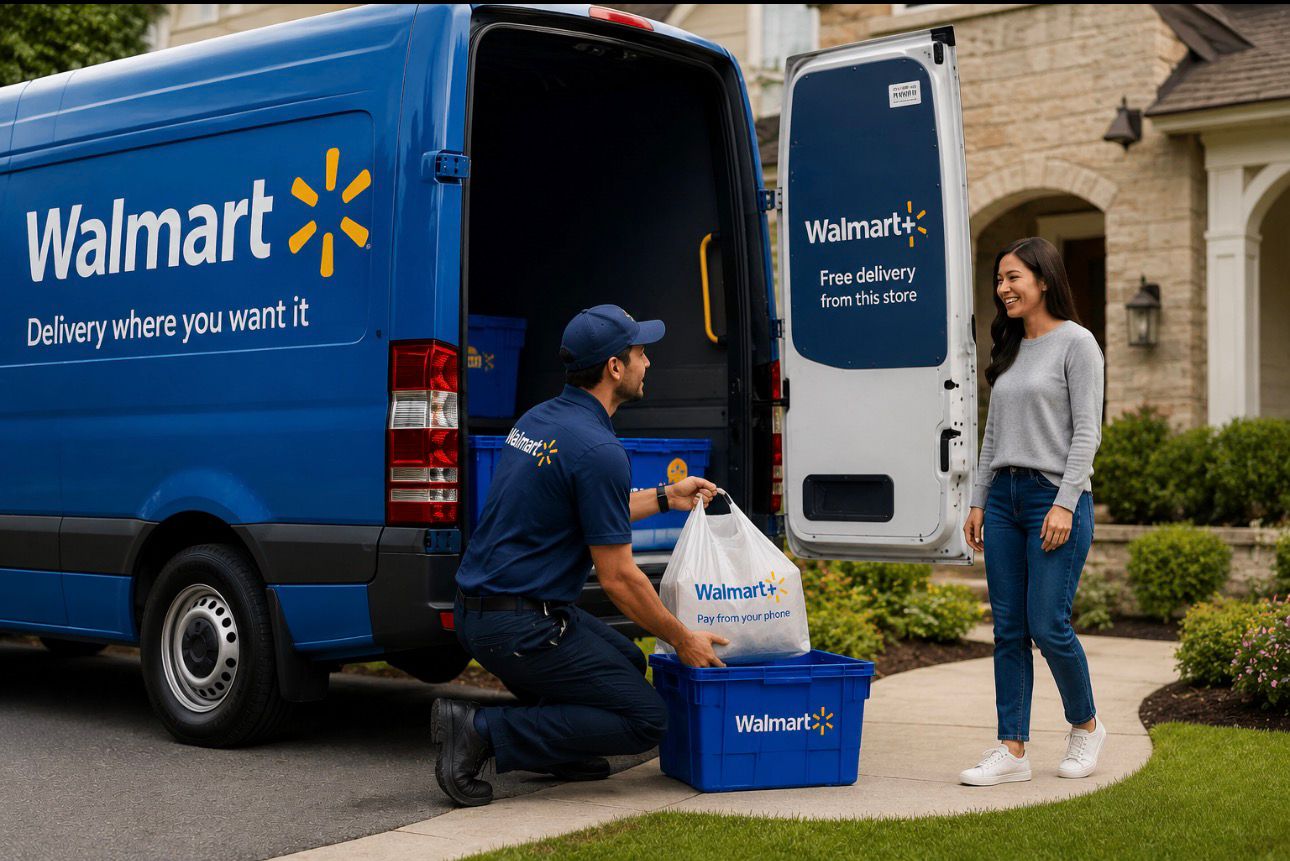
Retail giant Walmart continues to invest heavily in ultra-fast delivery, expanding the capabilities of its Express Delivery program. The latest initiative enables customers to receive not only everyday essentials but also freshly prepared food, including menu items from Subway restaurants, within 30 minutes of placing an order.
The move is part of Walmart’s broader strategy to strengthen its position in the rapidly growing last-mile delivery market, where speed is increasingly becoming a key competitive advantage.
Betting on Instant Convenience
The service is currently available across 33 U.S. markets and continues to gain traction among consumers. During the first quarter of 2026, approximately 26% of all Express Delivery orders were completed in less than 30 minutes.
For the retail industry, this represents a significant shift. Just a few years ago, next-day delivery was considered a major competitive differentiator. Today, leading retailers are working to reduce delivery times to one hour—or even just a few minutes.
According to Walmart, customers are increasingly using the service not only for larger shopping trips but also for urgent purchases of groceries, household essentials, over-the-counter medications, and ready-to-eat meals.
Coverage Across More Than 19,000 ZIP Codes
Walmart reports that its ultra-fast delivery service now reaches more than 19,000 ZIP codes across the United States.
Customers can choose from over 100,000 products eligible for rapid delivery.
The assortment extends far beyond groceries and includes home goods, cleaning supplies, electronics, baby products, pet supplies, health and wellness items, personal care products, prepared foods, and beverages.
This broad product selection allows Walmart to compete not only with traditional retailers but also with e-commerce marketplaces, food delivery platforms, and specialized online merchants.
Partnership with Subway
One of the most notable additions to the program is the integration of Subway restaurants located inside Walmart stores.
Customers can now order groceries, household products, and freshly made sandwiches within a single transaction and receive everything in one delivery.
Industry experts note that this model can increase average order values while improving last-mile efficiency by combining multiple product categories into a single delivery route.
The partnership also supports Walmart’s broader vision of transforming its stores into multifunctional logistics hubs capable of supporting both retail and fulfillment operations.
Micro-Fulfillment Becomes a Core Strategy
The foundation of Walmart’s rapid-delivery network is its growing investment in micro-fulfillment centers.
Unlike traditional distribution facilities that span hundreds of thousands of square feet, micro-fulfillment centers are strategically located close to consumers.
Their primary advantages include shorter delivery times, lower transportation costs, reduced pressure on large distribution centers, and the ability to efficiently process high volumes of small orders.
In effect, Walmart is transforming its nationwide store network into a distributed logistics infrastructure capable of supporting highly efficient last-mile operations.
Competition with Amazon Intensifies
The expansion of Express Delivery is part of a broader competitive battle among major U.S. e-commerce and retail players.
Amazon remains Walmart’s primary rival, continuing to invest heavily in its Prime ecosystem, fulfillment network, and same-day delivery capabilities.
Additional competition comes from companies such as Instacart, DoorDash, Uber Eats, Target, and Sam’s Club.
In today’s market, delivery speed is becoming just as important as product pricing.
Analysts believe that last-mile performance now plays a critical role in customer loyalty and directly influences repeat purchasing behavior.
A New Reality for Last-Mile Logistics
Walmart’s expansion of 30-minute delivery services highlights one of the defining logistics trends of 2026: the shift from next-day delivery to on-demand fulfillment.
Consumers increasingly expect products to arrive almost immediately after purchase, forcing retailers to redesign their logistics networks around speed and flexibility.
For the logistics industry, this means continued investment in micro-fulfillment centers, warehouse automation, intelligent route optimization, localized distribution networks, and demand forecasting technologies.
Industry observers believe that order fulfillment speed will become one of the most important competitive metrics among global retailers in the years ahead, making last-mile logistics one of the fastest-growing segments of the supply chain industry.