

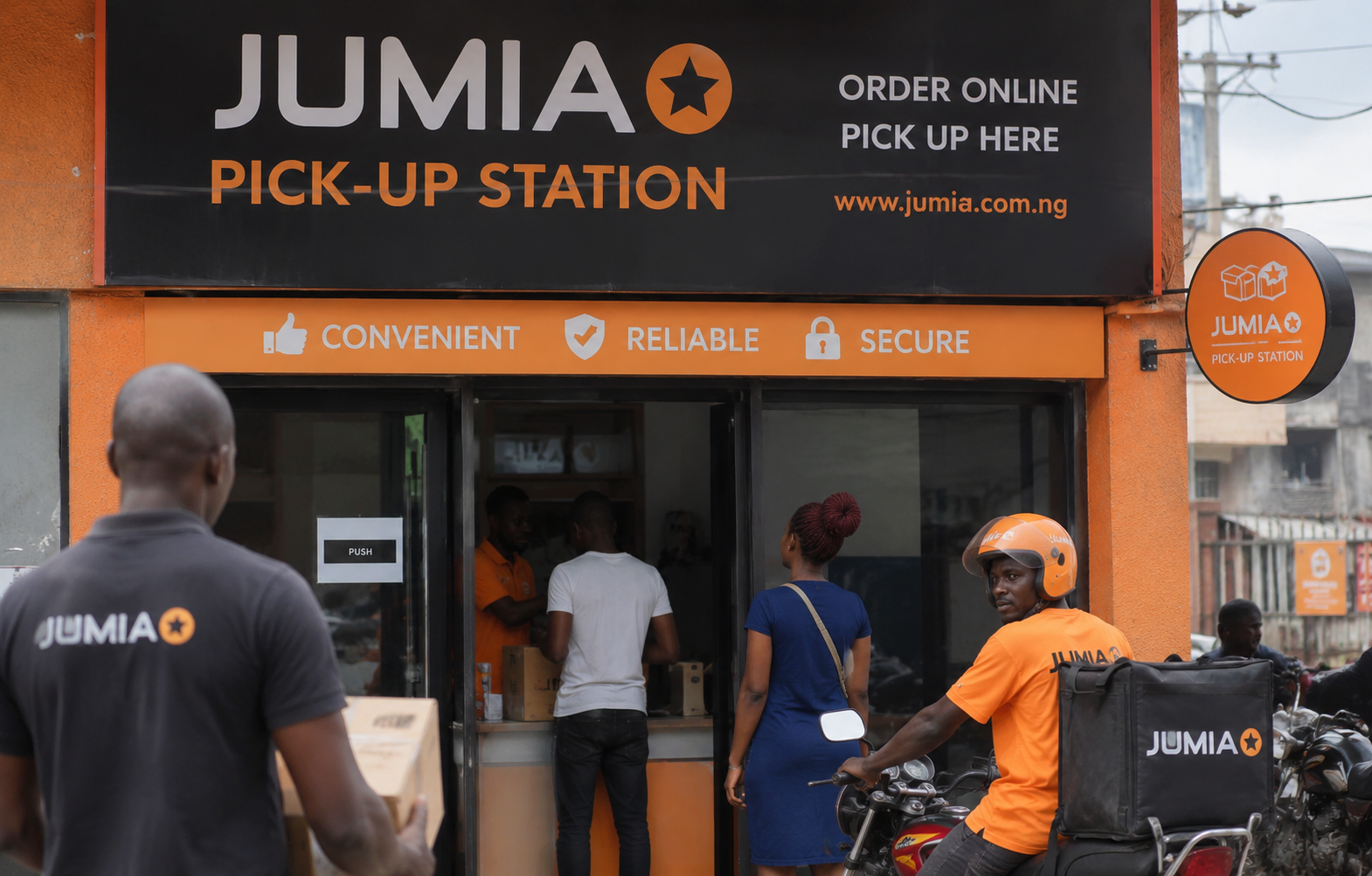
Africa’s largest homegrown e-commerce company is making a strategic bet on an idea that has already reshaped online retail in many emerging markets: bringing the customer closer to the package instead of the package to every customer’s door.
As competition from Amazon, Temu, and Shein continues to intensify, Jumia is expanding the logistics infrastructure that has become one of its greatest competitive advantages.
The company is increasing the number of pick-up points, opening new local service centers, expanding self-service collection locations in smaller cities, and investing heavily in last-mile delivery across Nigeria—its largest and most important market.
According to the company, business activity in Nigeria grew by approximately 50% during the last quarter. Management describes the country as the primary engine of Jumia’s future expansion, underscoring its central role in the company’s long-term growth strategy.
A Practical Response to Africa’s Logistics Challenges
The decision reflects a practical reality of African logistics.
In many regions, delivering every parcel directly to a customer’s home remains expensive and operationally complex because of limited addressing systems, traffic congestion, and long travel distances. Pick-up locations offer a more reliable and cost-effective alternative while giving customers greater flexibility in collecting their orders.
More Than a Logistics Upgrade
For Jumia, expanding this network is more than a logistics upgrade.
It strengthens delivery efficiency, reduces operating costs, shortens delivery times, and extends e-commerce access to communities that have traditionally been difficult to serve.
As international retailers continue looking toward Africa as the next major growth market, the competition may no longer be decided by who offers the lowest prices—but by who builds the strongest last-mile network.
Across much of Africa, the future of e-commerce may begin not at the customer’s doorstep, but at the neighborhood pick-up point.
Read also: Amazon and Walmart Reach Africa’s Doorsteps — Thanks to a Quiet Logistics Revolution
