

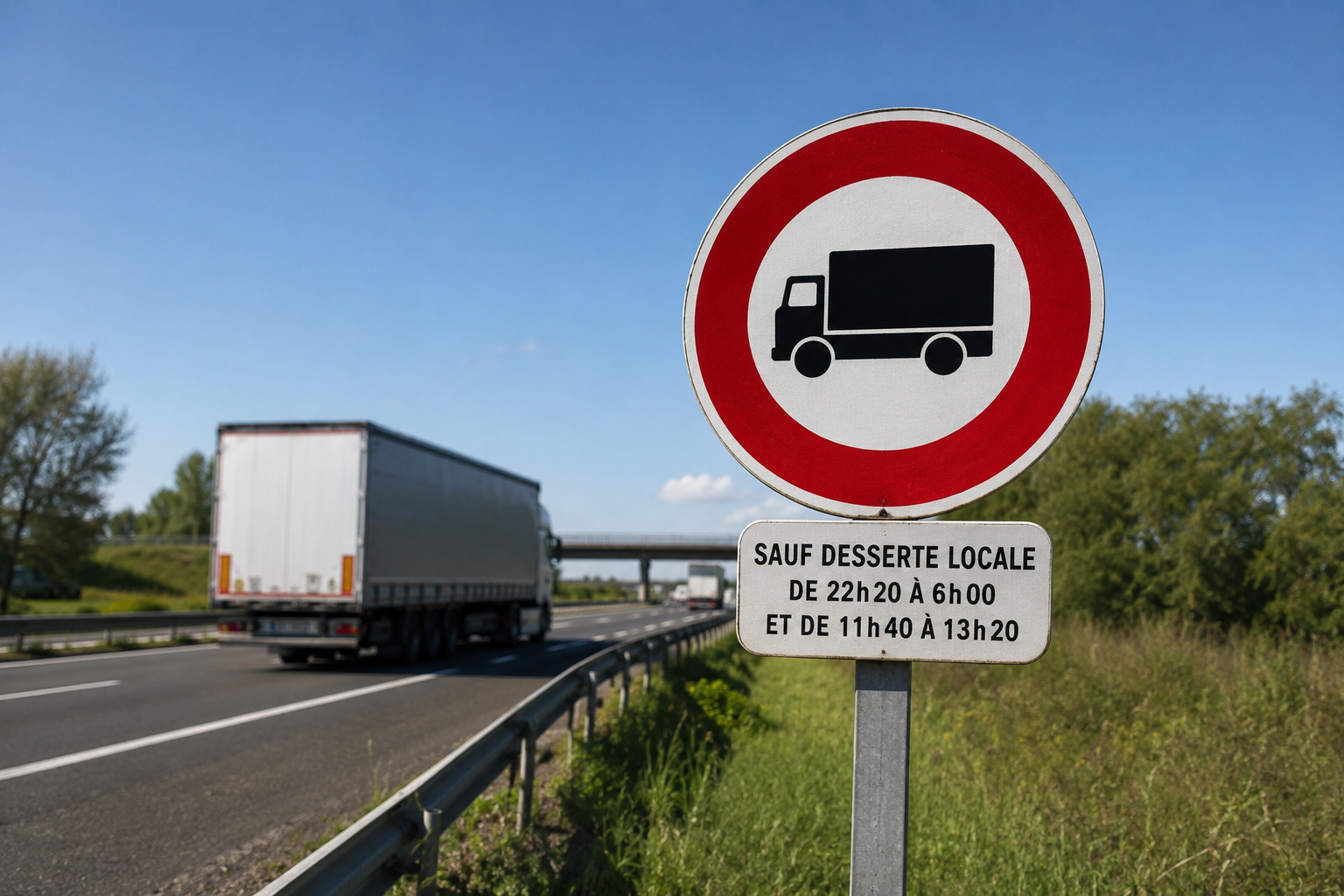
During the summer of 2026, numerous European countries will impose seasonal traffic restrictions on heavy goods vehicles. These measures apply in addition to year-round driving bans and are intended to reduce congestion during the peak tourist season.
According to information published by specialized transport platforms, the restrictions affect major motorways and key international freight corridors across Europe. Carriers are encouraged to take the new regulations into account when planning cross-border operations.
Central Europe Faces the Strictest Restrictions
Among the most restrictive countries is Austria, where additional truck bans will apply on Saturdays along the A12, A13, A14, and A4 motorways between late June and early September. Particular attention is focused on the Brenner Corridor, one of the most important freight routes connecting Germany and Italy.
Germany will also enforce its traditional summer truck driving ban every Saturday from July 1 through August 31. The restrictions cover dozens of motorway sections, including major routes such as A1, A2, A3, A5, A7, A8, A9, A45, and A61, among others.
In the Czech Republic, additional restrictions will be in force throughout July and August on Friday evenings, Saturdays, Sundays, and public holidays. Similar seasonal rules will apply in Slovakia, where heavy truck traffic will also be restricted on Saturdays, Sundays, and holidays.
Southern Europe Prepares for Peak Tourist Traffic
Southern European countries are also tightening traffic regulations during the summer season.
In Croatia, seasonal restrictions will remain in effect from June 15 to September 15, covering weekends and public holidays on designated tourist routes.
France will introduce additional nationwide restrictions for trucks exceeding 7.5 tonnes on selected Saturdays in July and August.
Greece will implement one of the most comprehensive systems of seasonal restrictions. Traffic bans will apply to numerous motorways and national highways, including the Athens–Patras, Athens–Thessaloniki, Ionian Motorway, Peloponnese routes, and roads leading to popular tourist destinations. Depending on the location, restrictions will be enforced on Fridays, Saturdays, and Sundays until early September.
Eastern Europe Also Introduces Seasonal Measures
In Romania, additional restrictions will apply from July 1 to August 31 on the A2 Bucharest–Constanța Motorway and several national roads leading to the Black Sea coast. The restrictions will be in force on Fridays, Saturdays, and Sundays.
Hungary will continue its traditional weekend and public holiday truck bans throughout July and August. If a public holiday coincides with a weekend, restrictions may remain in force continuously for more than two days.
In Slovenia, seasonal restrictions will apply from late June until early September on major routes leading to the Adriatic coast. Italy will also maintain its annual summer truck bans, covering most weekends throughout July and August.
Logistics Companies Advised to Plan Ahead
Industry experts emphasize that seasonal truck bans have a significant impact on European freight transport every year. Temporary traffic restrictions increase congestion on alternative routes, extend delivery times, and create additional pressure at border crossings.
Transport companies are therefore advised to carefully adjust delivery schedules, consider national restriction periods when planning international operations, and organize mandatory rest stops accordingly to avoid unnecessary delays and financial penalties. This is particularly important for carriers operating across Central and Southern Europe, where summer traffic restrictions affect some of the continent’s busiest freight corridors.
Read also: Tunnel Renovation to Reshape Traffic Flow in Munich