

Armed Men Took Control of the Vessel
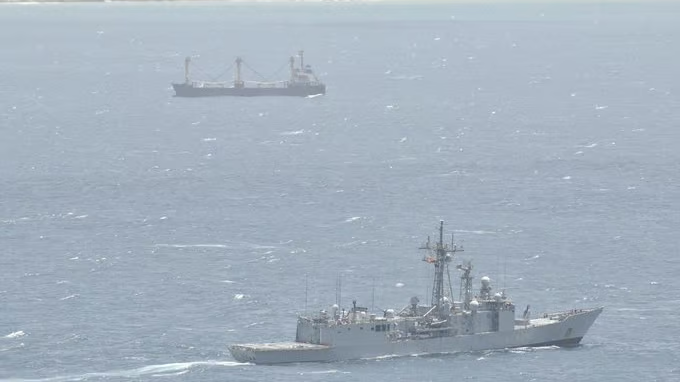
The incident occurred on 17 August 2026 approximately four nautical miles south of Mareeyo, Somalia. According to an official UK Maritime Trade Operations alert, eight armed unauthorized persons boarded the cargo vessel and took control of it.
Industry reports identified the ship as the Cameroon-flagged Lutuf, a general cargo vessel built in 1995 with a deadweight of approximately 1,400 tonnes. It was reportedly sailing from Türkiye to Dar es Salaam, Tanzania.
The latest information from UKMTO and the Maritime Security Centre Indian Ocean indicated that the crew was safe. This did not mean that the vessel had been released: the incident remained under investigation, while the attackers were reported to be in control of the ship. Vessels in the area were advised to exercise caution and report suspicious activity.
The Task Force Decision Predated the Attack
The Lutuf hijacking coincided with the announcement of a new regional security mechanism, but it did not directly trigger the decision. The Djibouti Code of Conduct Steering Committee recommended establishing the force on 29 July, and national focal points endorsed the proposal on 5 August.
A statement issued under the Djibouti Code of Conduct and Jeddah Amendment on 17 August said the Combined DCoC Task Force would provide a regional mechanism through which willing signatory states could conduct coordinated maritime operations. The plans may include deploying law-enforcement officers from coastal states aboard participating naval vessels.
The task force is not yet operational. Working Group 3 must still define its geographical scope, composition, responsibilities, resource requirements and relationship with existing maritime security operations. Recommendations are expected to be considered at a regional workshop in Mombasa on 7–9 September 2026.
Four Other Ships Were Already Being Held
Before the latest incident, Somali pirate groups were already holding four commercial vessels. According to Seatrade Maritime, the list as of 16 August included the Palau-flagged tanker Honour 25, the Saint Kitts and Nevis-flagged general cargo ship Sward, the Togo-flagged tanker Eureka and the Tanzania-flagged product and chemical tanker Asana.
Honour 25, Sward and Eureka were seized in April and May, while Asana was hijacked in July 2026. Efforts to release their crews have been complicated by the threat of violence, hazardous cargoes aboard some vessels and reported disagreements between pirate groups.
In July, International Maritime Organization Secretary-General Arsenio Dominguez called for urgent international action to release 44 seafarers who were then being held aboard three vessels. The IMO warned that food and drinking-water supplies were running critically low.
Regional Cooperation Will Be Critical
The proposed DCoC task force is intended to support, rather than replace, existing international naval missions. An effective response will also require intelligence sharing, coordination with Somali authorities and legal arrangements allowing suspected pirates to be transferred to states capable of prosecuting them.
The attack close to Somalia’s coastline demonstrates that piracy remains possible even during the southwest monsoon, when rough offshore conditions usually limit long-range operations by small skiffs. Sheltered coastal waters continue to provide opportunities to target smaller and slower commercial vessels.
For shipping companies, renewed piracy means higher expenditure on voyage assessments, insurance, surveillance, access-point protection and crew preparation. Even attacks involving relatively small ships can increase security costs and disrupt cargo flows across the western Indian Ocean and Gulf of Aden.
Read also: Cargo Ship Attacked in Red Sea off Yemen
