

For years, Africa has remained one of the world’s most challenging regions for large-scale e-commerce. Limited street addressing, uneven infrastructure, and vast rural territories have made traditional home delivery difficult and expensive. Yet while global attention has focused on warehouses and cargo ships, another transformation has been unfolding much closer to consumers.
Today, a new generation of logistics companies is quietly building the last-mile networks that are bringing Amazon and Walmart purchases to homes across Africa—even in countries where neither retail giant officially operates.
The system itself is remarkably practical.
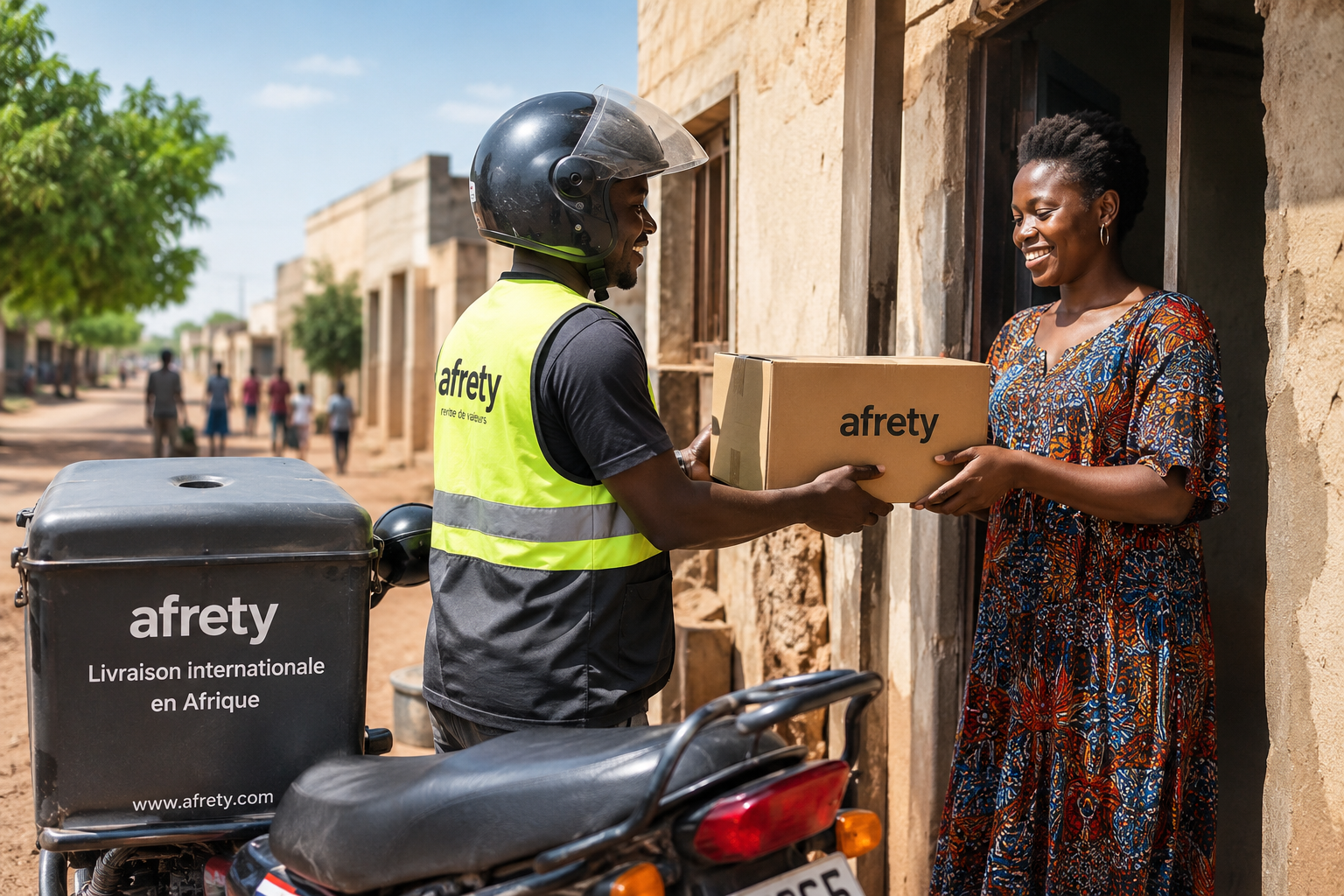
Consumers first receive a virtual shipping address in the United States, Europe, or China. Their online purchases are consolidated at international fulfillment centers before being transported by air or sea to Africa. Once the shipments arrive, local logistics providers take over, using motorcycles, courier vans, neighborhood pickup points, and increasingly sophisticated GPS navigation to complete deliveries—even in communities that lack formal street addresses.
Several companies have emerged as key participants in this growing ecosystem.
Senegal-based Afrety has developed cross-border forwarding services tailored to African consumers. Aramex continues expanding its regional delivery capabilities across multiple African markets. Jumia, already established as Africa’s largest homegrown e-commerce platform, has invested heavily in its own logistics infrastructure. Alongside them, hundreds of independent courier companies now provide the local delivery networks that make the final stage of transportation possible.
What makes this development significant is that it extends well beyond online shopping.
Every successful delivery strengthens Africa’s logistics infrastructure. Every new distribution route improves supply chain reliability. Every additional courier creates employment while increasing consumer confidence in e-commerce.
For years, many African consumers relied on collecting purchases from retail stores or designated pickup locations. That model is gradually giving way to direct home delivery—a shift already familiar in North America, Europe, and parts of Asia.
The implications reach beyond convenience.
As last-mile logistics continue to mature, cross-border e-commerce is expected to accelerate, giving millions of African consumers easier access to international goods while opening new opportunities for logistics providers, freight forwarders, customs brokers, and technology companies operating across the continent.
In logistics, the final mile has always been the most difficult.
Across much of Africa, it may soon become the industry’s greatest opportunity.