

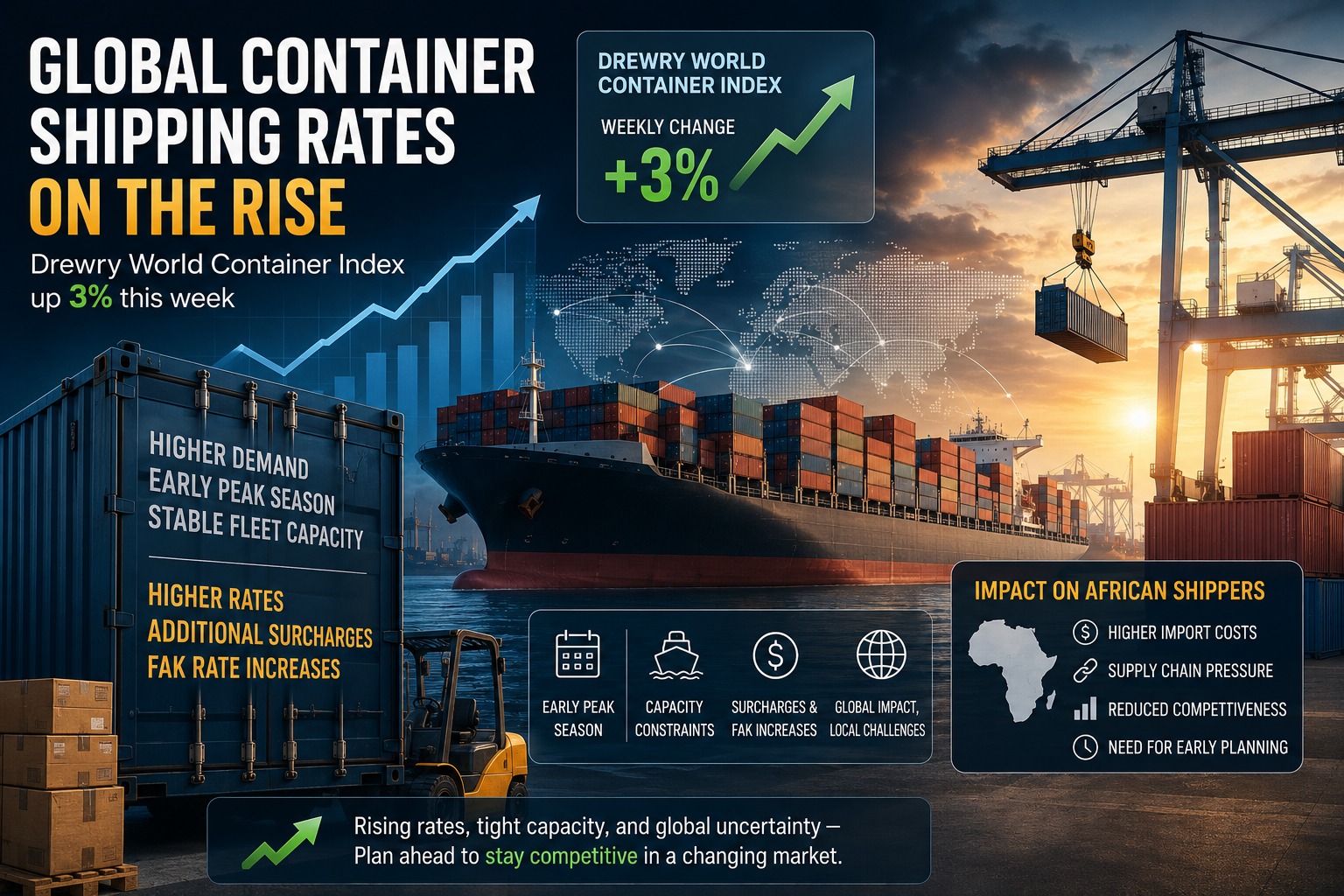
The global container shipping market is once again showing signs of strengthening after several months of relative stability. According to the latest figures from the Drewry World Container Index (WCI), average container freight rates increased by 3% over the past week, signalling renewed pressure across the international maritime logistics sector.
Industry analysts attribute the increase primarily to the earlier-than-usual start of the peak shipping season, resilient import demand, and only limited growth in available vessel capacity.
The Market Enters Peak Season Earlier Than Expected
Traditionally, container freight rates begin to rise during the second half of the year as manufacturers and retailers prepare for autumn sales campaigns, the Christmas shopping season, and year-end inventory replenishment.
However, in 2026, peak season demand has emerged significantly earlier than expected.
The main factors behind this trend include:
- increased purchasing activity from importers in the United States and Europe;
- recovering consumer demand across several major economies;
- companies building inventories in advance of potential disruptions;
- continued uncertainty surrounding key maritime trade routes.
Many cargo owners are securing shipping capacity earlier than usual amid concerns over further rate increases and potential supply chain disruptions.
Shipping Lines Increase Tariffs and Introduce Additional Surcharges
Against the backdrop of growing demand, major container shipping companies have begun revising their pricing strategies.
In addition to higher base freight rates, several carriers have announced new surcharges, including:
- Peak Season Surcharges (PSS);
- General Rate Increases (GRI);
- terminal congestion surcharges;
- additional fuel-related charges;
- regional service surcharges.
Particular attention is being paid to Freight All Kinds (FAK) rates, which serve as a benchmark for a significant share of short-term shipping contracts.
Historically, rising FAK rates have often been viewed as an early indicator of future increases in long-term contract pricing.
The Balance Between Supply and Demand Remains Fragile
Although global shipping lines continue to introduce new container vessels into service, analysts note that available capacity is not expanding rapidly enough to fully accommodate current demand levels.
Additional pressure on the market stems from:
- congestion at several major ports;
- route adjustments caused by geopolitical risks;
- longer container turnaround times;
- rising cargo volumes at leading Asian transhipment hubs.
Even minor disruptions at key logistics gateways can quickly affect container availability and freight pricing across global trade lanes.
African Shippers Face Additional Challenges
Although the Drewry index reflects global market conditions, its movements carry direct implications for African importers and exporters.
Many African economies remain heavily dependent on maritime transport for the movement of:
- industrial equipment;
- construction materials;
- vehicles;
- consumer goods;
- agricultural products.
Higher freight rates automatically increase import costs while reducing the international competitiveness of exported goods.
Countries in East and West Africa are particularly exposed to such developments, as maritime transport continues to account for the majority of their international trade activity.
The Red Sea Remains a Source of Uncertainty
Market conditions continue to be influenced by developments along Red Sea shipping routes and throughout the broader Middle East region.
While some carriers have gradually resumed operations on traditional routes, a portion of the global fleet continues to sail around the Cape of Good Hope.
This diversion results in:
- longer transit times;
- higher fuel consumption;
- reduced vessel availability;
- additional operational costs for carriers.
Any deterioration in regional security conditions could once again trigger sharp increases in freight rates and further tighten shipping capacity.
Outlook for the Second Half of the Year
Most industry observers agree that the container shipping market is entering the second half of 2026 in a considerably stronger position than many had anticipated at the beginning of the year.
Nevertheless, the likelihood of further freight rate increases remains significant.
Key factors to watch include:
- export volumes from Asia;
- consumer demand trends in the United States and Europe;
- cargo processing efficiency at major global ports;
- developments along Red Sea trade routes;
- capacity management strategies adopted by leading container carriers.
If current market conditions persist, shipping lines may continue raising rates in the coming months, forcing cargo owners to account for higher transportation costs when planning supply chains for late 2026.
Why It Matters
A 3% weekly increase in the Drewry World Container Index may not appear dramatic at first glance, but for the logistics industry it represents an important shift in market sentiment.
Following an extended period of rate declines, the market is once again showing signs of strengthening. The early arrival of peak-season demand also suggests that global trade activity remains resilient despite ongoing geopolitical and economic uncertainties.
For African shippers, this means securing transportation capacity well in advance, revising logistics budgets, and preparing for higher ocean freight costs during the second half of 2026.