

Agricultural Supplies to Tajikistan Continue to Grow
Belarus increased exports of agricultural products and food to Tajikistan by almost 20% during the first five months of 2026, according to the Belarusian Ministry of Agriculture and Food.
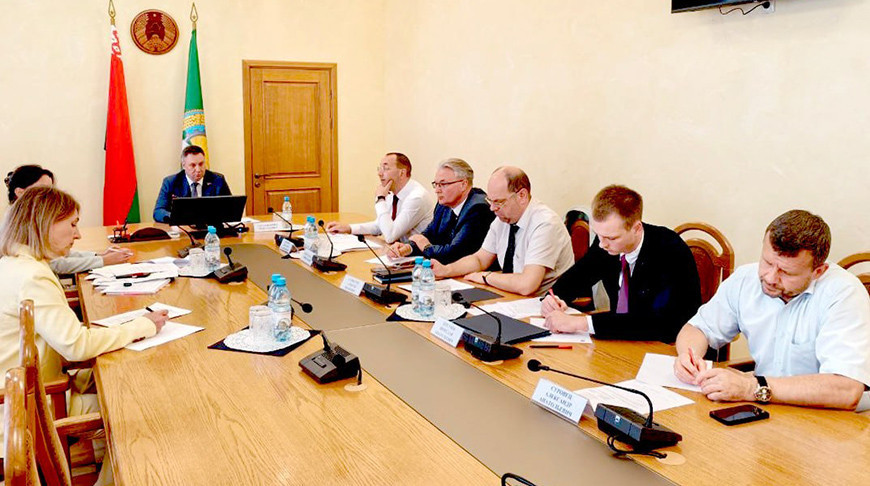
The results were discussed at a meeting of the Belarusian section of the intergovernmental commission on cooperation with Tajikistan. The videoconference was chaired by Agriculture and Food Minister Yuri Gorlov and focused on expanding bilateral cooperation and preparing for the commission’s 19th meeting, scheduled to take place in Brest at the end of July.
The agricultural sector remains one of the main drivers of trade between the two countries. In 2025, bilateral trade in food products and agricultural raw materials exceeded the previous year’s level by 61.4%, while Belarusian exports increased by 63.4%.
Growth continued in 2026. During January–May, Belarusian agricultural supplies to Tajikistan rose by almost one fifth, with meat products, sugar and dairy products forming the core of the export structure. Dairy exports demonstrated particularly strong momentum, increasing almost threefold.
Cooperation Goes Beyond Commodity Trade
Belarus and Tajikistan are gradually expanding cooperation beyond direct supplies of food and agricultural raw materials.
The partnership already includes industrial projects, construction, transport, healthcare and professional training. In the agricultural sector, nine veterinary medicines produced in Belarus have been registered for sale on the Tajik market.
Scientific and educational ties are also developing. Belarusian agricultural universities cooperate with four research centres in Tajikistan, while Tajik citizens study at specialised universities in Belarus.
This cooperation may help the countries create a pool of specialists for future joint agricultural, processing and logistics projects. It also makes trade relations less dependent on individual contracts by supporting longer-term institutional links.
Brest Meeting to Focus on Further Export Growth
The upcoming meeting of the intergovernmental commission in Brest is expected to become another step toward diversifying Belarusian exports and strengthening the partnership with Tajikistan.
Potential areas of growth include supplies of dairy and meat products, agricultural machinery, veterinary products, food-processing technologies and professional training.
For Belarusian exporters, Tajikistan is part of a broader Central Asian market with growing demand for food products and industrial equipment. However, further trade expansion will require stable transport services, competitive tariffs and predictable delivery times.
Belarus and Uzbekistan Prepare Regular Freight Trains
At the same time, the railway administrations of Belarus and Uzbekistan are working on plans to launch regular consolidated freight trains between the two countries.
The parties intend to study options for combining cargo flows, primarily through the Orsha-Vostochnaya railway station in Belarus. Consolidation would allow shipments from multiple companies to be grouped into larger train consignments instead of being transported separately.
Belarusian Railway and its Uzbek partners are also working to optimise tariff conditions along the entire route. The objective is to shorten delivery times, reduce logistics costs and make rail transport more attractive to exporters and importers.
The planned service could support shipments of food products, machinery, chemicals, consumer goods and other cargo moving between Eastern Europe and Central Asia.
Orsha Could Become a Consolidation Hub
Orsha-Vostochnaya is well positioned to serve as a cargo consolidation point because it connects major railway directions within Belarus and provides access to international routes.
Regular consolidated trains could give smaller exporters access to railway logistics without requiring them to provide enough cargo to fill an entire train independently. Freight from several shippers could be accumulated at the station and dispatched according to a fixed schedule.
This model can improve delivery predictability, but its commercial success will depend on stable cargo volumes, coordinated tariffs and efficient border procedures.
The initiative reflects a broader shift in Eurasian logistics toward scheduled rail services and diversified routes. As K2Cargo News noted in its analysis of the changing role of Eurasian transport corridors, shippers increasingly value not only price but also predictable schedules, coordinated documentation and the ability to choose between several transport options.
Trade and Transport Projects Reinforce Each Other
The growth of Belarusian agricultural exports to Tajikistan and plans for regular freight trains to Uzbekistan are two parts of the same regional strategy.
Expanding trade requires reliable transport capacity, while regular trains need sufficient cargo volumes to remain commercially viable. Agricultural products can become an important part of these flows, particularly when exporters require faster and more predictable delivery than conventional wagon-by-wagon shipments can provide.
For Central Asian importers, consolidated services could simplify access to Belarusian food, machinery and industrial goods. For Belarus, they offer an opportunity to strengthen its position as a supplier and logistics partner in a market that is becoming increasingly important for export diversification.
Read also: K2Cargo News examines whether the Middle Corridor can become a major alternative route for Eurasian trade.