

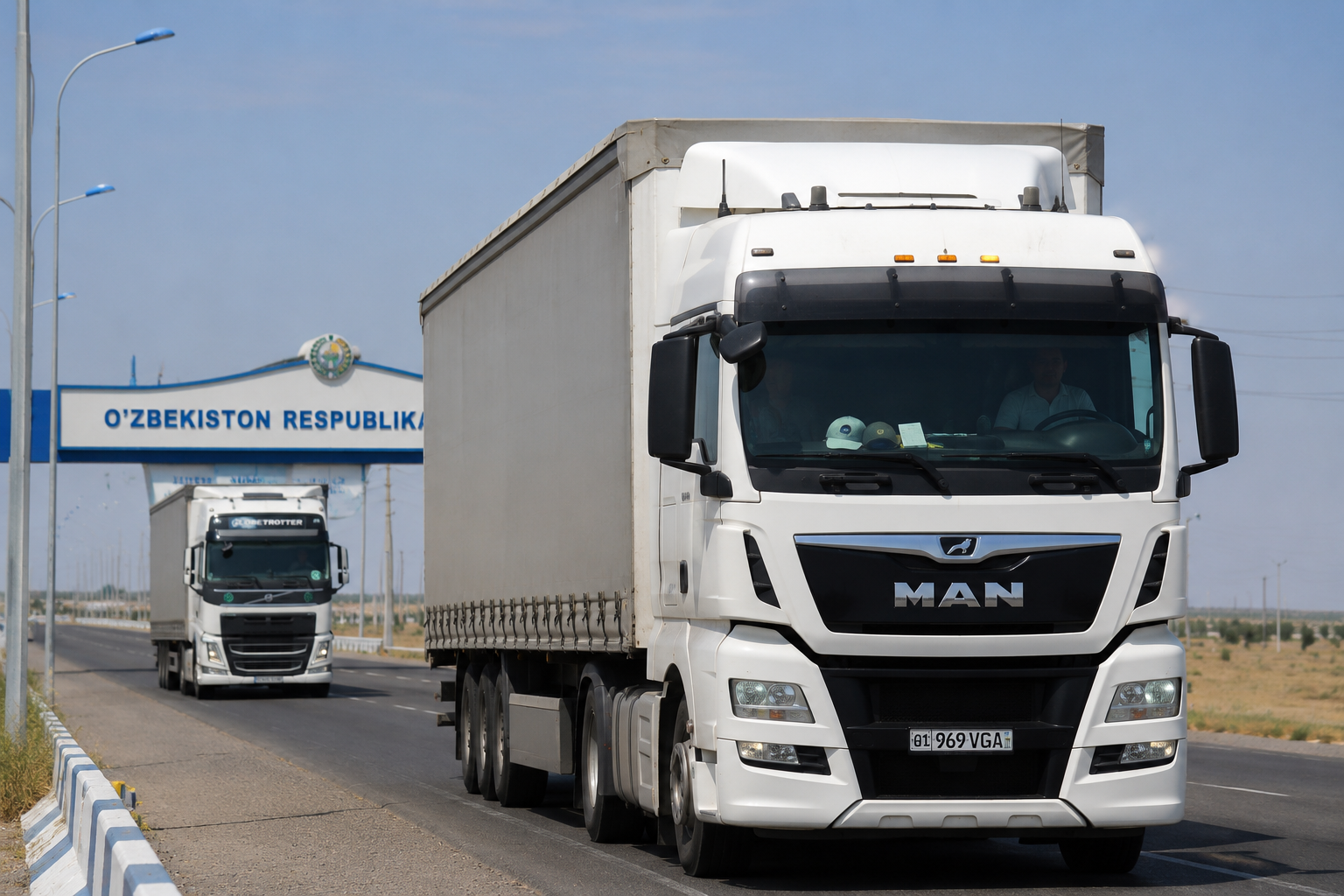
Uzbekistan is introducing new import privileges for freight transport companies. Under a new presidential decision, customs duties and the recycling fee will be set at zero for selected cargo trucks and semi-trailers imported into the country.
The measure applies to modern vehicles produced no more than five years before import. For trucks, the key condition is compliance with Euro-5 environmental standards or higher. For semi-trailers, the exemption applies to units with a cargo volume of at least 76 cubic metres and/or a maximum mass of 15 tonnes or more.
The benefit will remain in force until the end of 2027. According to the authorities, the goal is to increase the share of Uzbek companies in the international road freight market and make fleet renewal more accessible.
As K2Cargo News previously reported in Uzbekistan Raises Middle Corridor Share to 28%, Uzbekistan is increasingly focused on strengthening its position in Eurasian logistics. Cheaper access to modern trucks fits into the same strategy.
What Vehicles Are Covered
The exemption is not universal.
It applies to cargo trucks that meet Euro-5 or higher standards and to qualifying semi-trailers. The age limit is also important: the vehicle must have been manufactured no more than five years before it is imported into Uzbekistan.
This means the measure is designed to support the purchase of relatively modern equipment, not the large-scale import of outdated vehicles.
The focus on Euro-5 and newer trucks also shows that Uzbekistan wants to modernise its freight fleet without ignoring environmental and technical requirements. For international transport, this matters because many routes and customers increasingly require cleaner and more reliable vehicles.
Why the Measure Matters for Carriers
For transport companies, import duties and recycling fees can significantly affect the final cost of a truck.
By reducing these payments to zero, Uzbekistan is making fleet renewal cheaper. This may encourage carriers to replace older vehicles, expand capacity and compete more actively on international routes.
The measure is especially relevant for companies working on cross-border corridors connecting Central Asia with the Caucasus, China, Türkiye, Iran, Afghanistan and Europe. Modern tractors and high-volume semi-trailers allow carriers to meet customer requirements, reduce operating risks and improve route efficiency.
For smaller and mid-sized carriers, the benefit may be particularly important. Lower entry costs can make it easier to buy a newer truck or trailer instead of extending the life of older equipment.
Rules Against Re-Export
The government has also introduced safeguards.
If a vehicle imported under the privilege is re-exported within three years, the owner must pay the full amount of customs duties and the recycling fee. This rule is intended to prevent companies from using Uzbekistan only as a low-cost import point before sending vehicles to another market.
The privilege can also be cancelled if the vehicle’s HS code changes after modification. The exception is conversion to another fuel type. In other words, technical changes made for fuel conversion should not automatically remove the benefit, but other types of reclassification may trigger payment obligations.
These conditions show that the measure is aimed at real fleet development inside Uzbekistan, not speculative resale.
Impact on International Freight
Uzbekistan is trying to increase the presence of national carriers in international road transport.
This is a strategic issue. The country is landlocked, and road freight remains essential for regional trade, exports, imports and access to multimodal corridors. The quality and age of the truck fleet directly influence how competitive Uzbek carriers can be.
A newer fleet can help companies reduce breakdowns, improve delivery reliability and meet technical standards in partner countries. It can also make Uzbek carriers more attractive to exporters who need predictable transit times and stable service.
The policy may also stimulate demand for European and Asian truck brands, leasing services, maintenance networks and trailer suppliers. If import volumes rise, the broader transport ecosystem may develop with them.
Modernisation, But Not a Full Solution
The duty exemption is a useful tool, but it will not solve all problems in road freight.
Carriers still face high fuel costs, driver availability issues, border delays, permit systems, insurance costs and infrastructure limits. Buying a newer truck is only one part of competitiveness.
However, it is an important part. A modern fleet is the foundation for reliable international transport. Without it, carriers struggle to meet delivery schedules, pass technical controls and compete with operators from neighbouring countries.
The new Uzbek measure therefore looks like a targeted step: lower the cost of modern equipment, keep the vehicles in the domestic transport system and support companies that want to work internationally.
If the policy is used effectively, Uzbekistan may strengthen its position not only as a transit country, but also as a source of competitive road freight capacity in Central Asia.