

As global markets closely follow every statement from Washington and Tehran, the real consequences of the geopolitical crisis are already beginning to appear across international supply chains.
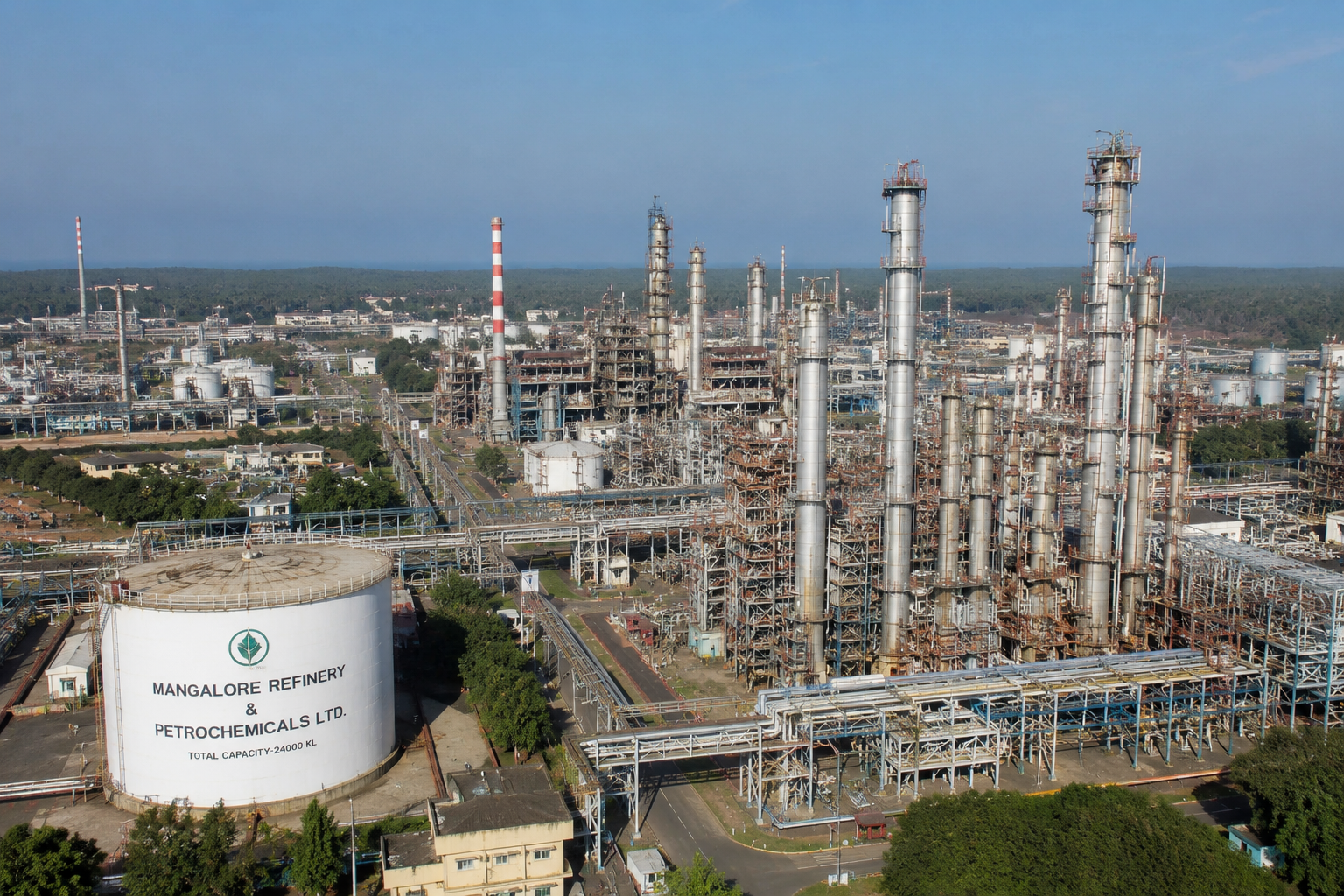
One of India’s largest state-owned refiners, Mangalore Refinery & Petrochemicals Ltd. (MRPL), is taking a step that would have seemed extraordinary only a few months ago. The company is seeking crude oil suppliers capable of delivering cargoes without relying on two of the world’s most vulnerable maritime corridors: the Strait of Hormuz and the Red Sea.
This is more than a change in the terms of a single oil tender.
It is a sign that one of the world’s largest crude importers is preparing for a new geography of global energy trade.
Supply Security Is Beginning to Outweigh Price
Under the terms of MRPL’s latest international tender, the company plans to purchase as much as one million barrels of crude oil for delivery to the port of New Mangalore on India’s southwestern coast by early September.
The tender allows suppliers to offer nearly 300 different crude grades, including several Middle Eastern varieties. But the most important requirement is no longer simply the origin or price of the oil.
The central question is whether the seller can guarantee delivery without exposing the cargo to disruption in the Strait of Hormuz or security threats in the Red Sea.
In other words, transportation costs are no longer the only decisive factor. Route reliability is moving to the top of the list.
India Is Reducing Its Dependence on a Single Region
India is the world’s third-largest crude oil importer, and its refining industry depends heavily on the uninterrupted movement of tankers across international waters.
Any disruption to maritime traffic can quickly affect crude prices, delivery schedules and refinery utilization rates.
That is why Indian refiners are accelerating efforts to diversify their sources of supply.
For years, the industry relied heavily on producers in the Middle East. Today, greater attention is being directed toward crude from Russia, Africa, the Atlantic Basin and other regions capable of providing more predictable logistics.
This is no longer merely a temporary adjustment to procurement.
It is becoming a new model for managing geopolitical and transportation risk.
Even the Red Sea Is No Longer a Reliable Alternative
As tensions surrounding the Strait of Hormuz increased, many energy traders viewed the Red Sea as a natural alternative route.
That calculation has changed following repeated attacks on commercial vessels near Yemen.
Both major transportation corridors are now facing serious uncertainty at the same time.
For oil traders and tanker operators, this means higher insurance premiums, more expensive freight rates, possible naval security requirements and a constant risk of delay.
Refiners are therefore beginning to search in advance for suppliers that can eliminate these routes from the transportation chain altogether.
New Contract Terms Reflect a New Reality
The contractual provisions included in the MRPL tender are particularly significant.
The Indian refiner has introduced stricter obligations for sellers.
If a cargo is declared subject to force majeure after the contract has been awarded, the seller will not be permitted to change the agreed loading schedule without MRPL’s approval.
The supplier would also be responsible for demurrage and other expenses resulting from delays at the loading port.
In practical terms, the buyer is shifting a substantial portion of the geopolitical and logistical risk back to the seller.
Only a year ago, conditions like these might have appeared unusually demanding.
Today, they are beginning to resemble the new standard of international energy trade.
The Restructuring Has Already Begun
The changes are not limited to tender documents.
India’s state-owned refiners have already suspended or reduced some crude shipments from Iraq and are increasingly replacing Middle Eastern supplies with oil from Russia and the Atlantic Basin.
The industry is also considering an unprecedented plan to transport Saudi crude along a significantly longer and more expensive route, potentially involving passage through the Suez Canal and a diversion around the Cape of Good Hope.
Such a journey would increase sailing time, fuel consumption and freight costs.
But under current conditions, the longer route may still be considered more reliable than sending tankers through waters exposed to military confrontation or attacks on commercial shipping.
Maritime Security Is Becoming Part of Energy Policy
India’s government has also signaled that it is taking the risks seriously.
The country’s shipping ministry has advised Indian vessels, as well as foreign-owned ships carrying Indian seafarers, to exercise the highest degree of caution while transiting waters near Yemen.
Warnings of this kind are rarely issued without substantial concern.
For the global logistics industry, the message is clear: maritime security is no longer only a matter for shipping companies and vessel operators. It is becoming a central element of national energy strategy for the world’s largest economies.
That is why MRPL’s latest tender carries significance far beyond the purchase of a single cargo of crude oil.
It demonstrates how quickly geopolitical conflict can redraw global trade routes, redirect tanker flows and force major energy buyers to rewrite the rules before a regional crisis develops into a broader global supply shock.