

There are moments in global trade when a geopolitical event thousands of miles away is felt almost immediately in ports, warehouses, and supply chains around the world.
That is what is happening again.
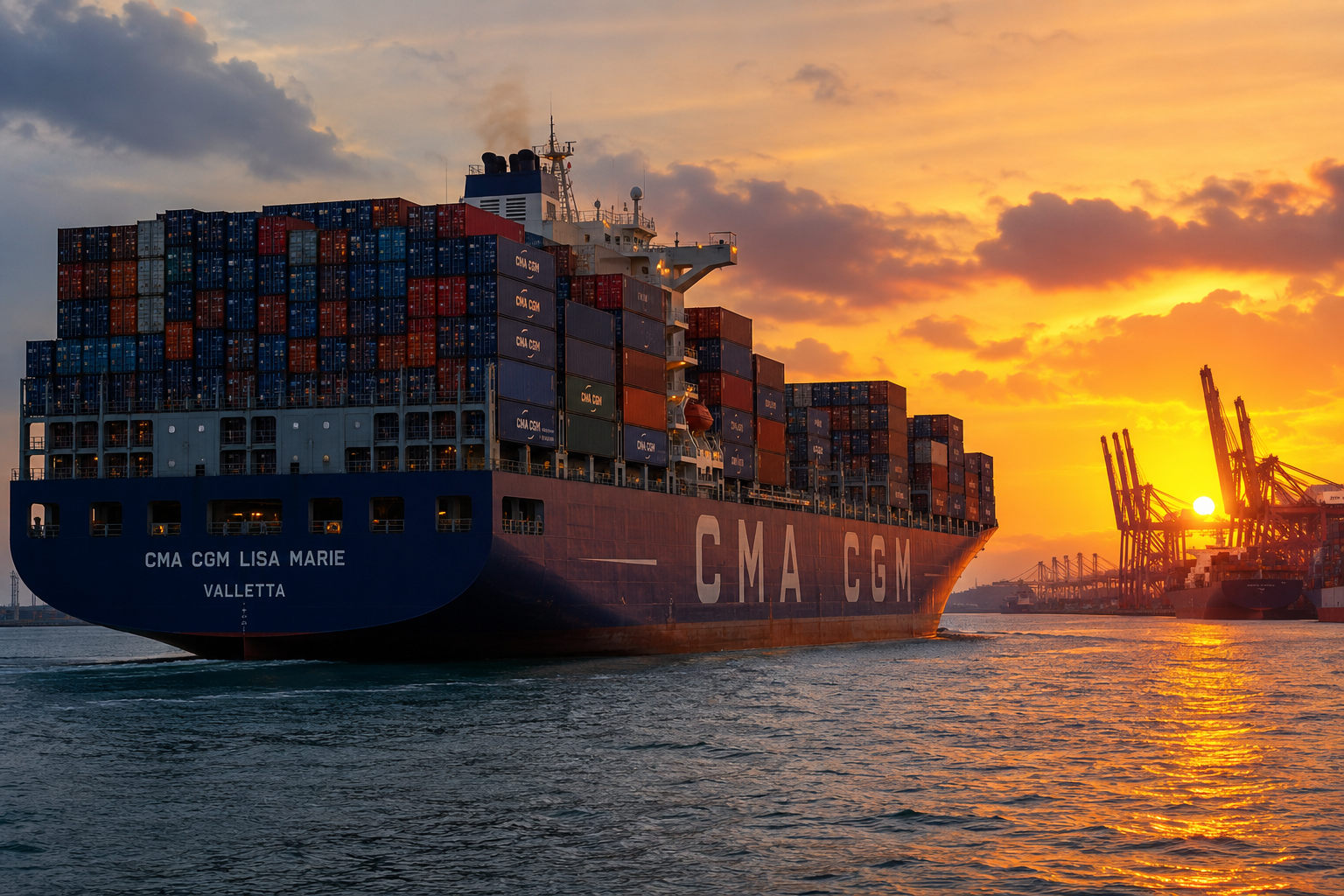
French shipping giant CMA CGM, one of the world’s largest container carriers, announced that it will introduce an Emergency Fuel Surcharge beginning August 1, citing a sharp increase in bunker fuel prices following renewed tensions around the Strait of Hormuz.
The announcement is another reminder that the cost of moving goods across oceans remains closely tied to geopolitical stability.
Fuel Costs Rise as Regional Risks Return
According to the company, the latest escalation in the Middle East has pushed bunker fuel prices higher, reversing the relief shipping lines had seen only weeks earlier.
Fuel remains one of the largest operating expenses in ocean transportation. When prices rise sharply, carriers often pass part of that increase on to customers through temporary surcharges.
Depending on the trade lane and container type, the new CMA CGM surcharge will range from $65 to $165 per container, affecting both dry and refrigerated cargo.
The measure will apply to cargo loaded from August 1, subject to local regulatory approvals where required.
Supply Chains Face New Cost Pressure
For shippers, the surcharge represents more than another line on a freight invoice.
Higher fuel charges move through the entire supply chain, raising transportation costs for importers, exporters, manufacturers, retailers, freight forwarders, and logistics providers.
More expensive ocean freight can lead to higher inventory replenishment costs, tighter logistics budgets, and renewed pressure during contract negotiations.
For beneficial cargo owners and freight forwarders, every additional surcharge makes cost forecasting more difficult at a time when many companies had expected greater stability in container rates.
The Shipping Industry Is Watching Closely
CMA CGM is among the first major carriers to respond directly to the latest increase in bunker prices, but the wider container shipping industry will now be watching whether competitors introduce similar measures.
In previous periods of sustained fuel inflation, emergency surcharges announced by one major shipping line were often followed by comparable actions from other carriers.
If tensions around the Strait of Hormuz continue to affect energy markets, additional shipping companies may raise charges in the coming weeks.
That could place further pressure on freight costs across major east-west trade routes and increase the price of moving goods between Asia, Europe, the Middle East, and North America.
Why It Matters
Walter Cronkite often measured major events not only by what happened that day, but by what they revealed about what might come next.
CMA CGM’s announcement is not simply about fuel.
It shows how quickly a geopolitical flashpoint can move through the global economy—raising energy prices, increasing transportation costs, reshaping freight budgets, and ultimately affecting businesses and consumers far beyond the Middle East.
For the logistics industry, this is another sign that global supply chains remain deeply exposed to geopolitical risk.
And for international trade, the message is clear: when uncertainty returns to one of the world’s most important maritime corridors, the cost of moving cargo rarely remains unchanged for long.