

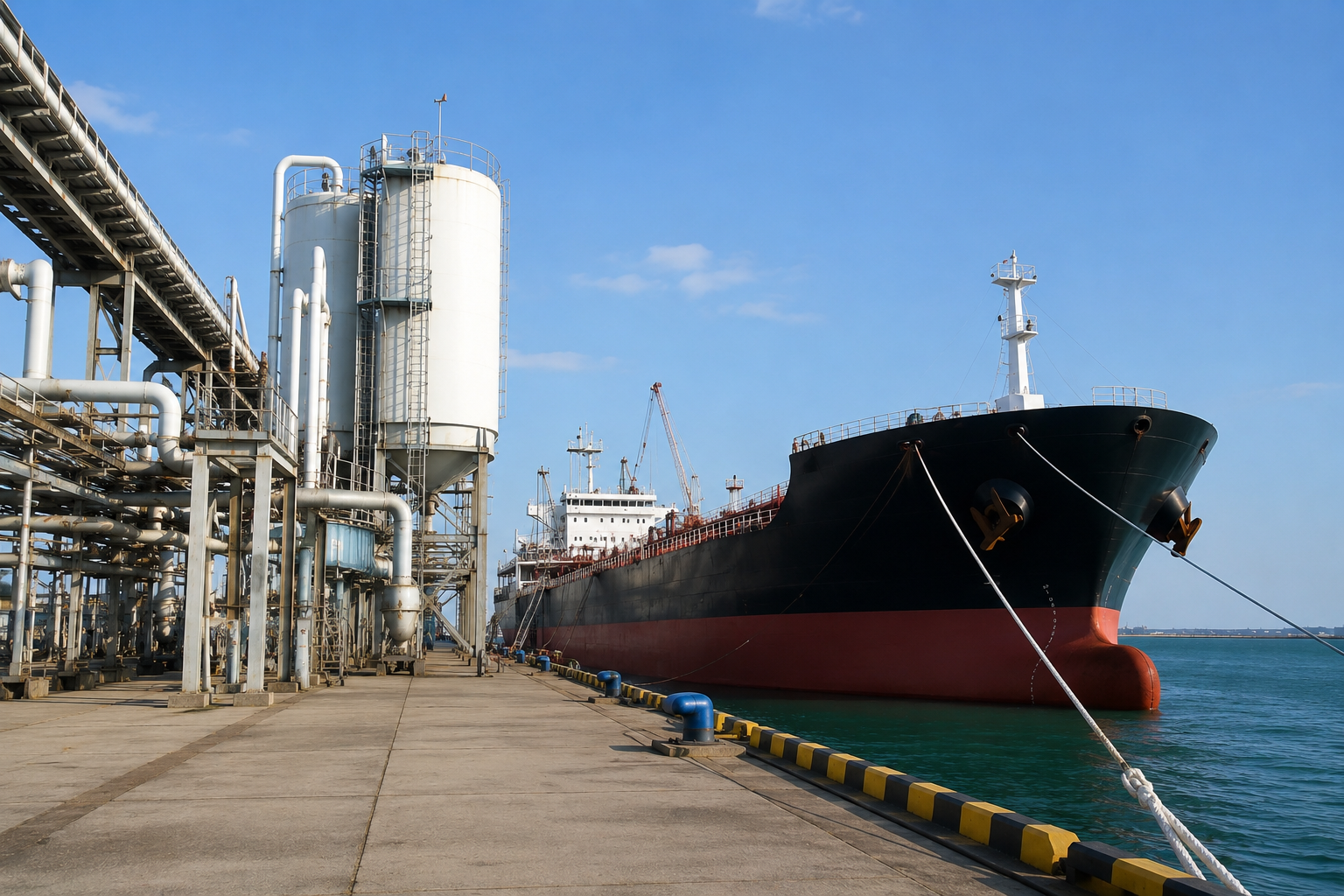
First Rapeseed Oil Cargo Departed on April 4
Kazakhstan has exported rapeseed oil through the Port of Aktau for the first time.
The inaugural 5,000-tonne cargo was dispatched to Iran on April 4, 2026, with the vessel taking approximately two and a half days to load.
Iranian company Kourosh Food Industry purchased the oil, while the exporter was one of Kazakhstan’s leading oilseed processing plants and a member of the National Association of Oilseed Processors. The shipment marked the first direct transfer of Kazakh vegetable oil onto a seagoing vessel at Aktau.
The route gives Kazakh producers direct access to Iran across the Caspian Sea. Previously, most oilseed products shipped to Iran were transported overland and largely consisted of meal rather than finished vegetable oil.
A Second Vessel Confirmed Commercial Demand
The first shipment was followed by another cargo only several weeks later.
On May 13, Aktau completed the loading of a second vessel carrying 5,000 tonnes of sunflower oil.
The new route therefore handled 10,000 tonnes of vegetable oil within roughly six weeks, indicating that the operation was more than a one-off trial.
According to industry estimates, Aktau could potentially load three or four vessels per month. At approximately 5,000 tonnes per shipment, annual throughput could reach 150,000–200,000 tonnes of vegetable oil.
Sunflower Oil Exports Rose by Almost 50%
The opening of the Caspian route comes as Kazakhstan rapidly increases vegetable-oil production and exports.
Domestic plants produced 335,500 tonnes of refined and unrefined sunflower oil in January–April 2026, an increase of 13.2% compared with the same period of 2025.
Exports rose by 49.6%, from 236,400 tonnes to 353,800 tonnes. Uzbekistan received 153,200 tonnes, China 127,200 tonnes, Afghanistan 38,600 tonnes and Tajikistan 27,000 tonnes. Shipments to Iran reached 4,900 tonnes.
The figures show that Kazakhstan’s processing sector already has sufficient output to support new logistics channels. The challenge is now to distribute growing volumes across China, Central Asia, Europe, Afghanistan and Iran.
Iran Offers Significant Market Potential
Iran imports approximately 3.5 million tonnes of vegetable oils, meals and oilcakes annually. Around 1.5 million tonnes consists of vegetable oil.
Over the previous three years, Kazakh processors exported more than 100,000 tonnes of oilseed products to Iran, but approximately 94% of those shipments consisted of meal.
Direct bulk shipments via Aktau could change this structure by allowing Kazakhstan to supply more finished products with higher added value.
The industry estimates that exports of Kazakh vegetable oil and meal to Iran could eventually exceed 500,000 tonnes per year, although actual growth will depend on freight availability, port capacity, tariffs and demand.
Free Trade Agreement Reduces Barriers
The route also benefits from the full free trade agreement between the Eurasian Economic Union and Iran, which entered into force on May 15, 2025.
The agreement replaced an interim framework and provides preferential access covering approximately 90% of the product range. The average Iranian import tariff on goods from EAEU countries is expected to fall from 20% to 4.5%.
This gives Kazakh suppliers a potential price advantage over exporters without comparable trade preferences.
The countries’ shared Caspian connection also offers a relatively direct logistics chain: oil can be transported by rail to Aktau and then shipped to northern Iranian ports.
Caspian Vessel Capacity Remains a Constraint
The Caspian route still faces infrastructure limitations.
Most available vessels are relatively small river-sea ships, while the declining water level of the Caspian Sea restricts draught and actual cargo capacity.
Market participants estimate that vessels with a nominal capacity of around 6,000 tonnes may be limited to loads of approximately 5,200–5,300 tonnes at Aktau.
This is sufficient for the initial vegetable-oil cargoes, but rapid expansion will require more suitable vessels, efficient turnaround times and adequate receiving capacity at Iranian ports.
Aktau Is Becoming a More Diverse Export Hub
Aktau operates year-round on the eastern coast of the Caspian Sea and handles oil, petroleum products, grain, metals, ferry cargo and other commodities.
The port reports annual handling capacity of approximately 11.8 million tonnes and operates 24 hours a day.
Oil has traditionally dominated its liquid-bulk operations. The first direct handling of edible vegetable oil demonstrates that the port can support a broader range of Kazakh exports.
For the agricultural sector, this creates an alternative to congested rail corridors and improves access to Iran and the wider Middle East.
Kazakhstan Raises Its Export Revenue Target
Kazakhstan’s oilseed processing sector has increased annual export revenue fourfold in four years, reaching $963 million.
At the FOC 2026 industry conference, the government announced a new target of more than $1.5 billion by 2028, representing a further increase of around 60%. Kazakhstan aims to consolidate its position among the world’s four largest sunflower-oil exporters and eventually enter the top three.
In 2025, Kazakhstan ranked sixth globally in sunflower-oil exports and second among suppliers to China. Its oilseed products are now sold in more than 20 countries.
The Aktau route is a practical part of this strategy. Further expansion will require a diversified network connecting Kazakhstan with China, Central Asia, Europe, Afghanistan and Iran.
Kazakhstan Expands Its Logistics Presence in Iran
The Caspian service complements Kazakhstan’s broader logistics plans in Iran.
In July, Kazakhstan signed an agreement to develop a transport and logistics terminal at Shahid Rajaee Port near Bandar Abbas. The project is intended to provide access to the Persian Gulf and markets in South Asia, East Africa and the Middle East.
Cargoes shipped across the Caspian could eventually become part of longer multimodal routes through Iran and its southern ports.
The first vegetable-oil shipments from Aktau therefore represent more than a new export operation. They mark an early stage in Kazakhstan’s effort to build a stable southern logistics system linking domestic railways, Caspian shipping and Iranian port infrastructure.
Read also: Kazakhstan to Build a Logistics Terminal in Iran
