

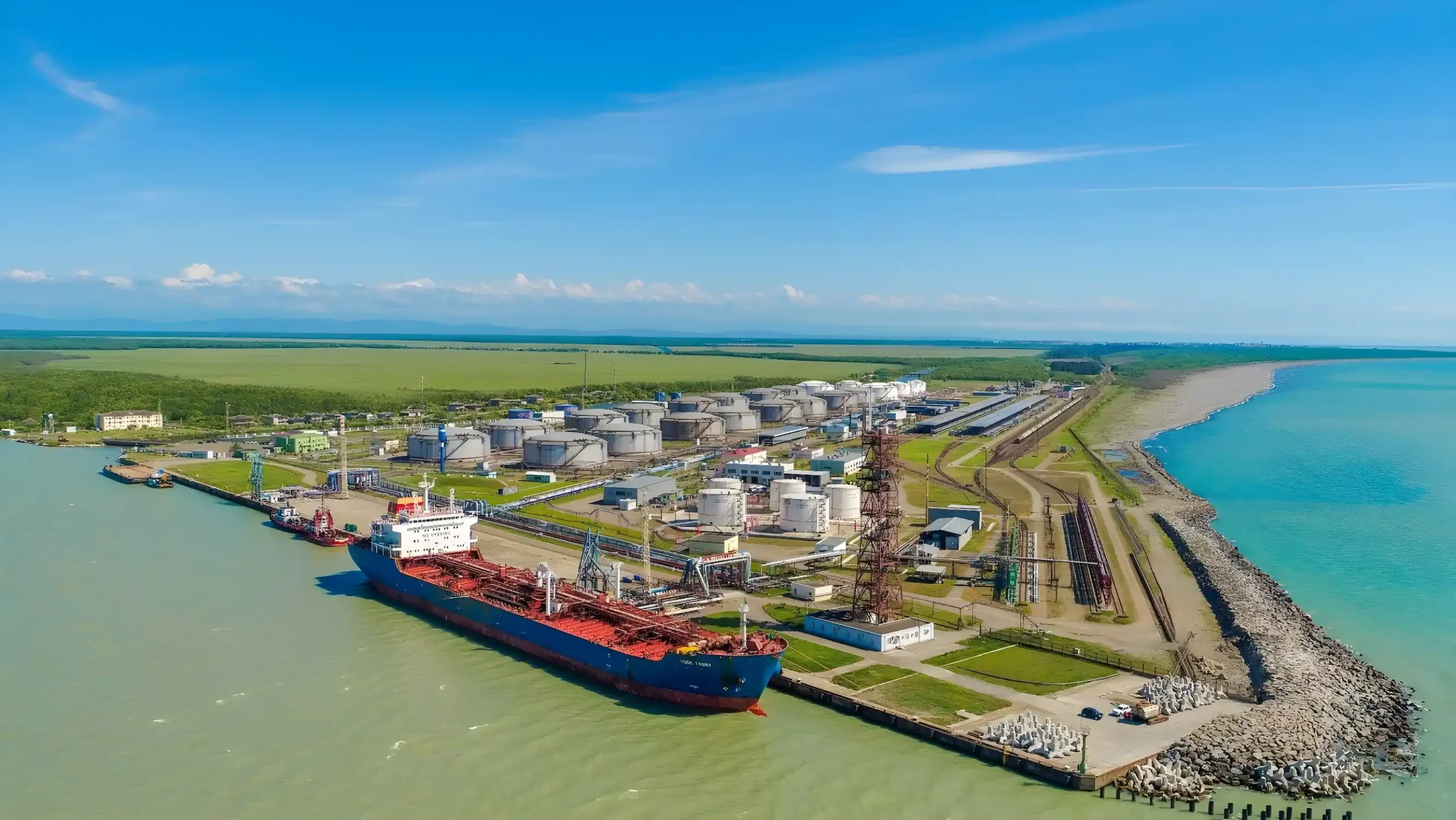
The July shipment became Georgia’s first recorded import of Kazakh crude oil and introduced an additional supply source for the country’s refining industry
First Shipment Appears in July Trade Data
Georgia imported 5,500 tonnes of crude oil from Kazakhstan in July 2026, with a declared value of approximately $3.2 million. It was the first shipment recorded under Kazakhstan in Georgia’s foreign trade statistics for the relevant crude oil category.
The figures were published by the National Statistics Office of Georgia, commonly known as Geostat.
No previous imports of Kazakh crude appear in the available Georgian trade data. However, Kazakh oil has crossed Georgian territory before as transit cargo, including through the Baku–Tbilisi–Ceyhan pipeline.
The significance of the July transaction is therefore not that Kazakh oil entered Georgia’s transport system for the first time. It is the first recorded case in which the crude was imported into Georgia rather than transported through the country toward Türkiye or other markets.
Average Customs Value Reached $582 per Tonne
Based on the Geostat figures, the average declared value of the Kazakh shipment was approximately $582 per tonne. The figure is calculated by dividing the cargo’s total value by its physical volume.
For comparison, Georgia imported 87,400 tonnes of Russian crude oil worth around $36.4 million in July. That produced an average statistical value of approximately $416 per tonne.
The declared unit value of Kazakh crude was consequently about $166, or nearly 40%, higher than the Russian figure. This should not automatically be treated as a direct comparison of market prices.
Customs unit values can be affected by crude grade, quality, shipment size, transport distance, insurance, delivery terms and contract timing. The difference does not necessarily mean that Kazakhstan consistently sells crude to Georgia at a 40% premium.
Initial Volume Remains Small
The first Kazakh cargo was almost 16 times smaller than Georgia’s Russian crude imports in July.
Between January and July 2026, Georgia imported approximately 569,000 tonnes of Russian crude worth about $238.5 million. Against this background, the 5,500-tonne Kazakh shipment appears to be an initial diversification cargo rather than a major change in the structure of Georgian imports.
Its longer-term importance will depend on whether shipments become regular. Geostat confirms that the trade operation took place but does not disclose the supplier, carrier, contractual terms or schedule for any subsequent cargoes.
Shipment Supports Refinery Diversification
Georgia’s rising crude imports are connected to the operation of the Kulevi refinery on the country’s Black Sea coast. The facility began production in 2025 and requires regular feedstock deliveries.
In July 2026, the Council of the EU included the Georgian refinery processing Russian crude in Kulevi in its 21st sanctions package against Russia. A transaction ban is scheduled to enter into force after six months.
The arrival of Kazakh crude therefore carries additional strategic importance. Alternative feedstock could help the refinery reduce its dependence on Russian supplies and maintain capacity utilisation.
One small shipment does not demonstrate that diversification has been completed. Replacing Russian volumes would require regular cargoes, reliable logistics and commercially competitive supply terms.
Exact Transport Route Has Not Been Disclosed
Kazakhstan has no direct access to the Black Sea, meaning that crude deliveries to Georgia require a Trans-Caspian, rail or pipeline connection through Azerbaijan.
A potential route could involve shipping crude from Aktau to Baku before moving it onward toward Georgia. However, Geostat does not identify the port of departure, vessel, railway route or pipeline infrastructure used for the July cargo.
It is therefore not possible to confirm the exact logistics chain from the published statistics. The data establish the cargo’s origin, volume and declared value, but not every stage of transportation.
Shipment Strengthens the Energy Role of the Middle Corridor
For Kazakhstan, the transaction creates another potential outlet for crude in the South Caucasus and Black Sea region. Although the volume is limited, it demonstrates that Trans-Caspian infrastructure can support direct supplies to Georgia as well as transit toward Türkiye and Europe.
For Georgia, the shipment expands the pool of possible crude suppliers and reinforces the country’s position as an energy and logistics link between the Caspian and Black seas.
The decisive indicator will be whether additional cargoes follow. Regular deliveries would signal the emergence of a sustainable oil supply route between Kazakhstan and Georgia.
Read also: Expert Opinion: Why Kazakhstan and Georgia Are Becoming Key Hubs of Eurasia’s New Logistics Network