

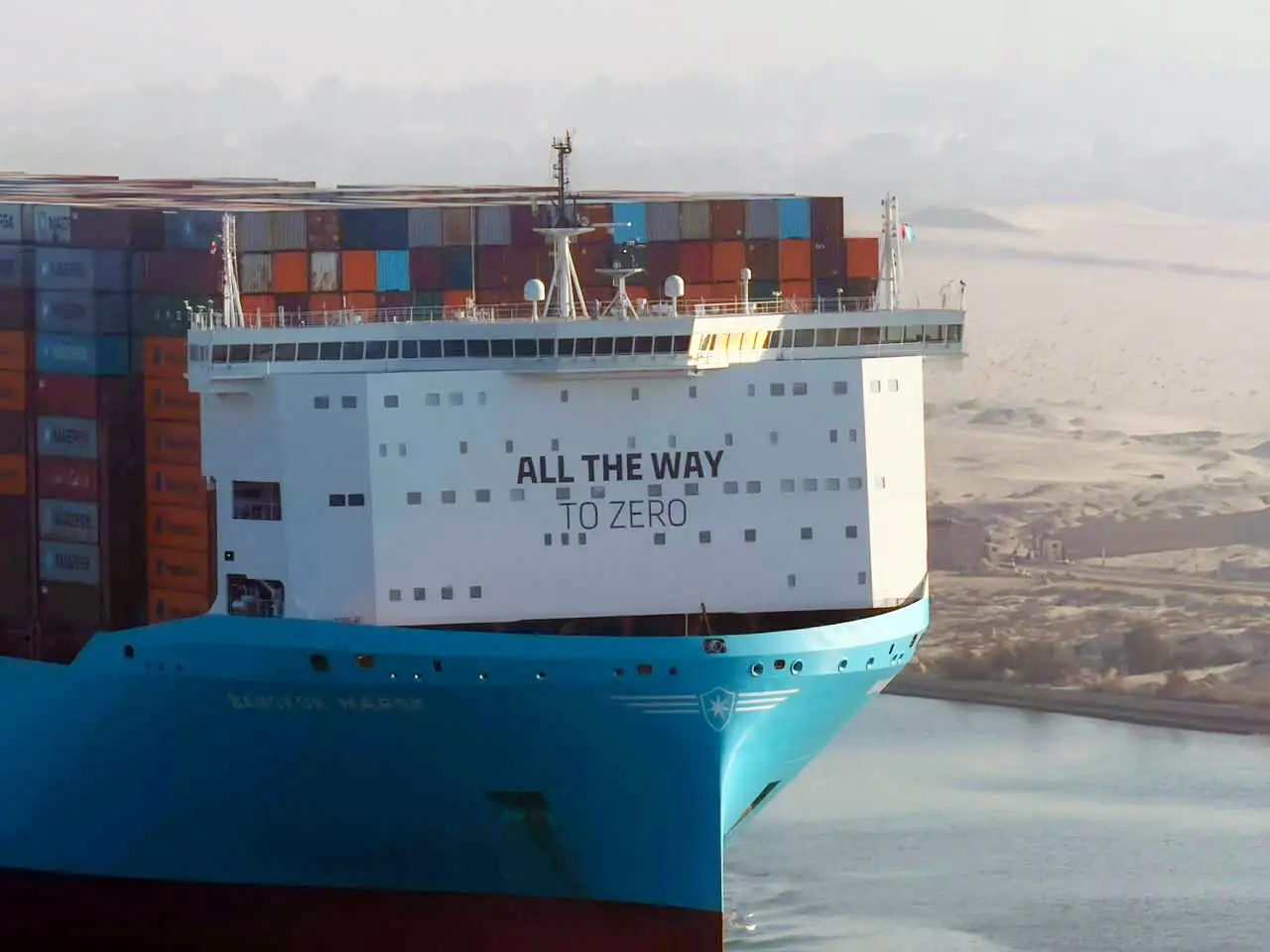
Major carriers are gradually shifting ships away from the Cape of Good Hope route as the seven-day total of container vessel transits through the Suez Canal reaches 50
MSC Partially Restores Red Sea Services
MSC, the world’s largest container shipping company, has begun gradually restoring services through the Red Sea and Suez Canal after nearly three years of widespread diversions around Africa.
According to an official MSC operational announcement, the decision followed a comprehensive review of regional security and operating conditions. The change applies to westbound and eastbound voyages but currently covers only a limited part of the carrier’s network.
Four services are returning to the Suez route:
- Jade between Asia and the Mediterranean;
- Albatros between Asia and Northern Europe;
- Himalaya between India and the Mediterranean;
- Tiger between Asia and the Mediterranean.
The first scheduled vessels include MSC Michel Cappellini, MSC Josefina, MSC Beryl, MSC Anna and MSC Tina. The transition will be implemented service by service, while booking confirmations and online schedules will be updated progressively.
“The protection of our seafarers, vessels and customers’ cargo remains our overriding priority,” MSC said.
Contingency arrangements remain in place, allowing individual ships to return to the route around Africa if regional conditions deteriorate.
MSC’s Decision Could Shift the Market
MSC’s return is particularly significant because of the scale of its fleet. K2Cargo.News previously reported that the carrier controls more than one-fifth of global container capacity.
Even a partial routing change can therefore release a substantial amount of vessel capacity. Services sailing around the Cape of Good Hope require additional ships to maintain weekly departures because each round voyage takes longer.
Transiting through Suez shortens the rotation. Vessels released from these loops can be assigned to other trades, used for additional sailings or become temporarily surplus to requirements.
A rapid increase in available capacity could strengthen competition between carriers and place downward pressure on freight rates.
Maersk and Hapag-Lloyd Expand Suez Use
MSC is not the first major carrier to begin returning ships to the Red Sea corridor. CMA CGM maintained some transits during the crisis, while Maersk and Hapag-Lloyd have been moving selected Gemini Cooperation services away from the Cape route.
The partners restored the AE15 service through Suez in July. The AE19 service connecting Asia, the Mediterranean and Northern Europe followed in August.
In its AE19 routing announcement, Maersk described the Suez Canal and Red Sea corridor as the fastest and most efficient route for transport between Asia and Europe.
The return remains gradual. A significant share of Maersk and Hapag-Lloyd vessels continues to sail around the Cape of Good Hope, while further changes will depend on sustained security around the Bab el-Mandeb Strait.
Seven-Day Suez Total Reaches 50 Container Ships
Container traffic through the Suez Canal is already showing signs of recovery. Bloomberg estimates indicate that the combined number of northbound and southbound container ship transits over the seven days ending August 25 reached 50, the highest weekly level recorded in 2026.
The figure does not mean that 50 vessels passed through the canal in a single day. It represents the cumulative result for seven days and remains significantly below traffic levels recorded before widespread diversions began in late 2023.
The increase nevertheless indicates that recovery is moving beyond isolated test voyages and into regularly scheduled services.
Maritime analyst Lars Jensen believes that, if the current pace continues, normalization of Red Sea container shipping by the end of 2026 is becoming a realistic possibility. Some services may still remain on the Africa route as carriers attempt to manage the capacity released by shorter voyages.
Southern Africa Could Lose Diversion Traffic
The widespread use of the Cape of Good Hope route increased shipping activity along Africa’s eastern and western coasts. Vessels made greater use of African ports for bunkering, supplies, technical services and crew changes.
A return to Suez could reduce demand for these services in South Africa and other countries located along the diversion route. Lower transit volumes may simultaneously ease pressure on anchorages, ports and bunkering infrastructure.
The effect on cargo moving directly to Africa will vary. East and North African trades may benefit from shorter connections with Asian and European services. Southern African ports, by contrast, could lose some of the temporary traffic generated by the Red Sea crisis.
Shorter Voyages Could Reduce Freight Rates
Routing around Africa typically adds approximately 10–14 days to an Asia–Europe voyage, depending on the ports, speed and service schedule. It also increases fuel consumption, crew costs, charter expenses and the number of ships required to maintain departures.
These additional costs have contributed to higher freight prices. K2Cargo.News previously reported that container rates from China had risen sharply amid the Red Sea crisis, restricted capacity and geopolitical instability.
Returning to Suez removes part of the cost directly associated with the Africa detour. Freight rates may not fall immediately, however. Seasonal demand, bunker prices, insurance premiums, port congestion and carrier capacity management will continue to influence the market.
Shippers must also check whether an individual booking is assigned to a service that has already moved back to Suez. The same carrier may operate both routes across different services.
European and Asian Ports Face Schedule Changes
Shorter voyages could temporarily disrupt established arrival patterns. Container ships transferred from the Africa route to Suez will reach European ports earlier than under their previous schedules.
If several carriers change routes simultaneously, terminals may face concentrated vessel arrivals, berth shortages, container accumulation and additional pressure on rail and road connections.
This is one reason carriers are making the transition gradually. They must coordinate not only vessel movements but also terminal capacity, container equipment, feeder schedules and inland transport.
Once the transition is complete, shorter routes should improve the predictability of deliveries between Asia and Europe. During the initial phase, however, some shipments may experience changes to their planned departure and arrival dates.
Security Remains the Main Condition
The return of MSC, Maersk and Hapag-Lloyd does not mean the Red Sea has been declared completely safe. Carriers continue to coordinate with authorities and naval forces, assess threats and preserve the ability to change routes at short notice.
Voyage decisions may depend on a vessel’s connections to particular countries or companies, cargo type, insurance coverage, available protection and current conditions off Yemen.
A single major incident involving a large container ship could interrupt the recovery and send vessels back around Africa. The Suez return should therefore be viewed as a controlled and reversible expansion rather than the definitive end of the crisis.
If security conditions remain stable, the global container market could move closer to its traditional routing pattern by the end of the year. This would reduce Asia–Europe transit times, release vessel capacity and increase pressure on freight rates, while diminishing the temporary importance of the route around Africa.
Read also: Cargo Ship Attacked in Red Sea off Yemen