

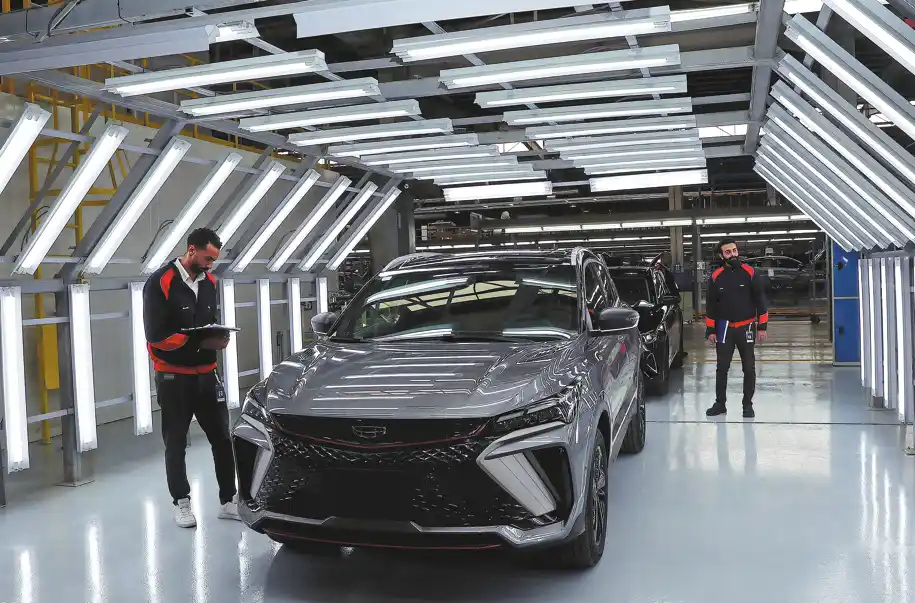
Not long ago, Egypt’s automotive market was struggling with severe vehicle shortages and rapidly rising prices. The situation is now changing as Chinese manufacturers increase both vehicle supplies and local production in Egypt.
Egypt’s automotive market is gradually emerging from a period of shortages and high prices. Chinese brands are becoming one of the key drivers of this transformation, increasing sales while also expanding local manufacturing operations in the country.
According to the Egyptian Association of Automobile Dealers, sales of passenger vehicles from Chinese brands exceeded 30,000 units in 2024, increasing by 37% year on year. In July 2025, Soueast Motor, Chery and Dongfeng Motor introduced 18 new models in Egypt, most priced below 1.5 million Egyptian pounds.
According to China Daily, the popularity of Chinese cars in Egypt is driven by more than competitive pricing. Egyptian dealers highlight build quality, modern technologies and improvements in after-sales service. The market also has significant growth potential: Egypt’s population exceeds 100 million, while car ownership remains relatively low.
At the same time, Chinese companies are increasingly focusing on local assembly. Five new vehicle assembly plants opened in Egypt during the first seven months of 2025. In 2024, sales of vehicles supplied in CKD, or completely knocked-down, kits for local assembly increased by 31.7%.
Localization allows manufacturers to significantly reduce costs. While fully assembled vehicles face import duties of 40–135%, CKD kits are subject to considerably lower rates. According to industry representatives, local assembly can reduce the customs burden by more than 30%.
For Egypt, this means greater vehicle availability and further development of its domestic automotive industry. For Chinese brands, it offers an opportunity to establish a stronger presence in a promising market not only as exporters, but also as local manufacturers.
Against the backdrop of strengthening economic ties between Beijing and Cairo, the automotive industry is becoming another important area of bilateral cooperation.
Read also: Icelanders vote against reopening EU membership talks