

After several years of one of the longest freight downturns in recent history, North America’s less-than-truckload (LTL) industry is entering a period of profound transformation. As freight demand begins a gradual recovery, the industry’s largest players are not waiting for the market to rebound—they are investing heavily in technology, expanding their networks, and preparing for a new era of competition.
That message dominated this year’s SMC3 Connections Conference, held this week in Florida, where approximately 400 executives representing LTL carriers, freight brokers, technology providers, and logistics companies gathered to discuss the future of freight transportation.
According to industry leaders, today’s combination of market volatility and rapid technological innovation is creating entirely new opportunities across the transportation sector.
“These are exciting times for everyone in this room,” said John Smith, President and CEO of FedEx Freight, as he addressed conference attendees during a discussion about the future of the LTL market.
FedEx Freight Begins a New Chapter
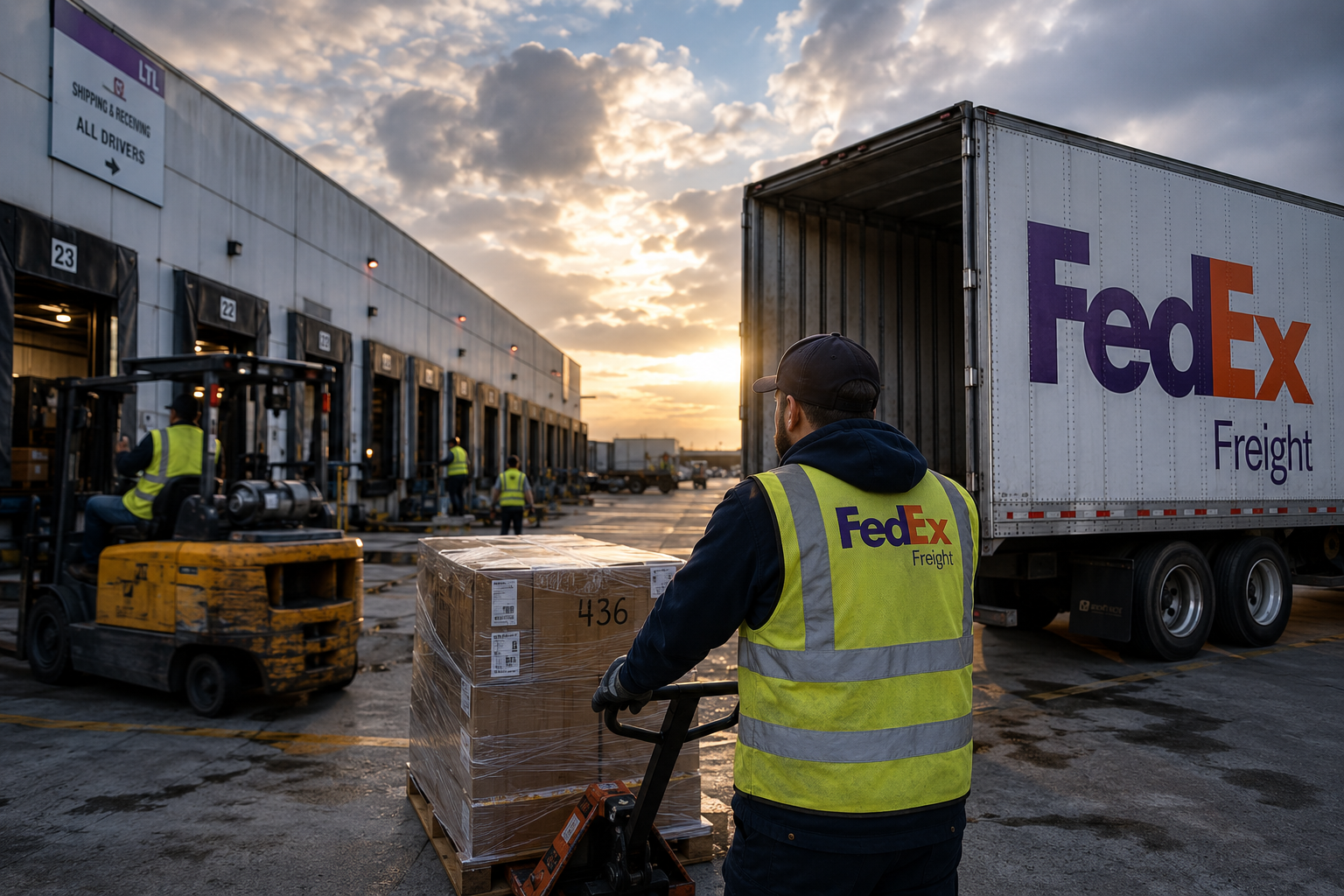
One of the conference’s central topics was the future of FedEx Freight following its official separation from FedEx Corp., which was completed on June 1.
The spin-off created an independent publicly traded company that is now the largest dedicated LTL carrier in North America.
According to Smith, preparing for the separation required nearly a year of planning and significant investment across virtually every part of the business.
The company has:
- Hired approximately 500 new LTL-focused sales professionals;
- Expanded its IT organization by nearly 900 employees;
- Invested heavily in digital capabilities and operational technology;
- Accelerated expansion into new customer segments.
FedEx Freight plans to aggressively pursue growth among small and medium-sized businesses (SMBs), healthcare companies, data center operators, and the food industry.
Today, the carrier operates approximately 26,000 freight dock doors, making it the largest dedicated LTL network in North America.
The Freight Downturn Is Reshaping the Industry
Industry executives agreed that the past several years have represented one of the most prolonged freight recessions in recent memory.
Rather than slowing innovation, however, the downturn has forced carriers to rethink their business models, invest in technology, and build more resilient operating networks.
Smith noted that the freight market is beginning to recover, although he expects the rebound to be gradual rather than rapid.
Amazon Freight Continues Expanding Beyond Its Own Network
Another major topic at the conference was the continued expansion of Amazon Freight.
What began as an internal transportation network supporting Amazon’s e-commerce operations is rapidly evolving into a full-service freight provider for the broader marketplace.
Earlier this month, Amazon announced that its LTL service now allows shippers to move freight not only to Amazon facilities but also to:
- third-party warehouses;
- distribution centers;
- retail partners;
- virtually any commercial destination.
According to Morgan Roberts, Supply Chain Executive at Amazon Freight, the company’s transportation strategy has evolved deliberately—from serving Amazon’s internal logistics needs, to supporting marketplace sellers, and now to offering freight services across the broader transportation market.
Amazon Supply Chain Services now operates a fleet of more than 80,000 trailers and 24,000 intermodal containers, making it one of North America’s largest logistics operators.
What This Means for Small and Mid-Sized LTL Carriers
For regional and mid-sized LTL carriers, the rapid expansion of industry giants presents both significant challenges and valuable opportunities.
The creation of an independent FedEx Freight introduces an even more focused competitor backed by major investments in technology, sales, and network expansion. At the same time, Amazon Freight is steadily transforming from an in-house transportation operation into a nationwide logistics provider serving virtually every type of shipper.
Competing directly with these companies on network size or pricing will become increasingly difficult. Instead, independent carriers should focus on the areas where they continue to have a competitive advantage—flexibility, responsiveness, and superior customer service.
1. Focus on Specialization Rather Than Scale
Instead of attempting to match nationwide LTL networks, regional carriers should concentrate on specialized freight markets such as healthcare, food distribution, construction materials, industrial equipment, or other cargo requiring customized handling.
Customers in these industries often value reliability, service quality, and responsiveness more than simply obtaining the lowest transportation rate.
2. Invest in Digital Capabilities
Today’s shippers expect far more than basic transportation services. Real-time shipment visibility, instant rate quotations, electronic documentation, API integration, and modern Transportation Management Systems (TMS) are rapidly becoming standard industry requirements.
Carriers that delay digital transformation risk losing customers—even if their pricing remains competitive.
3. Increase Freight Density Within Existing Markets
Rather than expanding geographically too quickly, many successful regional carriers are strengthening their position within existing service territories.
Higher freight density improves trailer utilization, reduces empty miles, lowers operating costs, and increases overall profitability.
4. Become a Strategic Partner Instead of a Direct Competitor
As national transportation networks continue expanding, demand is growing for reliable regional partners capable of providing local pickup and delivery services.
Partnering with large LTL carriers, third-party logistics providers (3PLs), and digital freight platforms can generate consistent freight volumes without the massive investment required to build a nationwide network.
5. Technology Is Becoming the Primary Competitive Advantage
FedEx Freight’s decision to add nearly 900 IT professionals illustrates the direction in which the industry is moving.
Competitive advantage is no longer determined solely by the number of trucks or terminals. Artificial intelligence, predictive pricing, automated dispatching, route optimization, and digital customer engagement are increasingly defining market leaders.
Regional carriers that begin adopting these technologies today will be significantly better positioned as freight volumes continue recovering.
A New Competitive Landscape
The North American LTL industry is entering a new phase. FedEx Freight is strengthening its position as an independent carrier, Amazon Freight is rapidly expanding beyond its own ecosystem, and technology is becoming the industry’s primary competitive differentiator.
For small and mid-sized carriers, success over the next several years will depend less on fleet size and more on the ability to adapt quickly, embrace digital transformation, specialize in profitable market segments, and build strategic partnerships.
The companies that begin making those changes today will be best positioned to emerge stronger when the freight market returns to sustained growth.
