

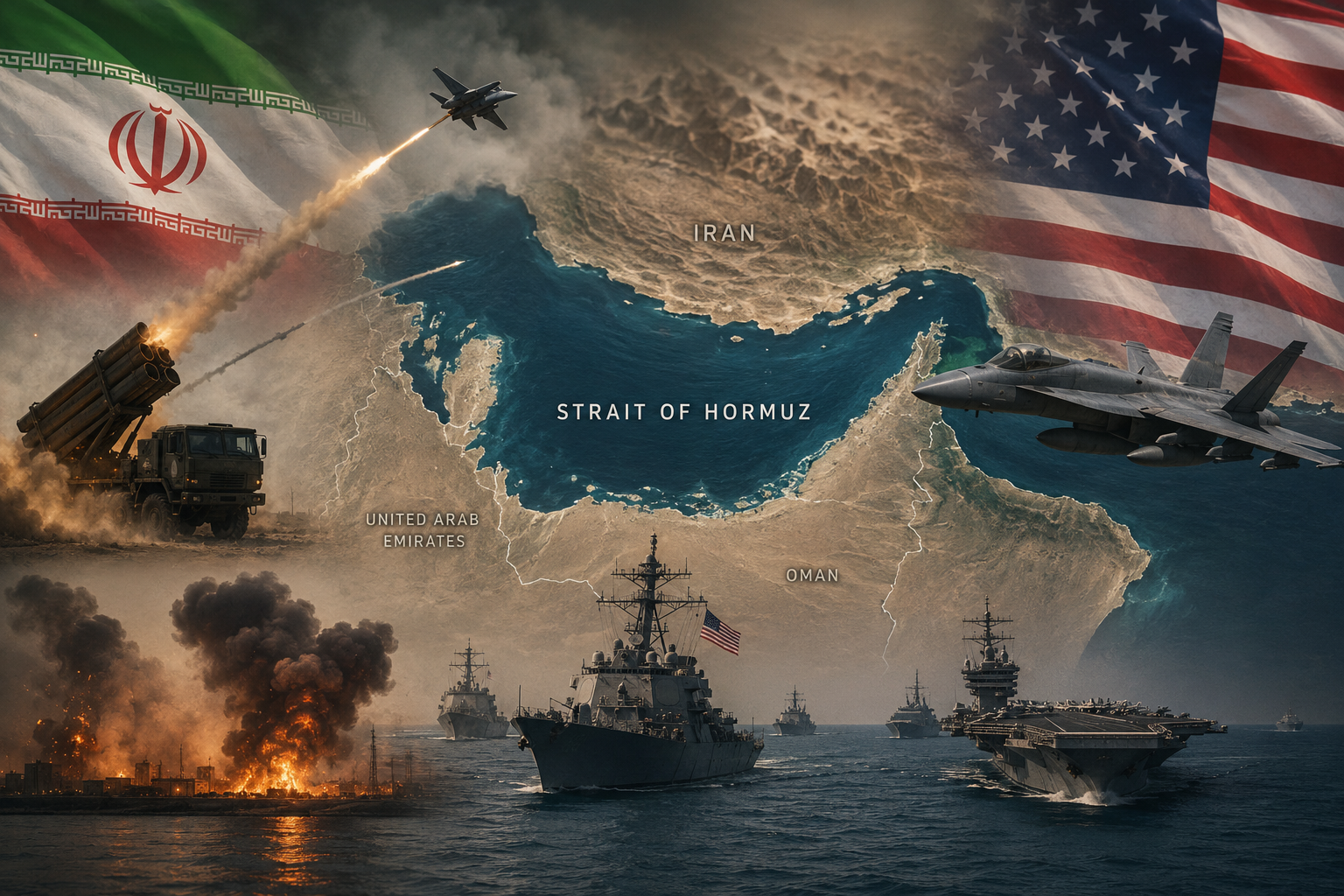
Following a brief period of relative calm, the Persian Gulf has once again become the center of military confrontation. A new exchange of strikes between Iran and the United States, coupled with increasingly confrontational rhetoric and rising tensions around the Strait of Hormuz—one of the world’s most strategically important oil shipping routes—has prompted regional governments to strengthen security measures.
Against this backdrop, Qatari authorities reported injuries caused by falling debris following air defense interception operations. Bahrain activated missile warning sirens, while the United Arab Emirates and Kuwait said their air defense systems had intercepted incoming missiles and drones.
Iran announced the closure of the Strait of Hormuz until what it described as an end to U.S. interference, while the U.S. Central Command reported carrying out extensive strikes against Iranian military infrastructure. In response, Tehran claimed to have launched attacks on U.S. military facilities across the region.
Meanwhile, Oman and Pakistan intensified diplomatic efforts, urging both sides to de-escalate the conflict and return to negotiations. Analysts warn that a further deterioration of the situation could affect not only the security of the Middle East, but also global energy supplies, international shipping and the world economy.
Read also: Container Shipping Faces Growing Risks as Global Network Vulnerabilities Increase
