

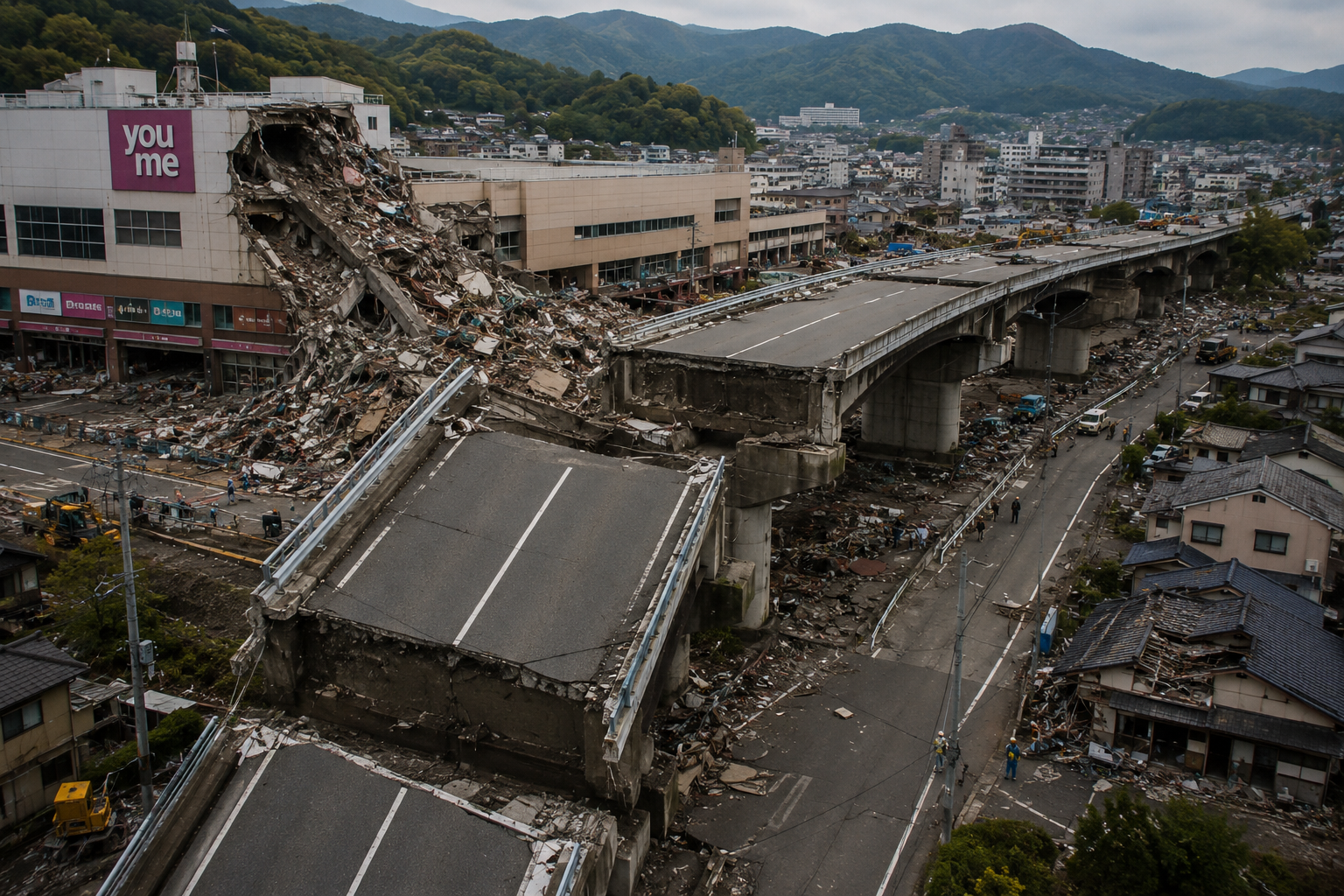
On July 28, 2026, a magnitude 7.1 earthquake struck southwestern Japan. The hardest-hit area was Kumamoto Prefecture on the island of Kyushu, where bridges, roads, and railway infrastructure were severely damaged, and a shopping mall partially collapsed. More than 11,000 buildings sustained damage, around 700 homes were destroyed, and over 46,000 households were left without running water.
Several days after the earthquake, emergency rescue efforts gradually shifted to large-scale recovery operations. According to official reports, the death toll has risen to 38, while more than 110 people were injured. Thousands of residents remain in temporary evacuation centers.
Rescue Operations Continue Under Extreme Conditions
One of the biggest challenges facing emergency responders is the extreme heat. Temperatures have exceeded 35°C (95°F), forcing many evacuees to remain in overcrowded shelters or sleep in their vehicles. Authorities have already confirmed at least one heat-related death following the evacuation. Meanwhile, the government has begun constructing temporary housing while rescue teams continue clearing debris and searching damaged areas.
Despite the extensive destruction, experts emphasize that the consequences could have been far worse. Japan is widely regarded as one of the world’s most earthquake-prepared countries, thanks to some of the strictest building standards, advanced earthquake early warning systems, the automatic shutdown of high-speed trains, and regular nationwide disaster preparedness drills. These measures helped prevent a significantly higher death toll, although even the world’s most advanced preparedness systems cannot completely eliminate the impact of a major earthquake.
Authorities are now focusing on restoring essential utilities, providing clean water and temporary accommodation for affected residents, and assessing the damage to industrial facilities and transportation infrastructure.
Read also: Powerful Earthquake in Japan Followed by Deadly Explosion at Shopping Mall