

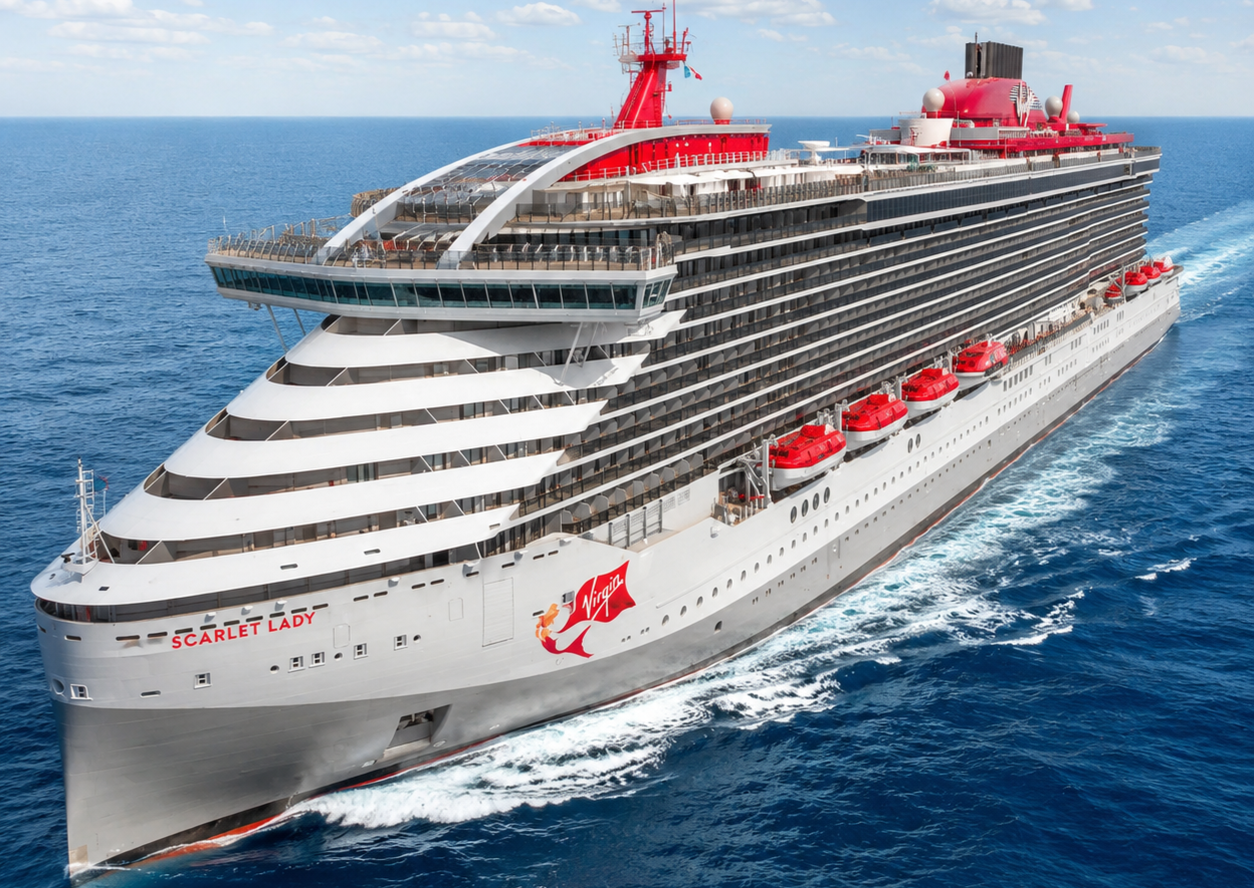
Turkey and Egypt have blocked a cruise ship carrying LGBTQ+ tourists from entering their ports, turning a Mediterranean holiday itinerary into an international controversy.
The Virgin Voyages ship Scarlet Lady was chartered by Atlantis Events, a U.S. company specialising in LGBTQ+ travel. The cruise, sailing from Athens to Venice, was originally scheduled to stop in Turkey, including Kuşadası and Istanbul. After Turkish authorities cancelled those calls, Atlantis changed the route and added Alexandria in Egypt. But Egyptian authorities also refused the ship entry as it approached the Mediterranean port.
According to Atlantis Events CEO Rich Campbell, the company had previously operated trips to both Turkey and Egypt without similar problems. He described the decision as deeply troubling for tourism, because it suggests that countries may choose which visitors to accept based on identity.
For the cruise industry, the case goes beyond one ship. It shows how port access can become a reputational, operational and legal risk when political or social issues affect passenger groups.
As K2Cargo News previously reported in Cargo Ship Attacked in Red Sea off Yemen, maritime routes are increasingly exposed not only to technical and commercial risks, but also to security and political pressures. The Scarlet Lady case shows that passenger shipping can face similar uncertainty.
Why Turkey Refused the Ship
Turkish authorities did not present the decision as a normal operational change.
A provincial statement from the Kuşadası area said the planned arrival had caused public concern and was considered inconsistent with local social structure and moral values. The wording turned the cruise into a political and cultural issue rather than a simple port-scheduling matter.
The decision affected both Kuşadası and Istanbul, forcing Atlantis to revise the itinerary shortly before passengers were due to arrive. The company had expected the Turkish calls to be part of the central programme, including tourism visits and nightlife.
The refusal is especially striking because Turkey remains a major tourism destination and depends heavily on international visitors. Blocking a cruise because of the identity of passengers sends a signal that may worry not only LGBTQ+ travellers, but also tour operators, cruise companies and international travel groups.
Egypt Gave No Clear Explanation
After Turkey’s refusal, Atlantis added Alexandria to the route.
That alternative also failed. Egyptian port authorities ordered the ship to turn around as it approached Alexandria. According to Campbell, no clear explanation was given to the vessel or the organiser.
This created another operational disruption. Passengers who expected to visit Egypt, including cultural sites and museums, lost that part of the trip. The ship was then rerouted to Crete and later planned an additional stop in Montenegro before returning to its original route toward Croatia and Venice.
For cruise operators, this is a serious problem. A cruise itinerary is sold months in advance, and each port call is tied to excursions, port fees, local suppliers, fuel planning and passenger expectations. When a destination suddenly refuses access, the ship must quickly find alternative ports, adjust schedules and manage customer frustration.
A Tourism Decision With Wider Consequences
The incident may create reputational costs for both Turkey and Egypt.
Tourism is not only about beaches, museums and hotels. It is also about trust. Large travel groups need confidence that approved itineraries will be honoured and that passengers will not be treated differently because of who they are.
Atlantis said it had secured prior permission for the Turkish calls. If operators cannot rely on such approvals, the commercial risk of planning group travel to a destination increases.
This matters for the cruise sector because ships bring concentrated spending to port cities. Passengers pay for excursions, restaurants, guides, transport and local services. When a ship is turned away, the destination also loses immediate economic activity.
The long-term effect may be bigger. Organisers of LGBTQ+ travel, conferences, cultural events and other group tourism may avoid destinations where they fear last-minute political decisions.
Human Rights Context
The port refusals did not happen in isolation.
Turkey has intensified pressure on LGBTQ+ communities in recent years. Pride marches in Istanbul have repeatedly been banned, and police have detained participants during attempted demonstrations. Human rights organisations have also warned about new anti-LGBTQ+ proposals and hostile political rhetoric.
Egypt also has a difficult record. Human Rights Watch has reported that Egyptian authorities use vague morality-related legal provisions to target LGBTQ+ people, even though the country does not have a law explicitly banning same-sex relations.
This background helps explain why the cruise refusal drew international attention. It was not viewed only as a tourism dispute, but as part of a broader pattern of pressure on LGBTQ+ communities.
Cruise Operators Face a New Risk
The Scarlet Lady case may force cruise companies and tour organisers to rethink risk assessment.
Traditionally, cruise itinerary risk focuses on weather, port congestion, safety, fuel, geopolitics and health restrictions. Now operators may also need to consider whether certain passenger groups could become politically controversial in a destination.
This creates a difficult question for the industry. If companies avoid destinations because of discriminatory treatment, they may protect passengers but reduce engagement with local communities. If they continue to include such ports, they may expose customers to sudden cancellations or hostility.
The strongest solution would be clear and non-discriminatory port access rules. A ship should be assessed on safety, port capacity, documentation and legal compliance — not on the identity or orientation of its passengers.
A Warning Signal for Travel and Shipping
The blocked cruise is likely to be remembered as more than a cancelled port call.
It shows how quickly a tourism itinerary can turn into a political statement, and how port authorities can affect not only shipping operations but also a country’s image as a destination.
For Turkey and Egypt, the immediate result may be the loss of future LGBTQ+ tourism and criticism from international travel markets. For cruise operators, the lesson is that passenger identity can now become an operational risk in some jurisdictions.
For the wider maritime sector, the case is another reminder that port access is never purely technical. Politics, public pressure, human rights and commercial planning increasingly intersect at the dock.
The Scarlet Lady continued its journey, but the signal to the tourism industry was clear: destinations that close ports to travellers because of who they are may also close themselves off from future business.
Read also: Cargo Ship Attacked in Red Sea off Yemen