

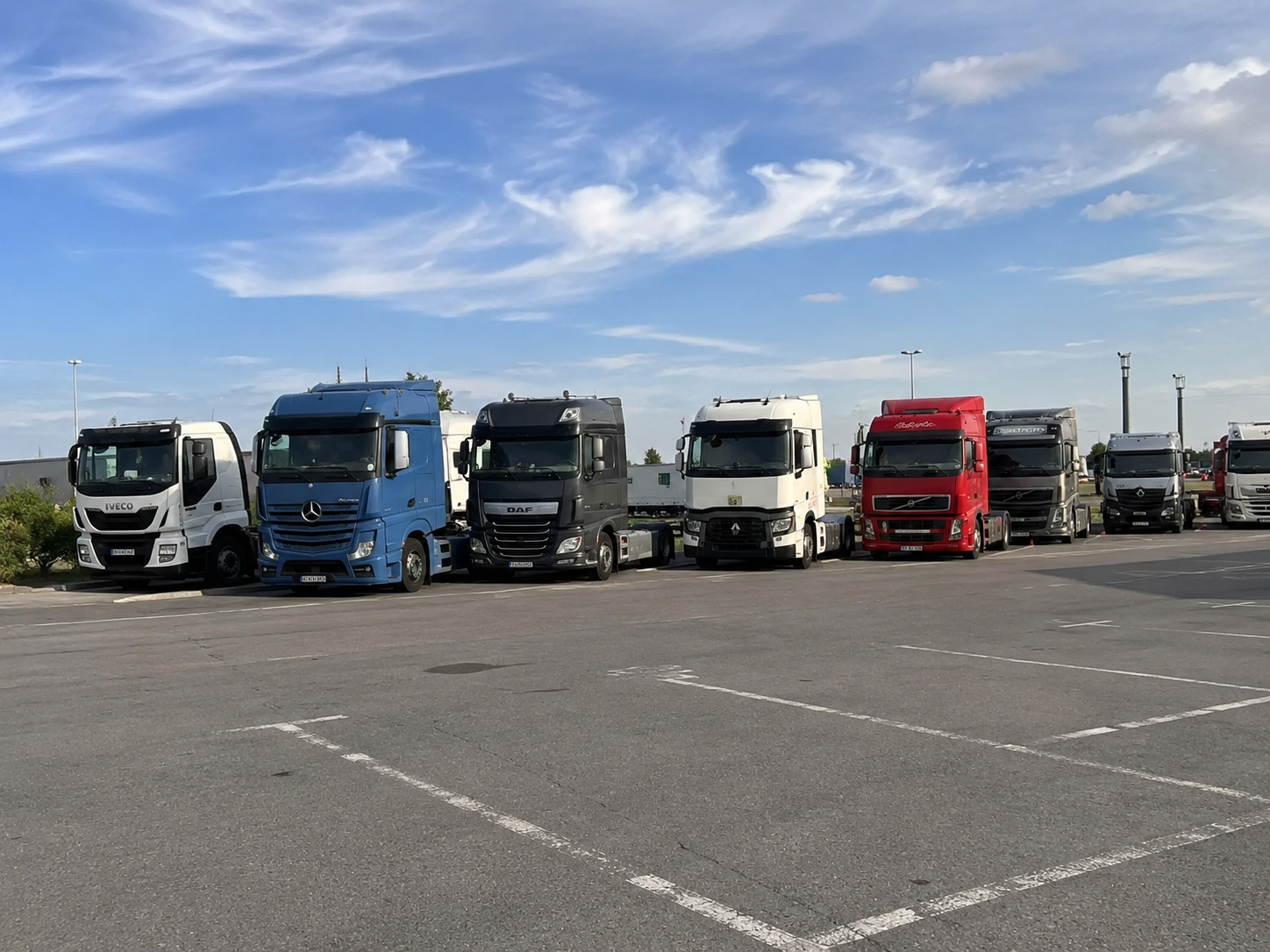
Romania is preparing to introduce one of the most important changes for road freight transport in Eastern Europe. From July 24, 2026, new rules will regulate who is responsible for loading and unloading goods in commercial road transport and will sharply limit the practice of requiring truck drivers to perform cargo handling work.
The reform was approved after President Nicușor Dan promulgated Law No. 100/2026 on June 24. The law establishes a dedicated legal framework for loading and unloading operations involving goods, load carriers and packaging in commercial road freight transport.
The rules apply to vehicles with a maximum authorized mass above 12.5 tonnes. This means the change will directly affect heavy goods transport, including international carriers operating to, from or inside Romania.
The new framework is designed to separate the driver’s primary role from cargo handling tasks. In practice, professional drivers should not be routinely required by carriers, shippers, consignees, freight forwarders or intermediaries to load or unload goods. Contractual clauses that force drivers to carry out such work contrary to the law may be considered invalid.
For the logistics market, this is a major shift. Romania joins Spain and Portugal, which have already introduced similar restrictions earlier this decade, reflecting a wider European movement to improve driver working conditions, reduce occupational risks and make responsibilities clearer across the transport chain.
As K2Cargo News previously reported in Romania to Ban Truck Drivers From Loading and Unloading Cargo Themselves, the issue is not only about labor rules. It is also about safety, waiting times, operational efficiency and the long-term attractiveness of the driving profession.
What the New Rules Change
For many years, truck drivers in Romania and across Europe have often been expected to help with loading and unloading, even when this work was not clearly part of their professional duties.
This practice created several problems. It exposed drivers to injury risks, especially when handling heavy goods, pallets, machinery or poorly prepared cargo. It also blurred responsibility between carriers, warehouses, shippers and receivers. If goods were damaged during loading, it was not always clear who was responsible.
The Romanian law attempts to solve this by defining the obligations of all parties involved in the transport operation. Transport operators, consignors, consignees and intermediaries will have to organize loading and unloading responsibilities more clearly.
The main principle is simple: the driver should not be treated as unpaid warehouse labor. Driving, securing the vehicle and performing road transport duties are already full-time responsibilities. Cargo handling should be performed by the parties responsible for the goods and the loading site, unless a legal exception applies.
Fines of Up to 20,000 Lei
The law introduces administrative sanctions for non-compliance.
Companies or responsible parties that violate the rules may face fines ranging from 5,000 to 20,000 Romanian lei. This equals roughly €1,000–4,000, depending on the exchange rate.
The amount is significant enough to make carriers and logistics customers review their procedures. For large logistics groups, the fine may be manageable. But for small and medium-sized transport companies, repeated violations could become a serious cost.
Enforcement is expected to involve the Romanian Labour Inspectorate and road transport control authorities. This means checks may be possible not only at company offices, but also at loading and unloading locations.
For carriers, the risk is not limited to the fine itself. Violations could also create disputes with clients, insurers and drivers, especially if an accident or injury occurs during unauthorized cargo handling.
Exceptions Will Apply
The Romanian law does not ban every possible form of driver involvement.
It allows limited exceptions for specialized transport operations where loading or unloading is inherent to the nature of the service. Examples may include livestock transport, tanker operations, bulk cargo, vehicle transporters and other specialized activities where the driver’s role is structurally linked to the operation.
In such cases, the driver’s employment contract or related documentation must clearly provide for these responsibilities. Occupational health and safety requirements must also be respected.
The law also includes a possibility for a driver to voluntarily agree in writing to carry out loading or unloading, provided safety rules are followed. However, this does not mean companies can simply pressure drivers into signing formal consent. The key legal and practical question will be whether the consent is genuinely voluntary and whether the workplace is properly equipped.
This is why implementing rules will matter. They should clarify how the law will be applied in daily operations, including international transport and cross-border situations.
Foreign Drivers Must Pay Attention
International carriers should not treat the Romanian reform as a purely domestic issue.
The rules apply to commercial road transport operations involving Romania, and foreign drivers may be affected when they load or unload on Romanian territory. This includes drivers working for Polish, Bulgarian, Hungarian, German or other EU transport companies.
At the same time, international freight associations have noted that some practical questions still need clarification. These include how the law will apply to transport operations to and from Romania performed by companies established outside Romania, and how enforcement will work in cross-border contracts.
For logistics companies, the safest approach is preparation. Contracts, transport orders, warehouse instructions and internal procedures should be reviewed before July 24. Any clause requiring the driver to load or unload as a routine obligation may become legally risky.
Why Romania Is Following Spain and Portugal
Romania is not the first European country to take this step.
Portugal introduced rules in 2021 that placed responsibility for loading and unloading mainly on consignors or consignees and limited the involvement of drivers. Spain followed with a ban that entered into force in 2022 for most operations involving vehicles over 7.5 tonnes.
The Spanish model became one of the most discussed examples in Europe. It improved the legal position of drivers, but it also created confusion in international transport, especially around how the rules should apply to foreign operations or Spanish drivers abroad.
Romania can learn from that experience. A clear law is useful only if all parties understand how to apply it. Carriers, freight forwarders, shippers and warehouse operators need practical guidance before the rules begin to affect daily work.
What This Means for Warehouses and Shippers
The biggest operational impact may be felt by warehouses, factories, distribution centers and retail logistics hubs.
If drivers can no longer be routinely used for loading and unloading, sites will need enough trained personnel and equipment. Forklifts, pallet jacks, dock staff, safety procedures and appointment systems will become more important.
This could increase costs for some shippers and receivers. But it may also improve efficiency. When warehouses are responsible for their own cargo handling, they have stronger incentives to organize processes properly and reduce waiting times.
For transport companies, the reform may support better planning. Drivers who spend less time doing warehouse work can focus on driving, rest periods and vehicle safety. That may help reduce fatigue and improve compliance with working-time rules.
A Driver Welfare Reform With Business Impact
The Romanian law is part of a broader European discussion about the future of the truck driver profession.
Europe already faces a shortage of professional drivers. Poor working conditions, long waiting times, unsafe parking, unpaid extra tasks and physical strain make the profession less attractive. Requiring drivers to load and unload cargo adds another burden.
By limiting this practice, Romania is sending a signal that driver time and safety must be treated as part of logistics efficiency. The driver is not just the last available worker at the loading dock. The driver is a professional responsible for moving cargo safely across the road network.
For companies, the reform will require adjustment. But in the long term, clearer responsibilities can reduce disputes, improve safety and make transport operations more predictable.
July 24 Becomes the Key Date
The transition period ends on July 24, 2026, when the new legal framework enters into force.
By that date, carriers and logistics customers should review contracts, train dispatchers, update transport orders and communicate the rules to drivers and loading sites. International operators should also monitor the implementing regulations expected from Romanian authorities.
Romania’s reform does not eliminate every practical problem. Disputes will still occur, especially in cross-border transport. Some warehouses may resist changing long-established habits. Some contracts may need renegotiation.
But the direction is clear: loading and unloading are becoming defined logistics responsibilities, not informal tasks pushed onto drivers.
For the road freight sector, this is a major cultural and operational shift. Romania is joining the European trend toward better driver protection, clearer liability and more professional cargo handling. The success of the reform will depend on enforcement, practical guidance and whether the logistics market is ready to change how freight is handled at the loading dock.
Read also: Romania to Ban Truck Drivers From Loading and Unloading Cargo Themselves
