

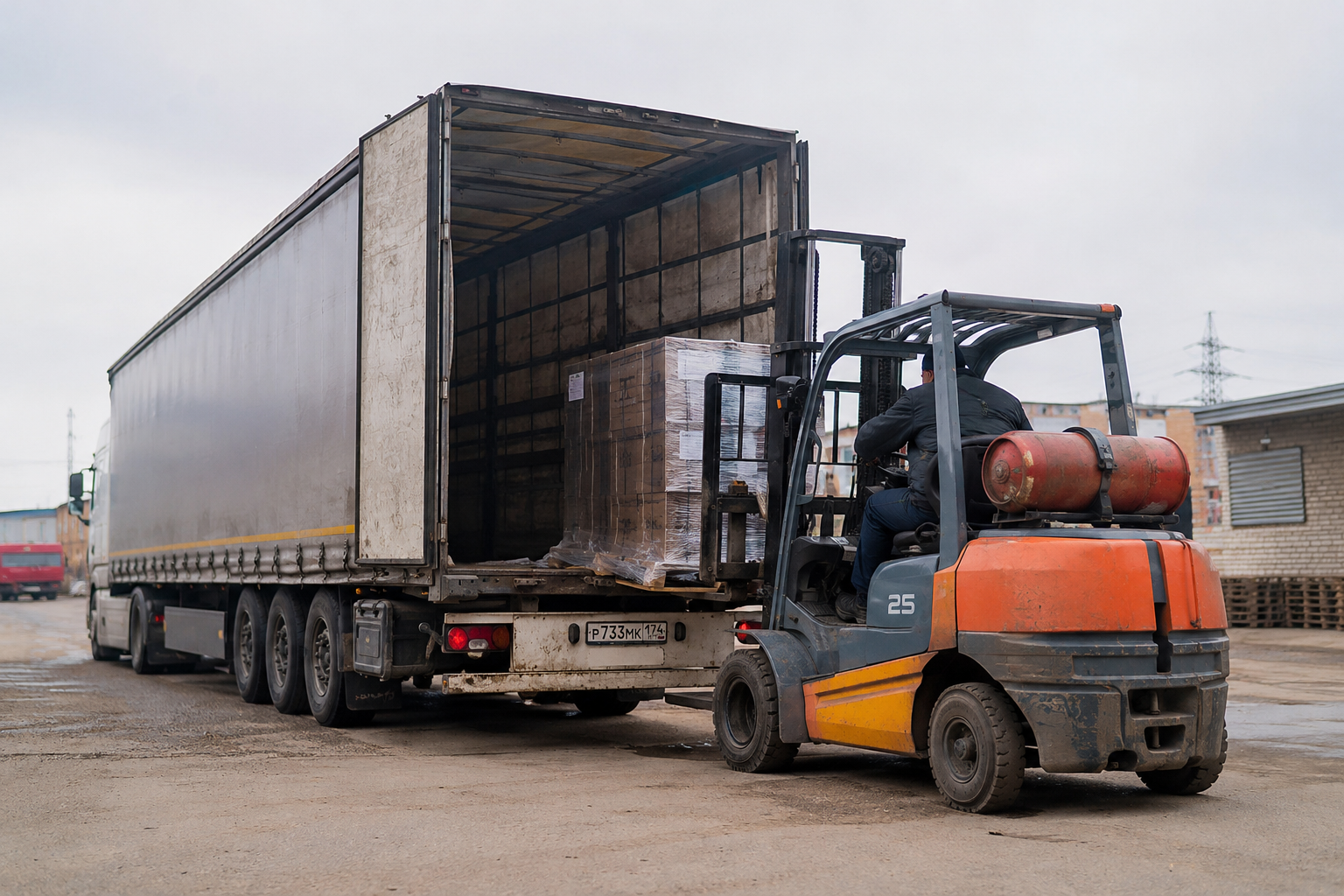
Romania is in the final stages of adopting legislation that will prevent truck drivers from loading or unloading their own vehicles. The proposed rules have already been approved by both the Romanian Parliament and the government and are now awaiting the president’s signature. Once enacted, Romania will join Spain and Portugal, which introduced similar restrictions in recent years to improve driver working conditions and workplace safety.
What the New Law Will Require
Under the new regulations, the ban will apply to drivers of commercial vehicles with a gross vehicle weight exceeding 12.5 tonnes.
After the law takes effect, drivers will no longer be allowed to perform loading or unloading activities unless these duties are explicitly included in their employment contracts. An exception will be made for employees of specialized transport companies where cargo handling is officially listed among their job responsibilities.
The legislation applies exclusively to commercial freight transport. Private transport operations and trucks used for a company’s own internal purposes will not be affected by the new requirements.
Financial Penalties for Violations
Romanian authorities intend to strictly enforce the new rules.
If a transport company instructs a driver to load or unload cargo in violation of the law, the carrier may face an administrative fine ranging from 10,000 to 20,000 Romanian lei. At current exchange rates, this corresponds to approximately €2,000–€4,000.
Responsibility will rest with the employer or transport company rather than the driver who carries out the task.
Following the Example of Spain and Portugal
Working conditions for professional drivers have become a major issue across the European transport industry.
Spain was among the first European countries to prohibit drivers from participating in loading and unloading operations, except in certain specialized transport sectors. Portugal later introduced similar regulations.
Transport industry associations have repeatedly argued that drivers should focus on transporting goods rather than performing warehouse-related tasks. Additional physical labor increases the risk of workplace injuries, worsens working conditions, and often creates unnecessary delays during deliveries.
Romanian lawmakers believe the new legislation will improve occupational safety standards and align national regulations with modern European labor practices.
Impact on International Logistics
For international carriers, the new rules will require adjustments to loading and unloading procedures within Romania.
Logistics operators will need to ensure that warehouse staff, forklift operators, terminal workers, or dedicated cargo-handling personnel are available to manage freight operations. This is particularly important for international routes passing through Romania toward Bulgaria, Turkey, Greece, and the wider Balkan region.
Industry experts note that the measure could initially increase operating costs for some transport companies. However, over the longer term, separating driving duties from warehouse operations may reduce workplace accidents, improve efficiency at logistics centers, and create better working conditions for professional drivers.
When the New Rules Could Take Effect
The legislation is currently in its final approval stage. The bill was submitted to the Romanian president on June 8, 2026.
If signed without delay, the new regulations will come into force after a transition period of approximately three weeks. According to preliminary estimates, the ban could become effective by late June or early July 2026.
For international transport companies, this means preparations should begin immediately to ensure compliance with the new requirements in one of Southeastern Europe’s key logistics markets.
Europe Continues to Redefine the Role of Truck Drivers
The Romanian initiative reflects a broader trend across Europe aimed at reshaping the responsibilities of professional drivers.
Alongside the Mobility Package, next-generation smart tachographs, and stricter enforcement of driving and rest-time regulations, European countries are increasingly reviewing the duties assigned to truck drivers.
At a time when the transport industry faces a growing driver shortage and increasing demands for workplace safety, measures such as Romania’s loading and unloading ban are gradually becoming part of a new operational standard for international road freight transport throughout Europe.
Read also: https://k2cargo.news/msc-acquires-51-stake-in-tis-container-terminal/