

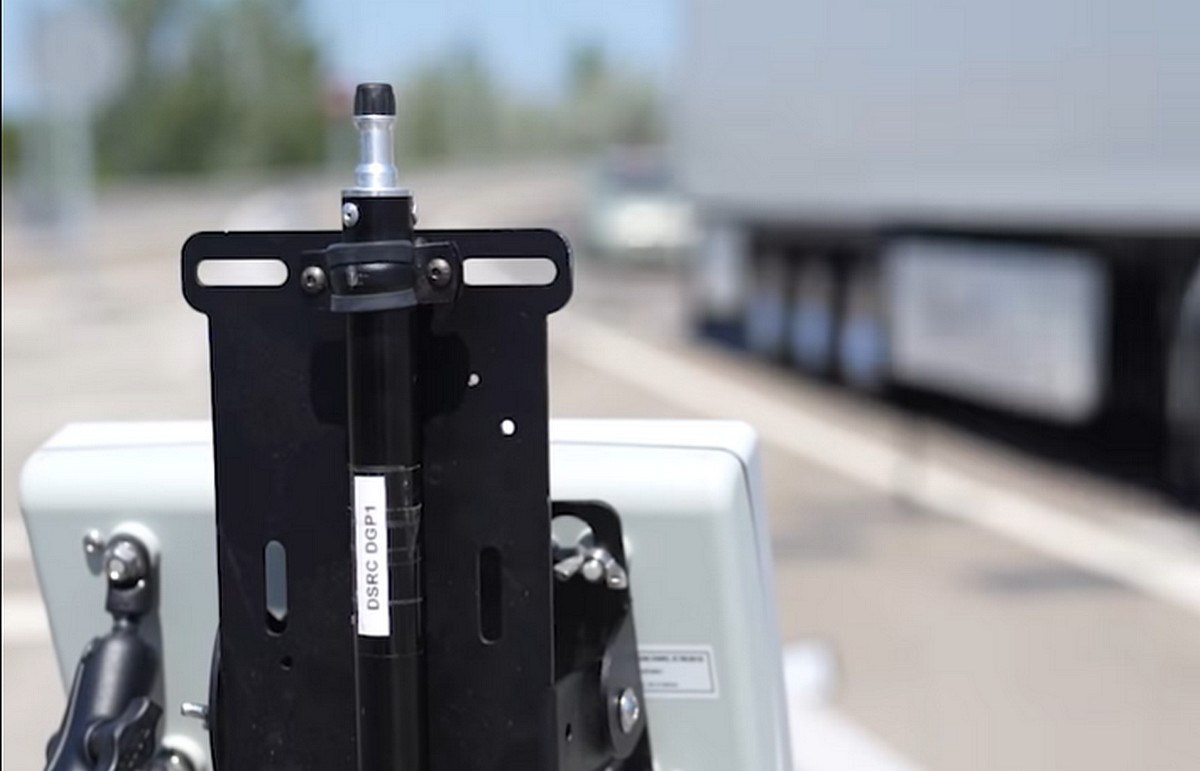
Catalonia, in northeastern Spain, is taking another step toward digital enforcement of road transport regulations. Regional authorities have started testing fixed roadside control stations capable of remotely checking heavy goods vehicles while they remain in motion.
According to local transport media, the first monitoring point has been installed at the former toll plaza in Martorell on the AP-7 motorway near Barcelona. The new system forms part of a broader project aimed at improving road safety while making inspections more efficient for both enforcement authorities and compliant transport operators.
Earlier, K2Cargo News reported that European countries are increasingly introducing digital transport control systems alongside new road charging schemes. Spain’s latest initiative demonstrates that roadside enforcement is becoming increasingly automated across the EU.
Remote Inspections Without Stopping Trucks
Unlike traditional roadside inspections, the new Catalan system allows authorities to collect data from passing trucks without immediately stopping them.
Each control station combines several technologies. Vehicles first pass over weigh-in-motion sensors that estimate their weight while driving. Cameras automatically read license plates, while DSRC (Dedicated Short Range Communication) antennas establish a wireless connection with Smart Tachograph Version 2 devices installed in modern commercial vehicles.
The system can instantly identify trucks that require further inspection.
If irregularities are detected, electronic message boards positioned after the control point instruct the driver to leave the motorway and stop at a designated inspection area. Police officers then carry out a traditional roadside inspection, verify the suspected infringement and, if necessary, issue penalties.
This approach allows enforcement officers to focus on vehicles that present the highest compliance risks while reducing unnecessary inspections for law-abiding operators.
Five Monitoring Stations Planned
The first installation is currently undergoing official testing in Martorell, near Barcelona.
According to the Catalan authorities, four additional monitoring stations will be installed over the coming months. Three of them will also be located along the AP-7 motorway at La Roca del Vallès, Vila-seca and La Jonquera, while another station will operate on the C-33 motorway near La Llagosta.
The total investment in the project amounts to approximately €4.4 million, with part of the funding provided through European Union programs supporting digital transport infrastructure.
The selected locations are among the busiest freight corridors in northeastern Spain, carrying thousands of international trucks every day between the Iberian Peninsula and the rest of Europe.
What Can DSRC Tachograph Technology Detect?
The introduction of DSRC antennas significantly expands the capabilities of roadside enforcement.
Modern Smart Tachograph Version 2 devices continuously record operational data that can be accessed remotely by authorized inspection authorities.
Without stopping the vehicle, inspectors can identify a range of potential infringements, including driving without a driver card, possible manipulation of tachograph software, speeding events recorded by the tachograph, violations of driving and rest time regulations, and other anomalies requiring further investigation.
The system does not automatically issue fines. Instead, it identifies vehicles that should undergo a full roadside inspection.
As K2Cargo News recently explained in its coverage of European transport enforcement and seasonal traffic restrictions, digital monitoring is becoming an increasingly important tool for ensuring compliance while minimizing disruption to traffic.
Europe Is Moving Toward Automated Enforcement
Catalonia is not the first European region to introduce remote truck monitoring.
At the beginning of 2026, Poland launched a similar roadside control station on National Road 94 between Tarnów and Brzesko. The installation combines automatic weighing systems, height sensors, number plate recognition cameras, and DSRC antennas capable of communicating with smart tachographs.
The growing use of this technology reflects broader European efforts to improve enforcement efficiency while reducing the need for random roadside checks.
Instead of stopping large numbers of vehicles, authorities can now focus resources on trucks that show signs of possible non-compliance.
More Digital Controls for International Carriers
For international transport companies, the expansion of remote inspection systems means that compliance is becoming increasingly important.
Smart tachographs are now mandatory for vehicles engaged in most international transport operations within the European Union. Their ability to communicate remotely with enforcement authorities significantly increases the likelihood of detecting infringements before a truck reaches a traditional inspection point.
Transport companies are therefore advised to ensure that tachographs are properly calibrated, driver cards are correctly used, and working time regulations are fully respected.
As more European countries introduce similar technology, digital roadside inspections are likely to become a standard part of freight transport across the continent.
Read also: Spain May Restrict Truck Overtaking on Key Roads in 2026
