

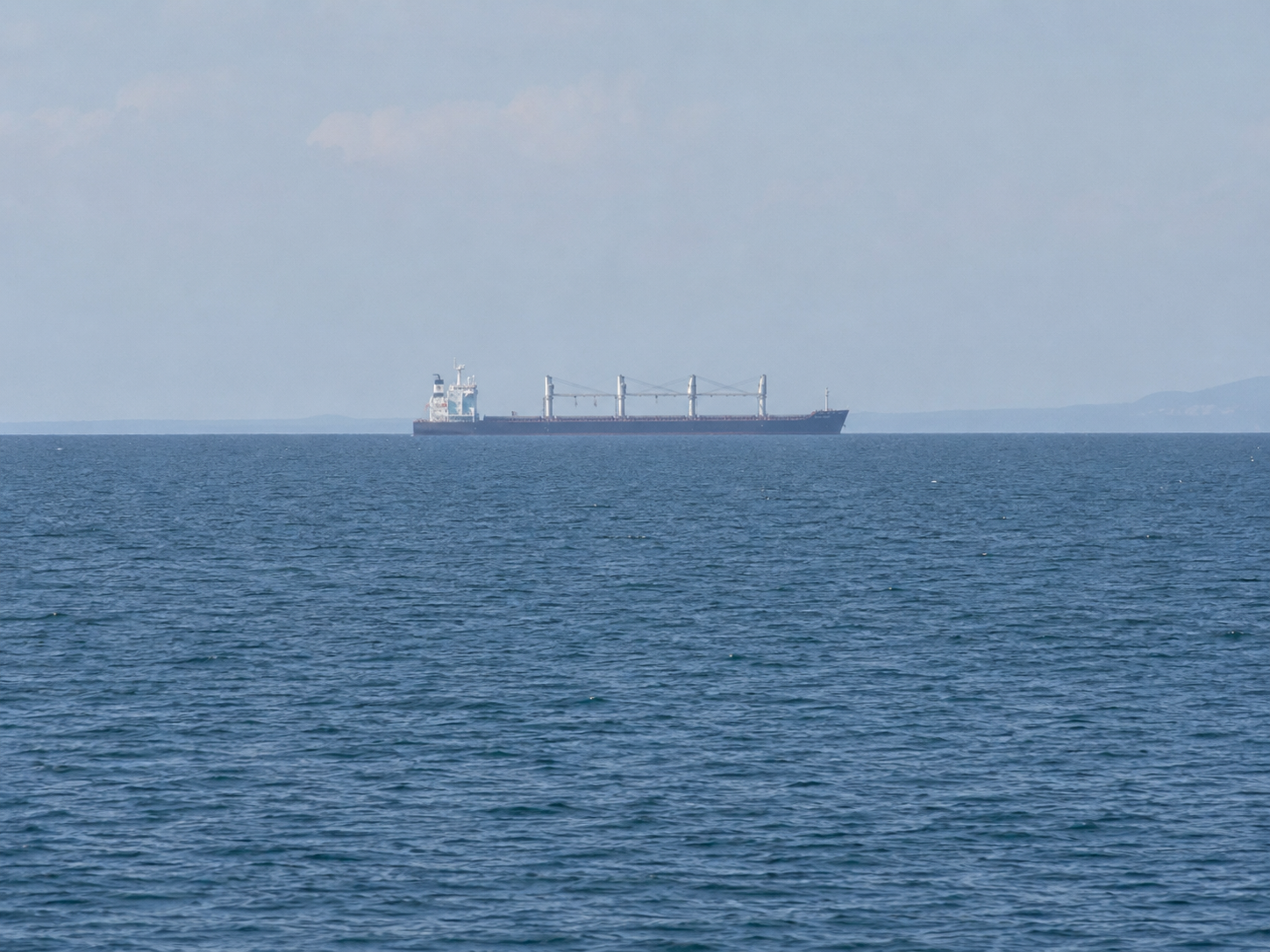
A cargo ship came under attack in the Red Sea off the coast of Yemen, according to the United Kingdom Maritime Trade Operations center. The incident was reported on July 5, approximately 30 nautical miles southwest of Al Hudaydah, a major port city on Yemen’s Red Sea coast.
UKMTO said the vessel triggered a distress alert, reporting that it was under attack by “unknown armed assailants.” Ships operating in the area were advised to exercise caution and report any suspicious activity to UKMTO.
According to international maritime reports, the attack involved a small boat that approached the cargo vessel and opened fire. Armed security personnel on board the ship reportedly returned fire, after which the attackers moved back toward a larger vessel nearby. At the time of reporting, no group had claimed responsibility for the incident.
The attack did not immediately appear to cause casualties, and authorities continued to investigate. However, the incident is another warning signal for shipping companies using the Red Sea and the Bab el-Mandeb corridor, one of the most important maritime routes between Asia, Europe and the Middle East.
As K2Cargo News previously analyzed in Analytical Report: The Blockade of the Strait of Hormuz During the U.S.–Israeli War Against Iran, disruptions at strategic maritime chokepoints can quickly affect global energy flows, insurance costs, shipping schedules and supply chain planning.
The Incident Happened Near Al Hudaydah
The location of the incident is especially important.
Al Hudaydah is located on Yemen’s Red Sea coast and has been under Houthi control. The waters around Yemen have been among the most dangerous maritime zones in the world since late 2023, when attacks on commercial vessels sharply increased amid the war in Gaza and wider regional tensions.
The Red Sea is not an isolated regional route. It is part of the main shipping connection between the Indian Ocean, the Suez Canal and the Mediterranean. Vessels carrying containers, energy products, dry bulk cargo and manufactured goods move through this area on routes between Asia and Europe.
Any new attack near Yemen therefore creates concern far beyond the immediate incident. Shipowners, insurers, charterers and cargo owners all monitor the area closely because even a limited security threat can affect routing decisions.
No Group Has Claimed Responsibility
At the time of the first reports, no organization had claimed responsibility for the attack.
This is important because attribution in the Red Sea can be complex. The Houthis have repeatedly targeted commercial shipping since 2023, saying their actions were linked to the war in Gaza and vessels connected to Israel or its allies. However, the region has also seen other maritime threats, including armed approaches, suspicious skiff activity and piracy-related risks in nearby waters.
UKMTO described the attackers as unknown armed assailants, and authorities are investigating the incident. Until there is an official conclusion, the attack should not be attributed to any specific group.
For shipping companies, however, the practical consequence is the same: risk levels remain elevated. Even when responsibility is unclear, the presence of armed attackers near a major shipping lane forces operators to reassess security measures.
Why the Red Sea Remains Critical for Global Trade
The Red Sea is one of the central arteries of world trade.
It links the Arabian Sea and the Indian Ocean with the Suez Canal, allowing ships to move between Asia, Europe and North Africa without taking the much longer route around the Cape of Good Hope.
When security risks increase in the Red Sea, shipping companies face difficult choices. Continuing to transit the area can reduce voyage time, but may require higher insurance, additional security measures and closer coordination with maritime authorities. Rerouting around Africa reduces exposure to the Red Sea threat, but increases sailing time, fuel costs, vessel demand and delivery delays.
This is why even a single attack can have a wider market impact. The direct damage to one vessel may be limited, but the risk premium for the entire corridor can rise.
For logistics companies, the Red Sea situation affects container shipping, project cargo, energy transport, dry bulk movements and supply chains between Europe and Asia.
Bab el-Mandeb and Hormuz Create a Wider Risk Picture
The attack also needs to be viewed alongside broader maritime tensions in the region.
The Bab el-Mandeb Strait, located near Yemen, is one of the key access points between the Red Sea and the Gulf of Aden. The Strait of Hormuz, farther east, is another critical chokepoint for global energy exports from the Gulf.
If security risks rise around both Bab el-Mandeb and Hormuz, shipping companies and energy traders face a much more complicated operating environment. The two chokepoints serve different routes, but together they influence oil, gas, container and general cargo flows across a large part of the world economy.
This is why maritime security in the Red Sea is not only a regional military issue. It is also a supply chain issue.
Higher risk can increase war-risk insurance premiums, delay voyages, reduce available vessel capacity and push transport costs upward.
What This Means for Shipowners and Cargo Owners
For shipowners, the latest incident reinforces the need for strict voyage risk assessment.
Vessels transiting near Yemen are expected to follow guidance from UKMTO, regional naval forces and industry best-practice procedures. This includes maintaining a strong watch, reporting suspicious activity, monitoring small craft, protecting vulnerable access points and preparing emergency communication protocols.
Cargo owners also need to pay attention. A security incident at sea can affect delivery schedules, insurance coverage and contract performance. Even when a vessel is not directly targeted, rerouting or delays in the region can disrupt supply chains.
For freight forwarders and logistics providers, the Red Sea risk environment makes planning more complicated. Transit times may change quickly, and customers may need alternative routing options depending on cargo value, urgency and risk tolerance.
Maritime Security Becomes a Logistics Cost
The Red Sea crisis has already shown that maritime security is now a direct logistics cost.
Before the escalation of attacks, many companies treated the Suez–Red Sea route as a standard part of global shipping. Today, every voyage through the area requires a more detailed risk calculation.
The cost is not limited to insurance. It can include armed guards, security planning, naval coordination, delays, fuel for rerouting, longer vessel employment and inventory costs caused by slower deliveries.
For high-value or time-sensitive cargo, the decision may be especially difficult. Avoiding the Red Sea can make shipments safer but slower and more expensive. Passing through the Red Sea can keep routes shorter but exposes vessels to higher risk.
This creates uncertainty for global supply chains at a time when many companies are already trying to diversify transport routes and reduce exposure to geopolitical disruption.
A Warning for Global Shipping
The July 5 attack near Al Hudaydah shows that the Red Sea remains a dangerous corridor for commercial shipping.
Even if no casualties were reported and the vessel remained safe, the incident confirms that armed threats continue in a region critical to global trade. The fact that the attackers have not yet been identified adds another layer of uncertainty.
For the shipping industry, the main priority is caution. Vessels transiting the area must remain alert, maintain contact with maritime security authorities and be prepared for rapid changes in risk conditions.
For the wider logistics market, the message is broader: maritime chokepoints are becoming one of the most important variables in supply chain planning. A disruption near Yemen, the Suez route or the Strait of Hormuz can quickly affect freight rates, delivery times and cargo routing decisions worldwide.
The investigation into the latest attack will determine more details. But the strategic conclusion is already clear: the Red Sea remains a vulnerable link in global trade, and every new incident strengthens the case for more resilient, diversified and security-aware logistics planning.
Read also: Analytical Report: The Blockade of the Strait of Hormuz During the U.S.–Israeli War Against Iran