

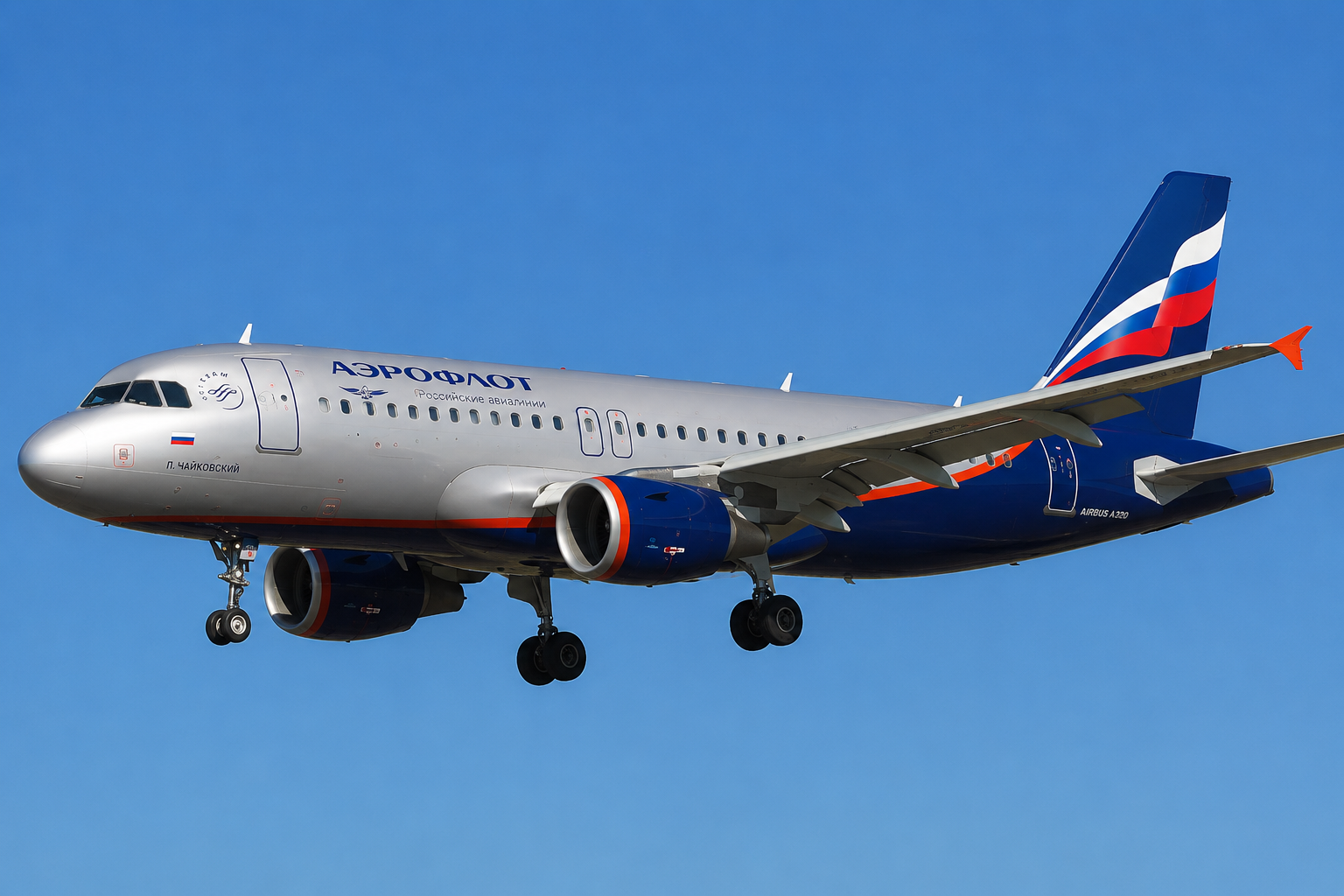
Aeroflot has expanded travel options to Turkmenistan through a new interline agreement with Belarusian carrier Belavia. The agreement allows passengers to book single-ticket itineraries via Minsk to several destinations served by Belavia, including Turkmenbashi in Turkmenistan.
The new arrangement also covers flights to Georgia — Tbilisi, Kutaisi and Batumi — as well as Tel Aviv in Israel. Under the scheme, Aeroflot operates the segment between Moscow and Minsk, while Belavia operates the onward flight from Minsk to the final destination.
For passengers, the key change is convenience. Instead of buying separate tickets from different airlines and managing the transfer independently, travelers can book one itinerary and connect through Minsk within the framework of an interline arrangement. This can simplify baggage handling, check-in and route planning.
The agreement also works in the opposite direction. Passengers from Belarusian cities, including Minsk, Gomel, Brest and Mogilev, can fly to Moscow or St. Petersburg with Belavia and then transfer to Aeroflot’s wider route network.
For the aviation market, the new scheme is important because it shows how airlines in Russia and Belarus are using partnerships to expand international connectivity without necessarily opening direct routes from every city. For Central Asia, the most notable point is the inclusion of Turkmenbashi — a destination that is strategically important for tourism, business travel and regional access to the Caspian Sea.
As K2Cargo News previously reported in Trans-Afghan Railway Project Estimated at $7 Billion, Central Asia is becoming a region where transport connectivity is expanding across several modes at once — rail, road, sea and aviation.
Interline Agreement, Not a Direct Flight
The new offer should be understood correctly: Aeroflot is not launching a direct Moscow–Turkmenbashi flight.
The carrier is opening ticket sales under an interline agreement with Belavia. In practice, this means passengers can combine flights of both airlines in one route. Aeroflot carries the passenger to Minsk, and Belavia operates the next segment.
This model is widely used in aviation. It allows airlines to extend their reach through partner networks without operating every destination themselves. For passengers, it can reduce the complexity of planning a multi-leg trip and may make transfers easier if baggage is checked through to the final point.
In the Turkmenistan direction, this is especially useful because direct flight options can be limited and schedules may not always match passenger demand. A connection through Minsk gives travelers another structured route to Turkmenbashi.
Why Turkmenbashi Matters
Turkmenbashi is not only a seaside destination on the Caspian coast.
The city is one of Turkmenistan’s most important transport and logistics points. It is linked to the port of Turkmenbashi, the country’s main maritime gateway on the Caspian Sea, and plays a role in trade, tourism, energy-related activity and regional connectivity.
For passengers from Russia, the route can be relevant for business travel, family visits, tourism and connections with Turkmenistan’s western region. For Belavia, the inclusion of Turkmenbashi strengthens Minsk’s position as a transfer point toward destinations that are not always directly accessible from Russia.
The route also fits into a wider pattern: Turkmenistan is gradually receiving more attention as a transport link between Central Asia, the Caspian region, Iran, the Caucasus and the Middle East. Aviation is only one part of this picture, but passenger connectivity supports business contacts and logistics cooperation.
Minsk Becomes a Transfer Platform
The agreement strengthens Minsk as a connecting airport.
Belarus has been actively trying to preserve and rebuild international air links after several difficult years for its aviation sector. For Belavia, cooperation with Aeroflot provides access to Russian passenger flows. For Aeroflot, Belavia’s network offers additional destinations through Minsk.
This creates a complementary model. Aeroflot has a larger fleet and a broader route network from Moscow and St. Petersburg. Belavia has regional experience and routes from Minsk to selected international destinations. By combining these networks, both airlines can offer more travel options without launching every route independently.
For passengers from Belarus, the agreement may also be useful. Travelers from Minsk, Gomel, Brest and Mogilev can reach Moscow or St. Petersburg with Belavia and then connect onward to Aeroflot destinations.
One Ticket Can Reduce Friction
The main benefit of an interline ticket is lower travel friction.
When a passenger buys separate tickets, every part of the journey carries additional risk. If the first flight is delayed, the second airline may not treat the missed connection as part of the same itinerary. Baggage may need to be collected and checked in again. Check-in procedures can be more complicated.
With an interline agreement, the trip becomes more integrated. Depending on the fare and airport procedures, passengers may be able to check baggage to the final destination and receive boarding passes for several segments at once.
This is especially important for routes involving countries where direct air connectivity is limited. For travelers to Turkmenbashi, a structured connection through Minsk may be more convenient than self-connecting through unrelated airports and airlines.
Baggage and Fare Conditions Matter
For passengers, the details of the fare remain important.
Reports on the new agreement indicate that tickets can be sold both with and without baggage on many routes. However, for flights to and from Turkmenistan, fares with baggage are available. This distinction matters because baggage rules can affect the final cost of travel.
Travelers should also check transfer time, visa and entry requirements, airport procedures, baggage allowance and ticket rules before purchase. Interline travel is simpler than separate bookings, but it still requires attention to the conditions of each segment.
For business travelers, baggage and schedule reliability may be more important than the lowest fare. For tourists, price and connection time may be decisive.
What This Means for Airlines
For Aeroflot, the agreement expands its international sales offer at a time when direct route development is complicated by regulatory, fleet and market constraints.
The company’s own fleet consists of 171 aircraft, including 41 wide-body aircraft and 130 narrow-body medium-haul aircraft. This gives Aeroflot scale, but international growth still depends on air access, bilateral rules, aircraft availability and partner networks.
For Belavia, the agreement supports passenger flow through Minsk and improves the commercial use of its route network. The Belarusian carrier is smaller, with a fleet of around 18 aircraft, so partnerships can help it reach a wider market without needing to operate from Russian cities itself.
The cooperation is therefore practical for both airlines. Aeroflot receives additional international destinations through Minsk, while Belavia gains more connecting passengers from Russia.
Regional Connectivity Is Expanding
The new agreement should also be seen in the context of wider Eurasian connectivity.
Passenger aviation does not move cargo in the same volumes as rail, road or maritime transport, but it supports trade in another way. It enables business trips, technical visits, tourism, labor mobility and government or corporate contacts. These are important for regions where transport projects, logistics hubs and energy infrastructure are developing.
Turkmenistan, Kazakhstan, Uzbekistan, Iran, Georgia and other countries in the region are increasingly discussed in terms of corridors and connectivity. Air links make these relationships easier to maintain.
For Russia and Belarus, the Minsk transfer model also offers a way to rebuild certain international travel chains through airline cooperation.
A Practical Route With Strategic Meaning
Aeroflot’s interline ticket sales with Belavia are not a revolution in aviation, but they are a practical step.
For passengers, the main value is a simpler route to Turkmenbashi, Georgia and Israel through Minsk. For Aeroflot and Belavia, the agreement expands network reach. For Minsk, it strengthens the airport’s role as a transfer platform. For Turkmenistan, it adds another passenger channel from Russia.
The success of the route will depend on schedules, pricing, connection convenience, baggage rules and demand. But the direction is clear: airlines are using partnerships to rebuild and extend international connectivity in a changing market.
For Central Asia, every new transport link — whether by rail, road, sea or air — adds flexibility. The new Aeroflot–Belavia agreement shows that aviation remains part of this broader connectivity map.
Read also: Trans-Afghan Railway Project Estimated at $7 Billion
