

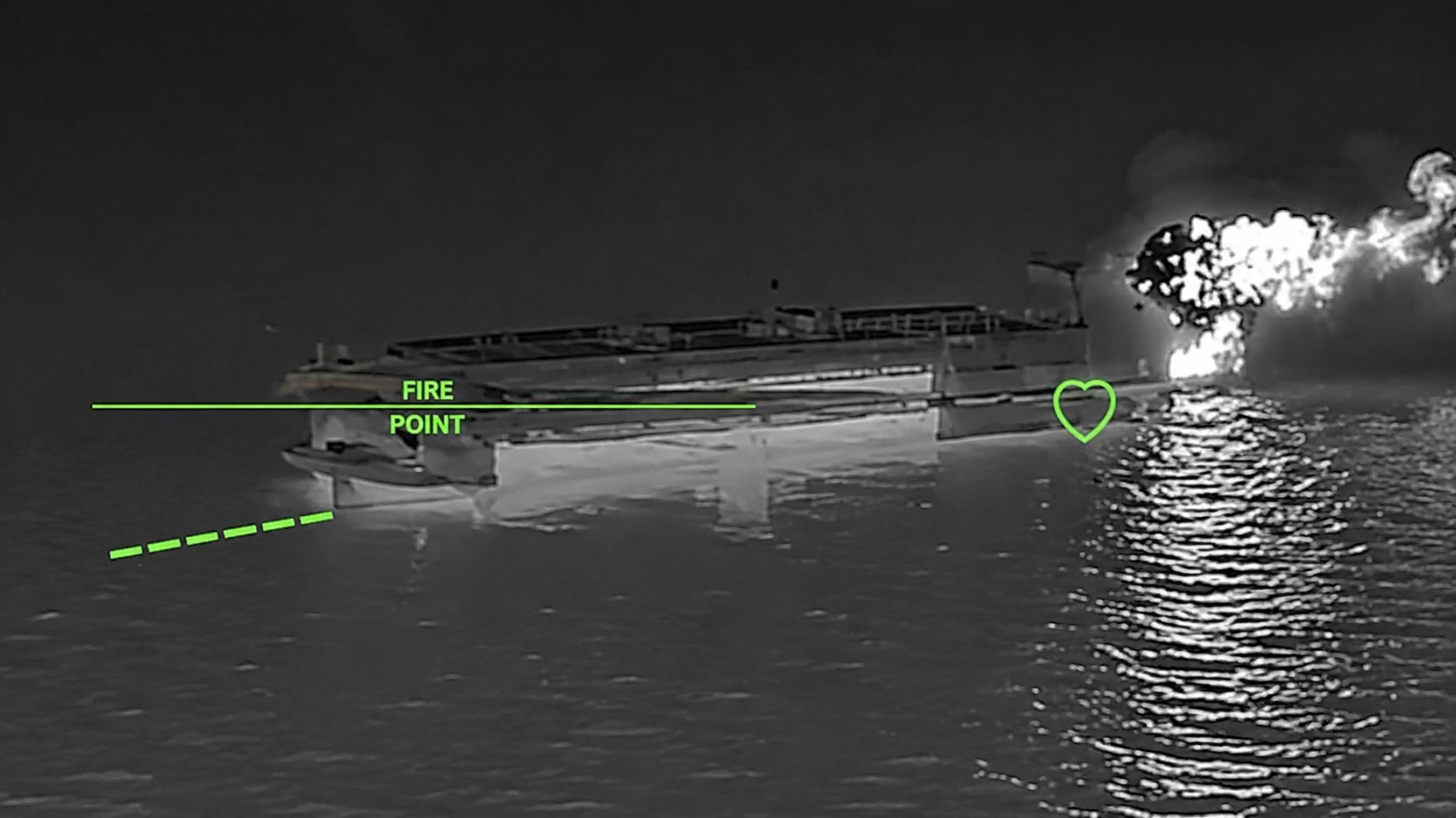
Ukraine has reported one of its most intense maritime drone campaigns of the war, claiming strikes on dozens of Russian-linked vessels in the Sea of Azov and near the Kerch Strait. According to Ukrainian military sources, the total number of vessels hit between July 6 and July 12 reached 90.
The campaign focused on tankers, ferries, tugboats and cargo vessels used in Russian logistics. Ukrainian officials say the targets included ships supporting fuel transportation, port operations and the movement of cargo connected to Russia’s military and export economy.
The latest wave of strikes reportedly took place overnight into July 12, when Ukrainian Unmanned Systems Forces said they hit 14 vessels: 10 tankers and four ferries. A day earlier, Ukrainian sources reported strikes on 28 vessels, including 21 tankers, tugboats, cargo ships and other support craft.
The figures come from Ukrainian sources and wartime reporting, so the full scale of damage cannot be independently verified in every case. However, the attacks have already affected regional shipping. Reuters reported that shipping in the Sea of Azov, a route used for a significant share of Russian grain exports, remained restricted after Ukrainian attacks on tankers and other commercial vessels.
As K2Cargo News previously reported in Ukrainian Ports Handle Over 40 Million Tons of Cargo Despite Ongoing Attacks, the war has turned maritime infrastructure into a key part of economic resilience and military pressure. The latest strikes show that logistics fleets themselves are becoming direct targets.
Why the Sea of Azov Matters
The Sea of Azov is not just a local shipping area.
It connects Russian ports, occupied Ukrainian territory, the Kerch Strait and routes toward the Black Sea. It is also linked to the Azov-Don shipping channel, which gives access to inland waterways. For Russia, this makes the region important for grain, fuel, construction cargo, military logistics and the supply of occupied Crimea.
If vessel movement through this area becomes unreliable, Russia faces more than isolated ship damage. It has to reroute cargo, delay shipments, protect port infrastructure and manage insurance and security risks.
That is why Ukraine’s campaign is aimed not only at individual vessels. It targets the system that allows Russia to move fuel, cargo and sanctioned goods through a relatively compact maritime corridor.
Tankers and Ferries Under Pressure
The most important targets appear to be tankers and ferries.
Tankers matter because they support the movement of oil and petroleum products. Ukraine says many of the vessels are linked to Russia’s so-called shadow fleet — ships used to move energy cargo while avoiding international sanctions.
Ferries are also important because they can support transport across the Kerch area and help maintain links with occupied Crimea. If ferry capacity is reduced, pressure grows on other parts of the logistics network.
The Ukrainian Unmanned Systems Forces said the strikes complicate the use of vessels to bypass sanctions and reduce Russia’s ability to sustain its war economy and troop logistics.
What the Videos Suggest
Footage released by Ukrainian sources shows drones approaching vessels at low speed and striking superstructures or exposed upper sections.
Many targets appear to be anchored or moving slowly. This matters because it suggests that Ukrainian drone operators had time to observe, select a target and choose an attack angle. Maritime analysts have noted that this raises questions about the level of air defence protecting Russia’s coastal and logistics fleet in the area.
The drones used in such operations do not need to sink every vessel to create an effect. Even limited damage can take a ship out of service, require repairs, force inspections or make operators reluctant to sail through exposed areas.
In maritime logistics, uncertainty itself is costly. If crews, owners and port operators expect more drone attacks, schedules become less predictable and security requirements increase.
Shipping Restrictions Add Economic Pressure
The impact has already reached commercial shipping.
Reuters reported that vessels could move inside the Sea of Azov but could not enter or leave through the Kerch Strait or the Azov-Don channel, according to industry sources. The restrictions were linked to security concerns after Ukrainian attacks and had not been officially announced by Russian authorities.
This is significant because the Sea of Azov route is used for about a quarter of Russian grain exports. No major disruption to grain trade had been reported at the time, partly because the new harvest had not yet fully reached ports. But the restriction shows how military strikes can quickly turn into a commercial transport problem.
For exporters, shipowners and traders, the main risk is uncertainty. If entry and exit routes can be restricted without formal notice, planning becomes harder and costs may rise.
Part of a Wider Deep-Strike Campaign
The maritime attacks are part of a broader Ukrainian campaign against Russian logistics and energy infrastructure.
Around the same period, Ukrainian sources reported strikes on oil facilities, ferries, radar stations and other infrastructure in Russia and occupied Crimea. Ukraine’s long-range forces also said they hit an oil refinery in Syzran, Samara region, which had reportedly already been targeted earlier this year.
The logic is consistent: reduce Russia’s ability to move fuel, support occupied territories, export energy products and maintain military supply routes.
For Ukraine, such attacks serve both military and economic purposes. They damage logistics assets, force Russia to spend more on protection and make export routes more difficult to use.
A New Phase of Maritime Pressure
The reported scale of the Azov campaign suggests a new phase in Ukraine’s pressure on Russian maritime logistics.
Earlier in the war, much attention focused on large naval vessels and the Black Sea Fleet. Now the target set appears broader: tankers, ferries, cargo ships, port infrastructure and support craft. These are not always high-profile naval assets, but they are essential to keeping logistics flows moving.
For Russia, the challenge is that these vessels operate in confined waters and often follow predictable routes. Protecting every tanker, ferry and support ship is much harder than protecting a few major warships.
For the freight and shipping sector, the message is clear. The war in the Black Sea and Sea of Azov is not only a naval conflict. It is also a logistics war, where ports, vessels, fuel routes and export corridors are all part of the battlefield.
If Ukraine can continue to threaten Russia’s coastal shipping, the economic and operational cost for Moscow will grow — even when individual strikes do not sink ships outright.
Read also: Ukrainian Ports Handle Over 40 Million Tons of Cargo Despite Ongoing Attacks