

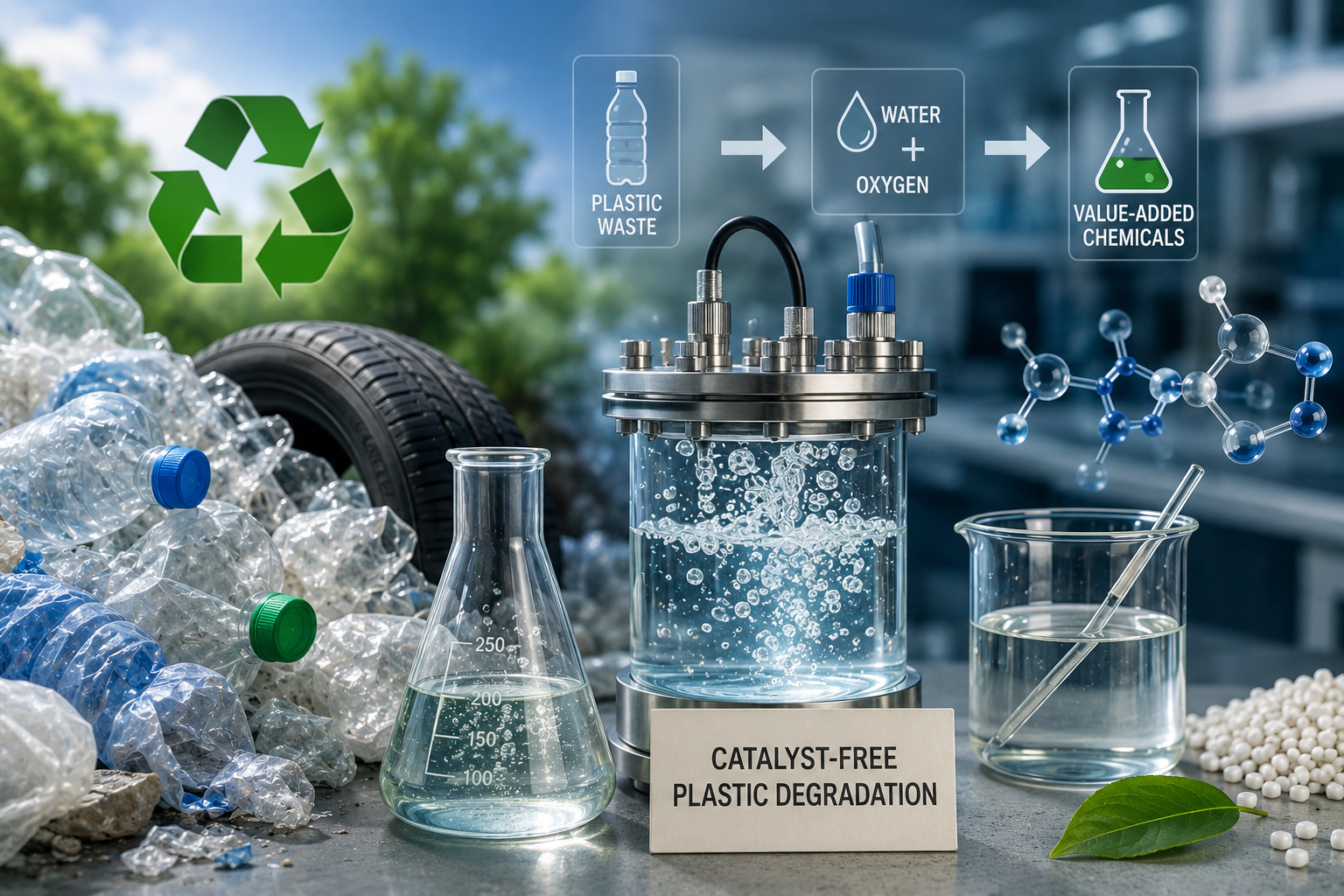
An international team of scientists led by researchers from Zhejiang University has announced a major scientific breakthrough that could reshape the future of plastic recycling. For the first time, the team has developed a catalyst-free technology for breaking down plastics, paving the way for a more affordable, environmentally friendly, and scalable recycling process.
The study found that polyethylene, polypropylene, and even discarded vehicle tires can be efficiently converted into valuable organic acids using only water, oxygen, and temperatures slightly above 100°C. The process leaves no microplastic residue and does not require expensive chemical reagents or catalysts.
According to the researchers, the discovery was made unexpectedly during a routine control experiment. After dozens of repeated tests, the team confirmed that plastics could be effectively degraded without any catalysts. The key lies in microscopic water droplets, where highly reactive hydroxyl radicals naturally form at the water–oil interface and break down the strong polymer chains.
The researchers believe the new technology has the potential to transform the global plastic recycling industry by converting millions of tons of difficult-to-recycle waste into valuable chemical raw materials while significantly reducing environmental pollution.
Read also: China Makes Key Statement Following Helium Export Ban
