

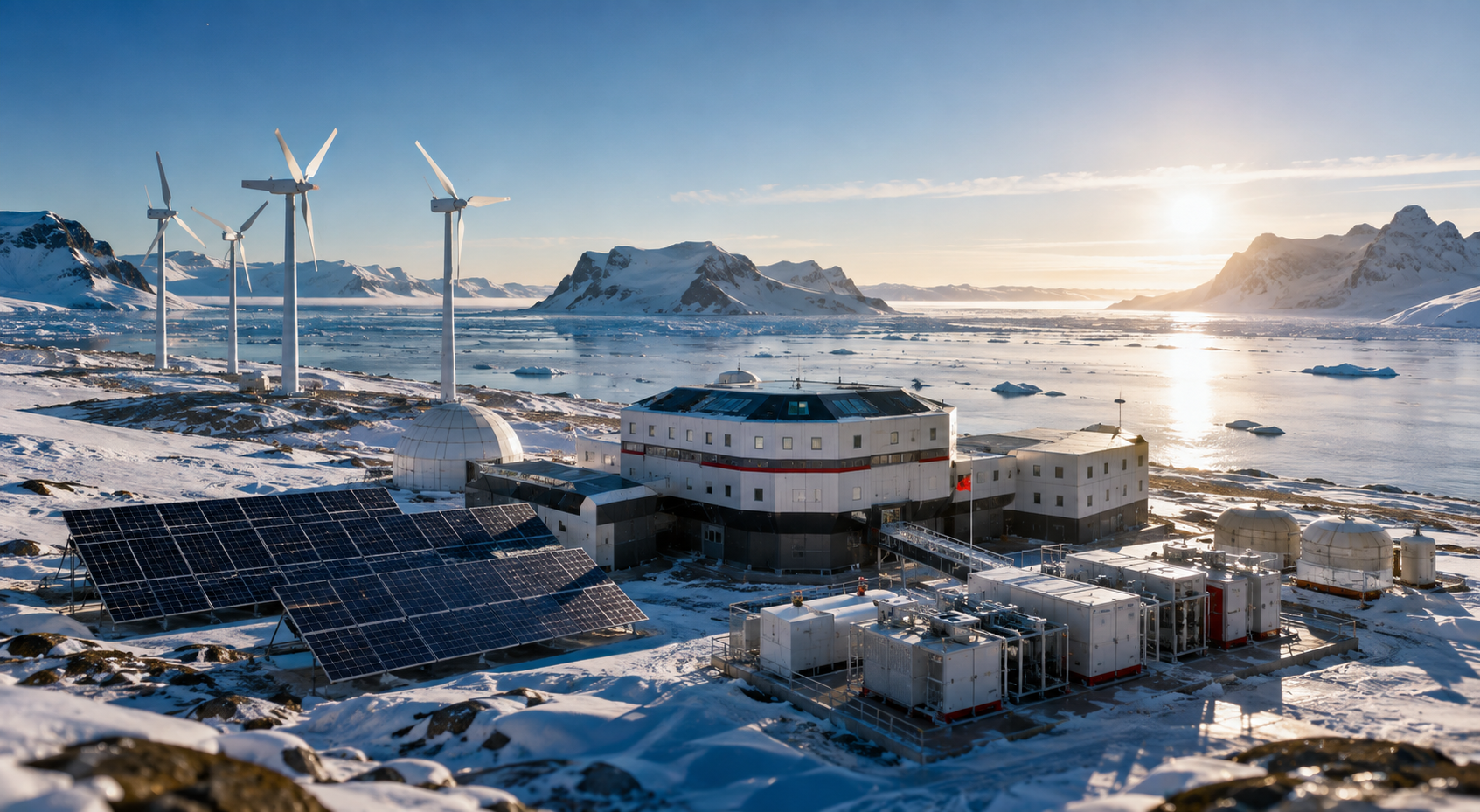
Qinling Station is able to meet around half of its electricity demand through an integrated energy system that combines wind, solar, hydrogen power, battery storage, and diesel generators. This hybrid approach ensures a stable power supply under the extreme conditions of Antarctica.
During the austral summer, renewable energy accounts for more than 60% of the station’s electricity consumption. The new system also reduces annual diesel fuel consumption by at least 200 tonnes, significantly easing the logistical challenge of transporting fuel more than 10,000 kilometers from China to Antarctica.
Commissioned in 2024, Qinling became China’s first Antarctic research station to operate such an advanced integrated microgrid. The project is considered a major step toward building more sustainable and energy-resilient infrastructure for future polar research.
Read also: White House Steps Up Push for Strategic Resources as Trump Plans Industry Meeting