

Chinese Scientists Confirm the Existence of the Glueball for the First Time
Chinese researchers have reported a breakthrough in fundamental physics after obtaining the world’s first convincing experimental confirmation of the glueball, a long-theorized form of matter that had remained purely hypothetical for nearly five decades.
The achievement is the result of more than 15 years of research conducted by an international scientific collaboration led by China.
Scientists Have Been Searching for This Particle for Nearly Half a Century
The glueball is considered one of the most elusive objects in modern particle physics. According to the Standard Model, it is composed entirely of gluons—the elementary particles responsible for the strong force that binds quarks together inside protons and neutrons. Although its existence was predicted decades ago, scientists had never before obtained conclusive experimental evidence.
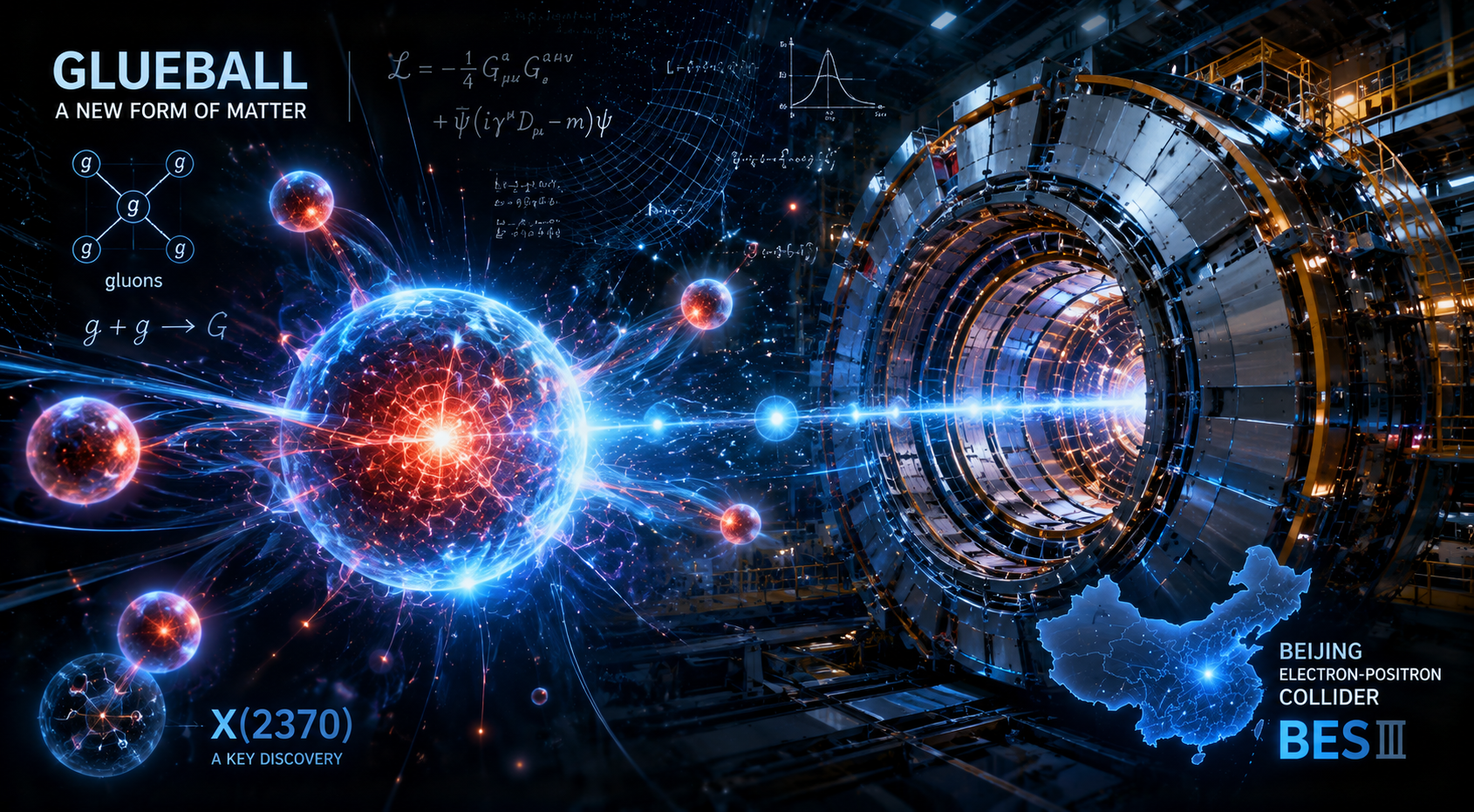
The breakthrough was made possible through the BESIII experiment at the Beijing Electron-Positron Collider. By studying the particle X(2370), researchers identified its unique properties, including the so-called flavor singlet, a defining characteristic that distinguishes a glueball from conventional particles.
Why This Discovery Matters
According to the research team, the findings represent the strongest experimental evidence for the existence of the glueball in nearly 50 years of scientific investigation. The discovery not only confirms one of the key predictions of the Standard Model of particle physics but also opens new avenues for exploring the strong nuclear force, one of the four fundamental forces of nature.
Scientists believe that future research will provide deeper insight into the structure of matter and the physical processes that occurred during the earliest moments of the Universe.
K2Cargo.News will continue to follow the world’s most significant scientific breakthroughs and keep you informed about the discoveries shaping our understanding of science and technology.
Read also: More Than 1.7 Million Residents Evacuated After Typhoon Bavi Strikes China