

Pacific island countries have failed to agree on a joint statement following China’s test in July of a ballistic missile capable of carrying a nuclear warhead. The disagreement comes amid increased military activity by the United States and China and the expansion of defence agreements with island nations.
The test was China’s first known launch of a ballistic missile into the Pacific since September 2024. It took place just hours after Fiji and Australia signed a new defence agreement, the first alliance of its kind in Fiji’s history.
Despite concerns expressed by individual countries, Pacific foreign ministers have still been unable to agree on a unified response more than a month after the launch.
Papua New Guinea’s Foreign Minister Justin Tkatchenko described the test as “completely inappropriate”. At the same time, he stressed that China remains a close friend and ally of his country.
According to Tkatchenko, Beijing had notified Papua New Guinea about the launch in advance, but did not provide details about where the missile would land.
China said the test was conducted safely. Chinese Foreign Ministry spokesperson Mao Ning urged other countries not to attach excessive significance to the event.
The Pacific Becomes an Arena for Rivalry
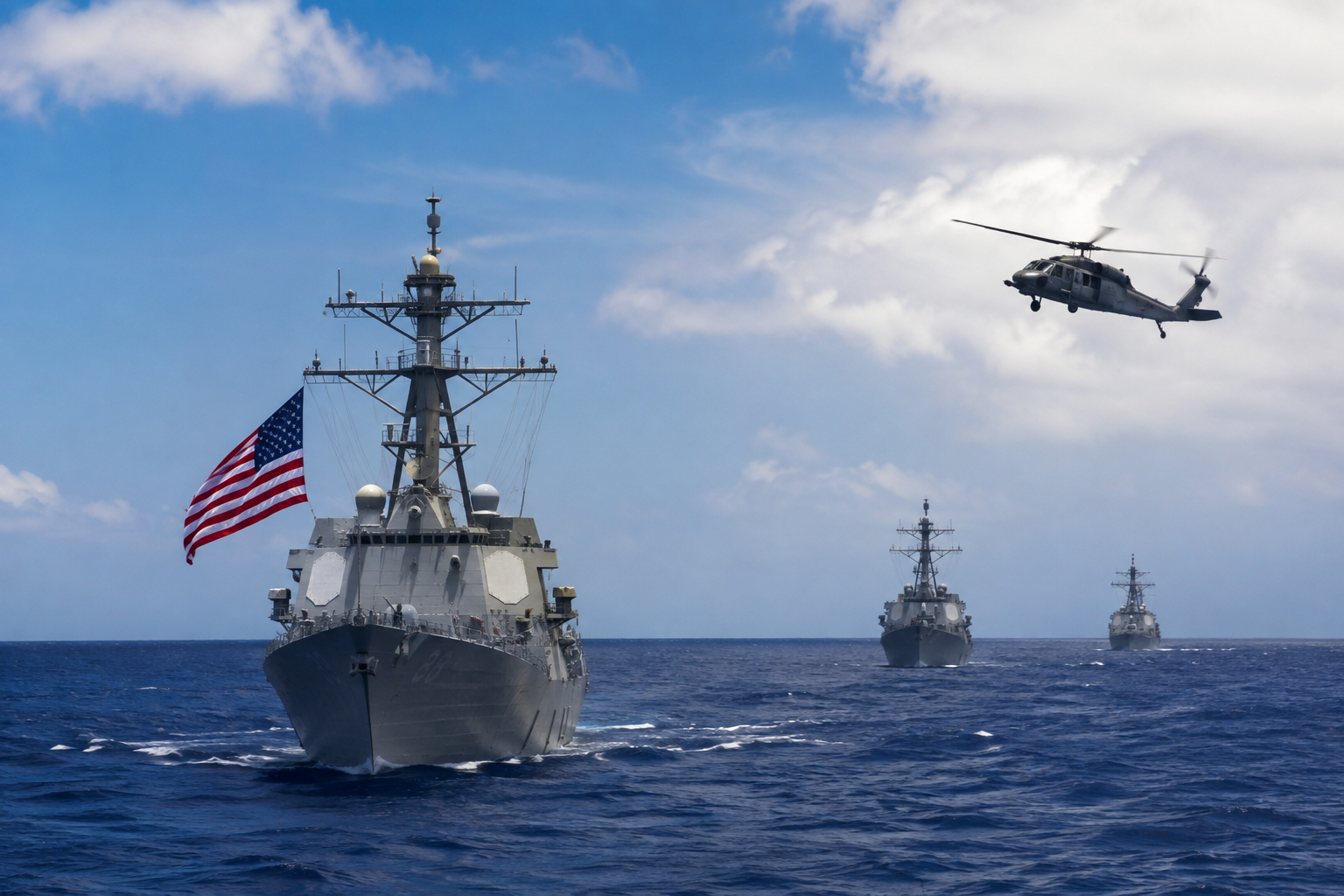
The missile test came amid a marked increase in military activity across the region. China has expanded its naval presence and conducted live-fire exercises, while the United States and its allies have held military drills around Guam and Hawaii.
Washington also maintains a significant military presence in Hawaii, Guam and the Marshall Islands.
Tuvalu’s Permanent Secretary for Foreign Affairs, Pasuna Tuaga, said concerns extend beyond China’s missile test. He also pointed to the expansion of initiatives such as AUKUS, the defence partnership between Australia, Britain and the United States.
“Ocean of Peace” and New Defence Agreements
In September 2025, Pacific leaders adopted the “Ocean of Peace” declaration, aimed at strengthening regional security and reaffirming the right of Pacific peoples to peace.
According to David Peebles of the Australian National University’s Pacific Security College, island nations want to shape the regional agenda themselves rather than allow outside powers to determine it according to their own strategic interests.
At the same time, the number of bilateral security agreements is growing. Last month, Australia and Fiji concluded a defence agreement known as the “Ocean of Peace Alliance”.
For Pacific island countries, such cooperation offers practical benefits, including assistance during natural disasters, efforts to combat illegal fishing, support for law enforcement agencies, and access to equipment and training.
Critics, however, fear that a growing number of bilateral agreements could reduce the influence of Pacific island nations over decisions concerning the use of their territory, waters and infrastructure.
Solomon Islands Foreign Minister Rick Houenipwela said the regional agenda should be shaped by Pacific countries themselves. However, participants at the meeting in Suva were still unable to reach a common position on China’s missile test.
Pacific Nations Struggle to Maintain a Balance
Kiribati and Nauru did not support the proposed wording of the joint statement, according to a source familiar with the talks. Both countries have strengthened ties with Beijing in recent years after switching diplomatic recognition away from Taiwan: Kiribati did so in 2019, while Nauru made the change in 2024.
New Zealand Foreign Minister Winston Peters attributed the failure to reach consensus to foreign influence, without specifying which country he was referring to.
The disagreements highlight how difficult it is for small island nations to balance economic interests, security concerns and relations with major powers.
Fiji’s Foreign Minister Sakiase Ditoka acknowledged that Pacific nations have to find a compromise. He said regional governments would prefer to reduce the military presence in the Pacific but also recognise that some security arrangements help protect their interests.
“I see it as maintaining a balance,” he said.
Last month, Fiji took part for the first time in RIMPAC, a major US-led military exercise in the Pacific.
In three weeks, Pacific leaders will gather in Palau for a meeting of the Pacific Islands Forum. The agenda is expected to include China’s missile test, regional security and the challenge of maintaining unity amid growing rivalry between major powers.
Read also: UK Faces 2027 Recession and 6.4% Inflation Risk Over Strait of Hormuz
