

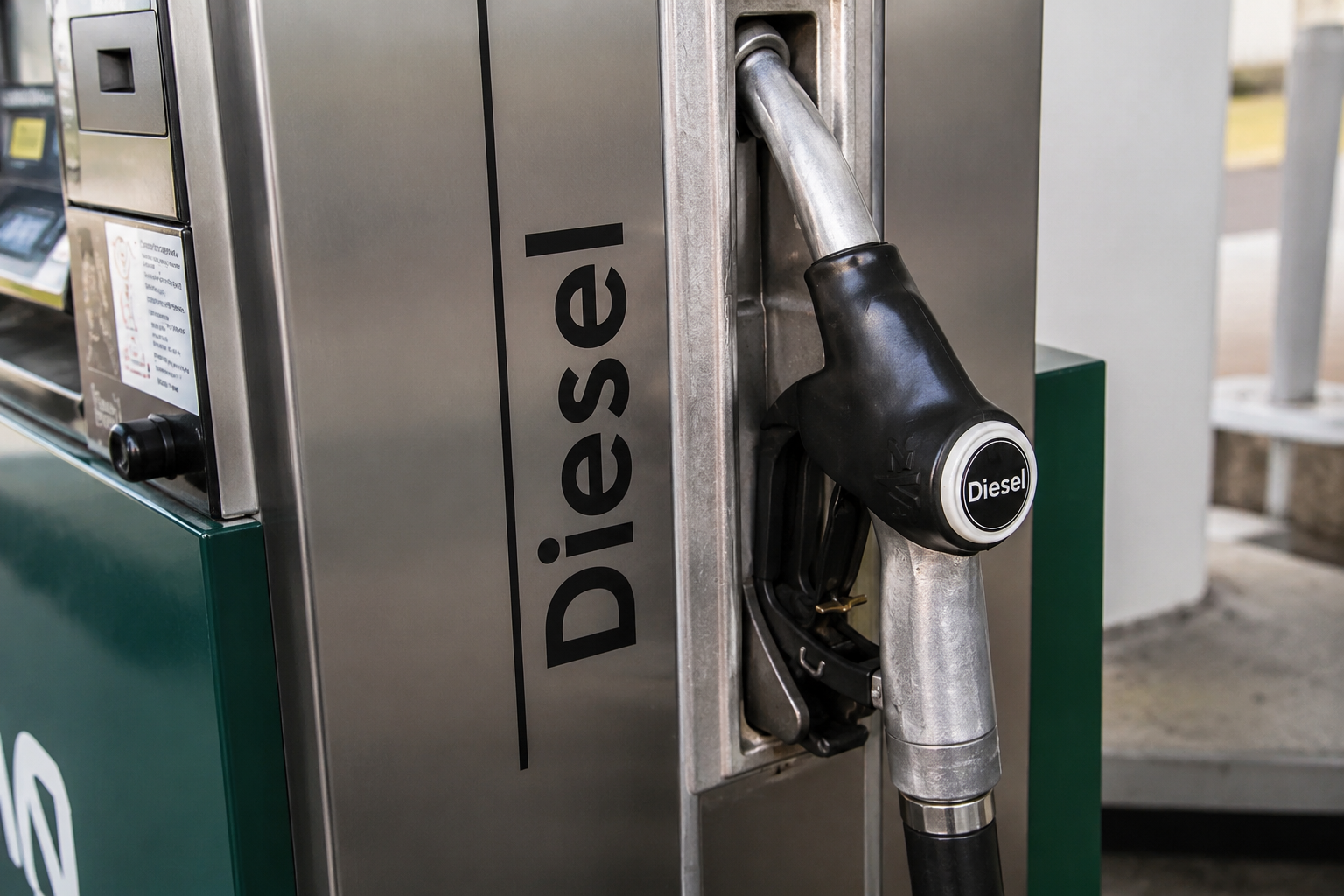
ARA Diesel Prices Rose 2%
The average price of diesel in Northwest Europe increased 2% during the final week of July to $1,310 per tonne on a CIF basis, including freight and insurance.
The assessment covers the Amsterdam-Rotterdam-Antwerp, or ARA, trading region, one of Europe’s principal hubs for petroleum products. According to Russia’s Center for Price Indices, the price reached its highest level since April 2026.
Importantly, $1,310 per tonne represents the final week of July rather than a current August 11 spot quotation. Market pressure has continued since then: European diesel refining margins jumped by nearly 10% on August 10 alone.
Russia Has Sharply Reduced Diesel Supply
One of the main factors behind higher European prices is the decline in Russian supply.
Russia imposed temporary diesel export restrictions in July as it sought to stabilize its domestic fuel market following refinery disruptions and rising wholesale prices.
The decline cannot be attributed simply to routine maintenance. A significant part of the disruption has followed Ukrainian drone attacks that damaged or shut refinery capacity.
Preliminary S&P Global Commodities at Sea data cited by Kommersant showed Russian seaborne petroleum product exports falling 21.85% month on month in July to 1.18 million barrels per day. Diesel shipments fell roughly threefold to 157,000 barrels per day.
Reuters separately reported that Russia’s overall seaborne petroleum product exports dropped by around one-third in July to roughly 3.9 million tonnes.
As K2Cargo.News previously reported, Russia’s fuel crisis is already increasing road freight costs, with higher diesel prices and supply constraints directly affecting carrier operating costs.
Export Restrictions Run Into 2027, With an Exemption for Refineries
On July 30, the Russian government extended restrictions covering gasoline, diesel, marine fuel and gasoil exports until January 31, 2027.
There is, however, an important exemption from September 1: petroleum producers will once again be allowed to export diesel, marine fuel and gasoil, while restrictions remain for other market participants. Certain intergovernmental shipments are also exempt.
That means the international market could receive some additional Russian supply in the autumn if refinery production recovers.
The size of any relief will depend on actual refinery utilization and whether further attacks disrupt production.
Refinery Attacks Continue to Remove Supply
Russian refining capacity remained under pressure at the end of July and into August.
Reuters reported that a crude distillation unit at Lukoil’s Perm refinery, with total capacity of about 260,000 barrels per day, was shut following a drone attack. On August 10, markets reacted again after an attack on a refinery in Russia’s Tatarstan region was confirmed.
These outages matter to Europe even where direct Russian trade is restricted because diesel is priced in a global market.
When Russian barrels disappear, traditional buyers such as Türkiye have to source replacement cargoes from the Middle East, India and other suppliers, putting them in competition with European importers.
Türkiye Became a Net Importer of EU Diesel
The redistribution of supply has been particularly visible in the Mediterranean.
Türkiye has historically been the largest buyer of Russian diesel, but in July it became a net importer of diesel from the European Union for the first time since November 2022.
That has intensified competition between Mediterranean buyers and Northwest Europe for cargoes originating outside the region.
The impact of reduced Russian supply is therefore broader than the loss of individual cargoes. It changes global diesel trade patterns and redirects supply among Europe, Türkiye, Brazil, Asia and other markets.
Red Sea Disruption Adds Another Supply Risk
A second major source of pressure is the Middle East and Red Sea.
At the end of July, petroleum product loadings from Saudi Arabia’s Red Sea ports fell almost sixfold, while shipments from Jizan effectively stopped.
Saudi Arabia’s 400,000-barrel-per-day Jizan refinery was shut on July 27 following a Houthi attack. The facility had exported more than 200,000 barrels per day of fuels during the previous three months, with diesel and gasoil among its main products.
Reuters reported another attack on August 10, with the planned restart delayed from August 15 to August 30.
Parts of Kuwait’s 615,000-barrel-per-day Al-Zour refinery have also been shut following a power outage, further restricting middle-distillate supply.
Hormuz Is Adding Pressure to Diesel Markets
Red Sea disruption is occurring alongside the larger crisis surrounding the Strait of Hormuz.
Restricted passage through Hormuz has reduced both crude and refined-product flows from the Gulf. Reuters says the blockade has sharply cut global diesel supply and contributed to the latest surge in fuel prices.
Uncertainty remains because the United States and Iran have yet to reach a final arrangement allowing commercial traffic to fully normalize.
K2Cargo.News previously examined this issue in Iran Proposes New Shipping Rules for the Strait of Hormuz.
Europe is therefore facing disruption on two strategically important Middle Eastern routes at the same time: Red Sea exports and Persian Gulf flows through Hormuz.
European Diesel Refining Margins Hit a Record
The supply squeeze can also be seen in refinery economics.
On July 30, the premium of European low-sulphur gasoil futures over Brent crude — a proxy for diesel refining margins — reached an all-time high of $74.66 per barrel.
On August 10, European diesel refining margins jumped by almost another 10% in a single session. Brent and WTI crude rose around 5%, meaning diesel again outpaced the underlying crude market.
That distinction is important. Europe is not facing only a crude-oil price problem; it is also facing limited availability of refining capacity and finished middle distillates.
As a result, falling crude prices would not necessarily translate immediately into significantly cheaper diesel if the physical fuel market remains tight.
European Diesel Inventories Are at Their Lowest Since 2014
Low inventories are amplifying the impact of every disruption.
Reuters reported that European diesel stocks had fallen to their lowest level since 2014 by late July. Energy Aspects expects Europe to face a shortage of about 833,000 barrels per day of middle distillates, including diesel and jet fuel, during the third quarter.
A market with limited inventories becomes much more sensitive to refinery shutdowns, attacks on infrastructure, shipping disruption or additional trade restrictions.
Even relatively small supply losses can therefore produce a disproportionately large price response.
India Shipped Up to 5 Million Barrels to Europe
India has emerged as one of the main sources of replacement supply.
Reliance Industries shipped approximately 4 million to 5 million barrels of diesel from its Jamnagar complex to Europe in July, the highest volume in around ten months.
European buyers, however, are competing with Asia for those same barrels.
Chartering an LR2 tanker to move refined products from India’s west coast to Europe costs slightly more than $5 million per voyage, or around $55 per tonne, according to shipping data cited by Reuters. Shipping economics toward Asia became more attractive again in early August.
High European prices therefore do not automatically guarantee sufficient additional imports. Europe has to outbid other regions to attract marginal cargoes.
Higher Diesel Prices Mean Higher Trucking Costs
Diesel remains the dominant fuel for international European road freight, meaning a prolonged increase in wholesale prices will eventually feed through to transport companies.
Fuel represents one of the largest cost components in long-haul trucking. In a previous analysis of the Russian market, K2Cargo.News noted that when fuel accounts for roughly 30% of operating costs, a 10% rise in diesel can translate into roughly a 3% increase in total transport cost before other disruptions are included.
The precise effect in Europe will vary according to national taxes, fuel purchasing contracts and fuel-surcharge mechanisms.
But if wholesale prices remain elevated, the pressure is likely to reach retail pump prices and freight rates, particularly in international long-haul operations where fuel consumption is highest.
Three Factors Will Determine the Autumn Market
European diesel prices over the coming months will depend heavily on Russian refinery recovery, Middle Eastern supply and the ability of alternative exporters to increase shipments.
From September 1, Russian refiners are due to regain the ability to export some diesel, potentially returning additional barrels to the international market.
Markets will also watch whether Saudi Arabia’s Jizan refinery successfully restarts and whether shipping conditions through the Strait of Hormuz improve. Further delays in either area could keep European prices elevated even if crude markets remain relatively stable.
The rise to $1,310 per tonne in ARA should therefore be viewed not as an isolated price spike but as the result of several simultaneous supply constraints. With inventories already low, Europe is increasingly forced to compete with Asia and other regions for every additional diesel cargo.
Read also: Fuel Crisis Drives Up Road Freight Costs in Russia