

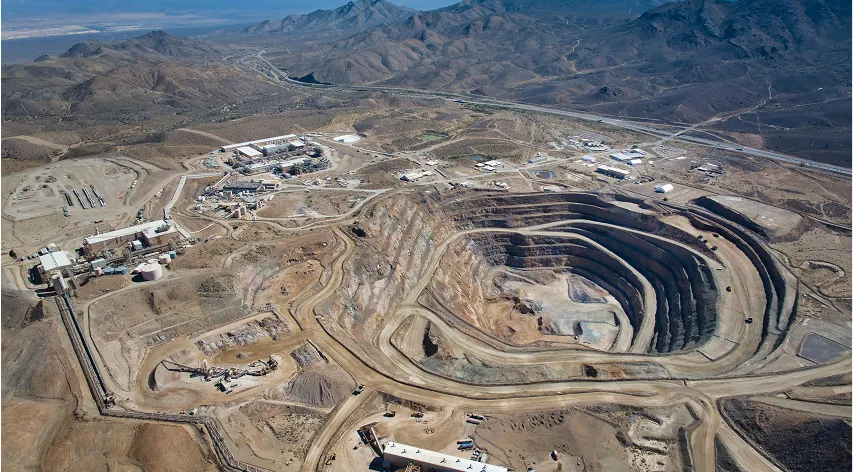
Washington is accelerating investment in mineral extraction and processing while European projects face funding gaps, lengthy approvals and the risk of a new external dependency
Washington Is Moving Faster on Mineral Deals
The European Union is falling further behind the United States in the competition for critical minerals. According to the Financial Times, Washington has secured more mineral-related deals during the past 18 months than Europe concluded over the previous decade.
Since 2022, the United States has announced approximately $40 billion in provisional funding for mining, processing and strategic-material supply projects. The EU and its member states have committed around €6 billion in 2026, according to the report.
The difference extends beyond funding volumes. Washington is using government loans, equity investments, procurement guarantees, pricing mechanisms and international agreements to secure access to deposits and processing capacity.
Europe Could Face a “Second China”
China’s dominance is particularly strong in rare-earth processing. European industry representatives now warn that replacing Chinese dependency without securing European-controlled capacity could create a new reliance on American suppliers and investors.
The United States could become a “second China” for Europe’s rare-earth supply chain
This does not necessarily mean that Washington intends to restrict European access. The risk is that U.S. companies may secure control of processing technologies, promising projects and long-term offtake contracts before their European competitors.
Minerals extracted or processed in Europe could consequently be directed primarily into U.S.-controlled industrial supply chains.
Defence and Electronics Depend on Critical Materials
Rare earths form one segment of the broader critical-minerals market. These materials are required for permanent magnets, electric motors, guidance systems, radar equipment, drones, aircraft, missiles, satellites, semiconductors and telecommunications infrastructure.
The White House describes processed critical minerals as “indispensable to almost every industry,” including defence programmes and critical infrastructure.
The U.S. Department of Defense is also financing a domestic mine-to-magnet supply chain. Its Office of Strategic Capital provided MP Materials with a $150 million loan to add heavy rare-earth separation capacity at the Mountain Pass facility in California.
EU Targets Face Implementation Challenges
Under the European Critical Raw Materials Act, the EU aims to meet at least:
- 10% of annual demand through domestic extraction;
- 40% through European processing;
- 25% through recycling.
No more than 65% of the EU’s annual consumption of any strategic material at a relevant processing stage should come from a single third country by 2030.
The European Commission has selected 60 strategic raw-material projects inside and outside the EU. It also launched a Raw Materials Mechanism in April 2026 to connect buyers with suppliers, financial institutions and storage providers.
Faster permitting, however, does not guarantee commercial production. Mining, refining and magnet-manufacturing projects still require affordable financing, long-term purchase agreements and protection against severe price volatility.
Competition Will Reshape Mineral Logistics
The critical-minerals race will also transform international logistics. New mining and processing projects require railways, roads, power infrastructure, warehouses and specialised port terminals.
Control over transport corridors and long-term shipping contracts is becoming nearly as important as ownership of the deposits themselves. Falling further behind could leave European manufacturers facing higher prices, longer supply routes and greater dependence on companies based outside the EU.
Brussels therefore needs to move beyond project selection and partnership memorandums toward financing complete supply chains covering extraction, processing, storage, transportation and industrial consumption.
Read also: Central Asia: 39% of Manganese Reserves Draw U.S.–China Competition