

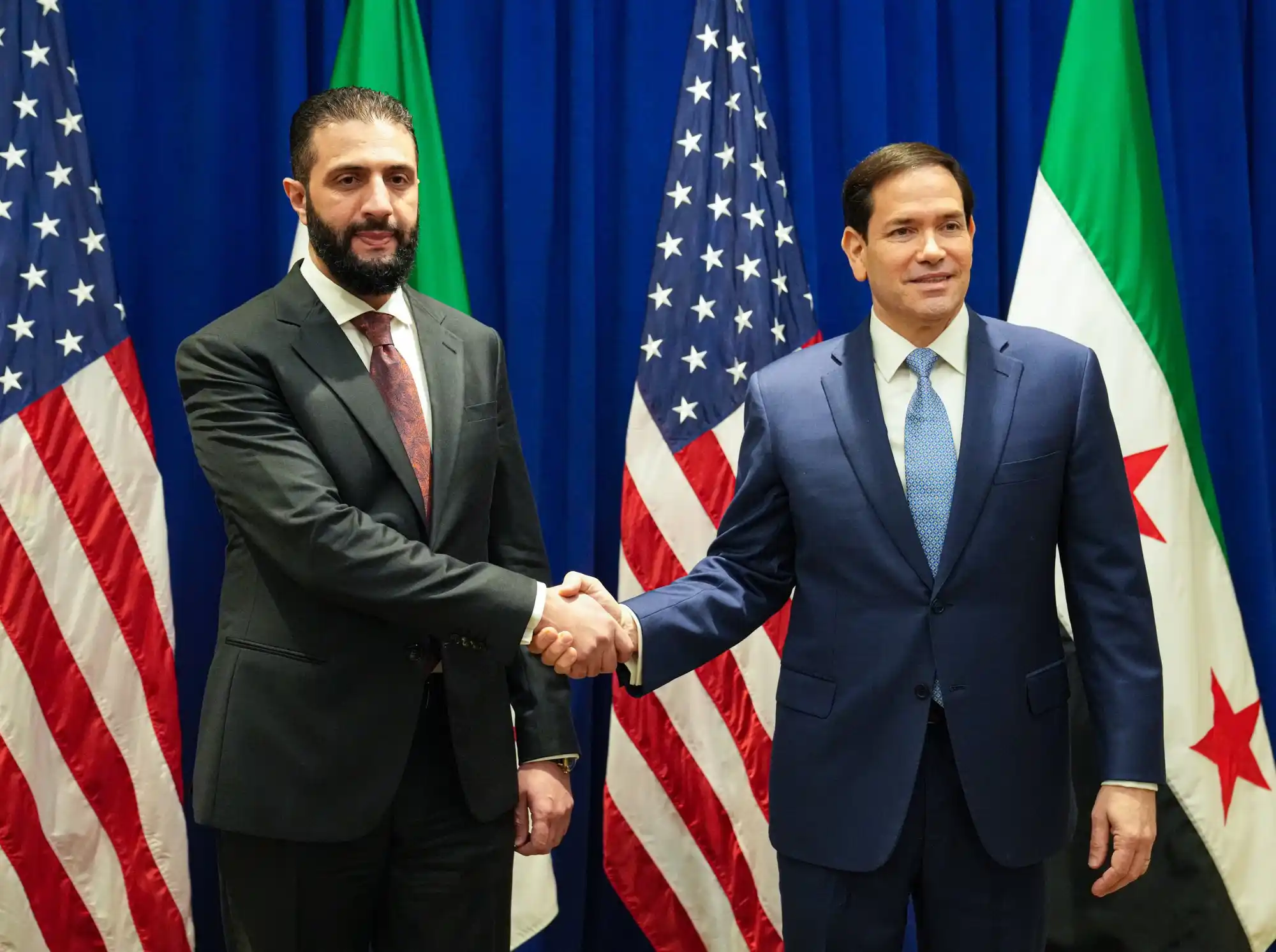
The decision removes one of the last major legal barriers to banking transactions and foreign investment, although targeted sanctions and export controls on sensitive goods remain in force
Decision Took Effect on August 24
The United States has formally removed Syria from its list of State Sponsors of Terrorism. The decision took effect on August 24, 2026, following the completion of a mandatory 45-day congressional review period.
The president notified Congress of his intention to rescind the designation on July 8. Congress did not block the decision within the statutory period, allowing the State Department to complete the delisting procedure.
Syria had been on the list since 1979. The designation imposed restrictions on U.S. economic assistance, arms exports, dual-use products, government-backed financing and certain financial transactions.
According to an official U.S. Treasury notification, Syria is no longer subject to prohibitions under the Terrorism List Governments Sanctions Regulations.
Most Comprehensive Sanctions Were Removed Earlier
The delisting is not the first step toward normalising Syria’s economic relations. Most comprehensive U.S. sanctions on the country had already been terminated on July 1, 2025.
Washington revoked six executive orders that formed the basis of the previous Syria sanctions programme. The corresponding regulations were subsequently removed from the Code of Federal Regulations.
As the Office of Foreign Assets Control explains, people and entities blocked solely under the former Syria programme were removed from the Specially Designated Nationals List, and their property was unblocked.
The terrorism-sponsor designation nevertheless continued to create separate legal restrictions and heightened compliance risks for banks, insurers, exporters and investors. Its removal completes another important stage in dismantling the previous sanctions framework.
HTS Was Also Removed From the Sanctions List
The United States simultaneously revoked the Specially Designated Global Terrorist status of the al-Nusrah Front, also known as Hay’at Tahrir al-Sham.
The Treasury removed HTS from its blocked-persons list. Syria General License 25, which had authorised certain transactions that might otherwise have been restricted because of HTS members’ role in the new Syrian government, was revoked because it was no longer required.
Washington said the measures recognise steps and commitments by the government of President Ahmed al-Sharaa to distance Syria from international terrorist activity.
Banks May Find It Easier to Process Trade
The most immediate practical effect concerns the financial system. Even after the termination of the comprehensive Syria sanctions programme, many international banks continued to treat transactions involving the country as excessively risky.
The terrorism-sponsor designation encouraged enhanced checks, restricted correspondent relationships and led some institutions to reject legally permitted payments entirely.
The new status could make it easier to provide:
- settlement services for trade contracts;
- correspondent banking accounts;
- import and export finance;
- insurance for investment projects;
- commercial credit;
- international remittances;
- access to global payment systems.
Banking normalisation will nevertheless take time. Financial institutions must update compliance systems, evaluate individual counterparties and ensure that transactions do not involve people or organisations that remain sanctioned.
Infrastructure Could Attract the Most Investment
Syria requires extensive reconstruction of its energy, transport, housing, water, telecommunications and industrial infrastructure.
The World Bank estimates that rebuilding damaged physical assets could cost approximately $216 billion.
Around $82 billion of that amount relates to infrastructure. Potential investment priorities include:
- power plants, substations and transmission lines;
- roads and railways;
- seaports and land-border crossings;
- telecommunications networks;
- water and wastewater systems;
- housing, warehouses and industrial facilities.
In August 2026, the World Bank approved a US$100 million financial-sector modernisation project. It will support payment infrastructure, banking technology, supervision and anti-money-laundering controls.
Trade Recovery Would Create Logistics Demand
Easier access to finance could increase Syrian imports of construction materials, industrial machinery, vehicles, spare parts, power equipment and consumer goods.
Major cargo flows could move through:
- the Türkiye–Syria land border;
- crossings with Jordan and Iraq;
- the ports of Latakia and Tartus;
- Lebanese ports and overland routes;
- regional air cargo hubs.
Higher trade volumes would create demand for road and maritime transport, project logistics, warehousing, customs clearance and the distribution of construction and humanitarian cargo.
Operators must still account for damaged infrastructure, insurance restrictions, route security and differing compliance policies among international banks and export-credit agencies.
Targeted Sanctions Remain
Syria’s removal from the terrorism list does not eliminate every U.S. restriction. Sanctions remain on:
- Bashar al-Assad and members of his network;
- people accused of serious human rights abuses;
- Captagon traffickers;
- actors connected with past chemical-weapons proliferation;
- ISIS and al-Qaeda affiliates;
- Iranian organisations and regional proxies;
- other actors threatening Syria or regional stability.
Exports of controlled technology are also not automatically unrestricted. Under current U.S. Commerce Department guidance, many civilian EAR99 products may be shipped without an individual licence when all conditions are met.
Items on the U.S. Commerce Control List—including certain electronics, telecommunications equipment, aviation components and dual-use technologies—may still require export authorisation.
The Market Is Opening, but Risks Remain
The decision reduces legal uncertainty and may help reconnect Syria with international trade finance. This is particularly important for infrastructure projects that depend on bank guarantees, insurance and cross-border payments.
Delisting alone, however, cannot guarantee an investment surge. Companies will continue to assess political stability, security, property rights, procurement transparency, the judicial system and the ability of local partners to fulfil contracts.
The U.S. action should therefore be understood as creating a legal opening for investment and trade. The actual recovery of commercial activity and freight flows will depend on how quickly Syria can rebuild institutions and infrastructure while convincing international businesses that the remaining risks are manageable.
Read also: Syrian Court Sentences Bashar al-Assad to Death for Crimes Against Humanity