

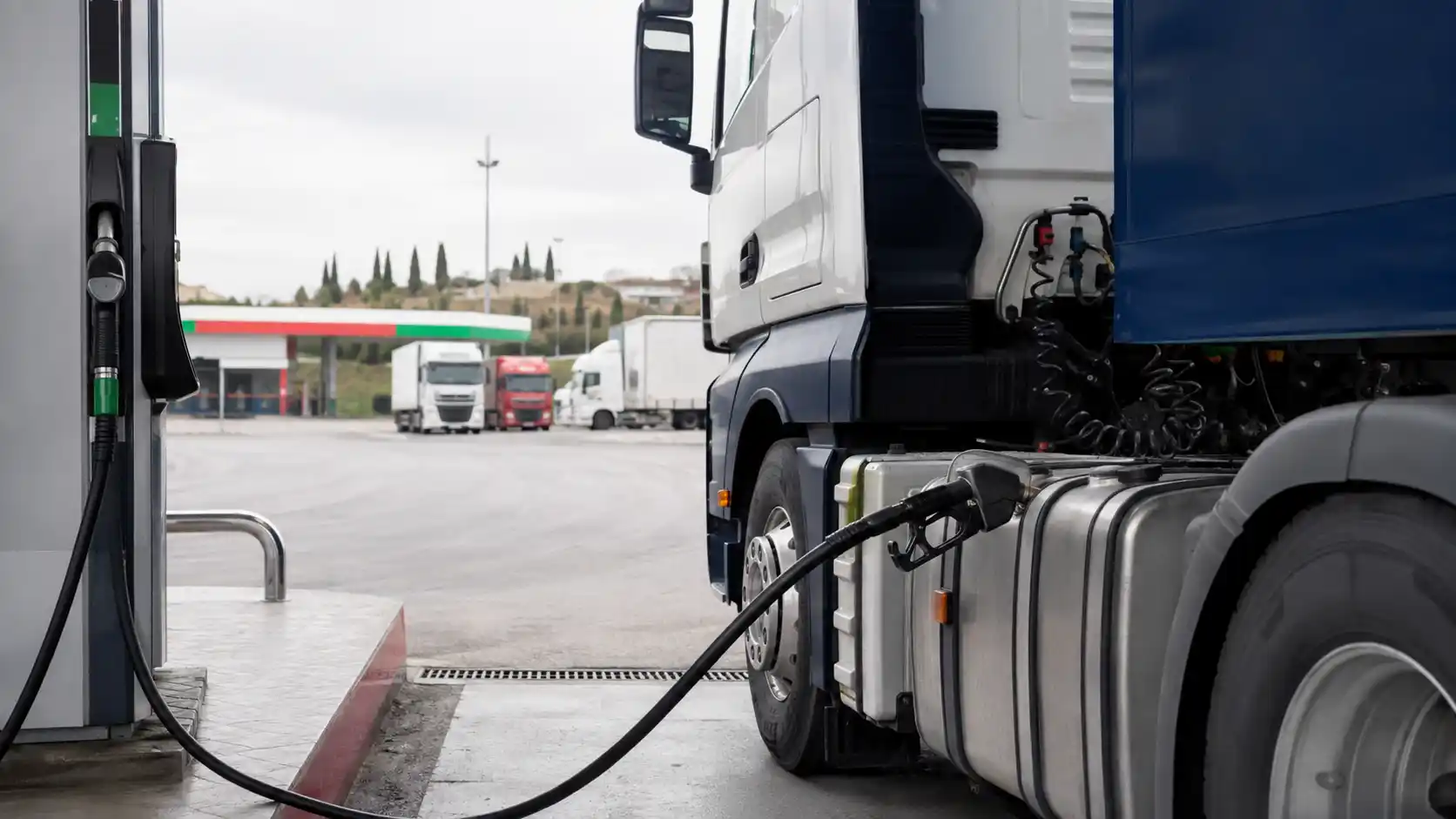
Freight and passenger road transport operators may recover up to 70% of additional diesel costs incurred between March and August 2026
The Italian government has allocated an additional €22.1 million to the tax credit intended to offset higher diesel costs for road transport companies. The latest refinancing increases the programme’s total budget to €386.2 million.
The decision is contained in Decree-Law No. 153 of August 26, 2026, published in Italy’s Official Gazette No. 197 and effective from August 27.
The Italian term is decreto-legge, which should be translated as “decree-law,” not “legislative decree.” The latter describes a different form of Italian legislation known as a decreto legislativo.
The decree also maintains a reduced diesel excise rate between August 27 and September 5. The rate is set at €532.90 per 1,000 litres. This represents an excise reduction of €0.14 per litre, while the total pump-price benefit is estimated at approximately €0.17 per litre after the VAT effect.
The diesel tax credit was introduced under Decree-Law No. 33/2026 to compensate commercial road transport operators for the sharp increase in fuel costs.
The original measure allocated €100 million and covered fuel purchases from March through May. Its budget and eligible period were subsequently expanded:
- the initial allocation was €100 million;
- the first major refinancing increased it to €300 million;
- a subsequent increase brought it to €322 million;
- Decree-Law No. 139/2026 of August 5 raised it to €364.1 million and added August purchases;
- Decree-Law No. 153/2026 increased the fund to €386.2 million.
The scheme now covers eligible diesel purchased between March 1 and August 31, 2026.
The additional funding does not automatically increase the amount received by each company. It expands the overall pool from which tax credits will be distributed after applications have been examined.
The tax credit may cover no more than 70% of the additional diesel expenditure compared with the February 2026 reference price.
Italy’s Ministry of the Environment and Energy Security set that benchmark at €1.39415 per litre excluding VAT.
The maximum credit is calculated as:
70% × [eligible diesel expenditure excluding VAT − (eligible litres × €1.39415)].
The application platform is expected to calculate the amount automatically using monthly fuel volumes and the invoice information uploaded by the company.
Purchases made below the February benchmark must be excluded because they do not represent an additional cost eligible for compensation.
If total calculated entitlements exceed the available €386.2 million, credits will be reduced proportionally across the beneficiary pool. A company’s preliminary estimate may therefore differ from the final amount awarded.
The programme covers road freight companies operating for third parties and the relevant categories of passenger road transport operators.
For freight transport, eligible vehicles are category N trucks meeting Euro V or Euro VI standards and having a permissible gross weight of at least 7.5 tonnes. Passenger transport is subject to the conditions established for category M2 and M3 buses.
An applicant must have its registered office or a permanent establishment in Italy and satisfy the applicable REN registration requirements.
REN stands for Registro Elettronico Nazionale, Italy’s National Electronic Register for road transport operators. It is not a register of employers.
Foreign transport companies may qualify if they maintain a permanent establishment in Italy and meet the remaining requirements.
Companies carrying their own goods on their own account are excluded. Diesel must also be used in vehicles that are individually eligible under the programme.
The electronic platform is scheduled to open on September 1, 2026, with applications closing on September 15.
Companies should verify the final platform-opening notice and the latest technical instructions before filing. Any change to the timetable or procedure would require a further ministerial decision.
Initial registration must be completed by the business owner or legal representative using Italy’s SPID digital identity or CIE electronic identity card.
Once authenticated, the representative may appoint an individual to enter data and submit the application. That person may belong to a trade association, provided that their Italian tax code is entered in the system.
A general delegation to another company is not permitted. The authority must be assigned to an identified individual rather than a separate legal entity.
The Ministry of Infrastructure and Transport and the Customs and Monopolies Agency have prepared approximately 50 answers addressing the application procedure. Many concern the invoice spreadsheet.
The file must:
- remain in .xlsx rather than .xls format;
- retain the same filename assigned when downloaded from the platform;
- show all amounts excluding VAT;
- contain only information connected with eligible fuel expenditure.
Column C must show the invoice’s total value excluding VAT. Column D must contain only the cost of diesel used to propel eligible vehicles.
Where a fuel-card or netting invoice also includes petrol, methane, AdBlue, tolls or other services, Column C must contain the entire net invoice amount. Column D must remain limited to the eligible diesel component.
Differences between invoices, fuel volumes and vehicle records may result in further checks or a reduction in the credit.
Applicants must correctly classify each invoice as CARB or NOCARB.
CARB applies when the invoice itself contains at least one registration plate belonging to an eligible vehicle.
NOCARB applies when no vehicle plate appears on the invoice. This remains the case when registration numbers are listed only in a separate file attached to a netting invoice.
So-called jolly, or universal, registration plates do not establish eligibility. If an invoice contains both eligible and universal plates, it remains classified as CARB, but fuel associated with ineligible vehicles must be removed from Column D.
Diesel purchased for a carrier’s private storage tank is not automatically excluded.
The invoice is generally classified as NOCARB. Column C must show the full invoice value excluding VAT, while Column D must contain only the share used to refuel eligible vehicles.
The company must be able to document how the fuel was allocated. Where both eligible and ineligible vehicles used the same tank, only the qualifying share may be included.
Diesel used to power independent refrigeration units on trucks or trailers is excluded because it is not used for vehicle propulsion.
For deferred invoices, the decisive date is the actual fuel purchase or refuelling date, not the date on which the invoice was issued.
An invoice issued in September may therefore qualify when it covers fuel purchased in August. Conversely, an invoice dated in March but covering February refuelling is not eligible.
The purchase date determines whether the expenditure falls within the March 1–August 31 period.
Invoices relating to purchases below the February benchmark of €1.39415 per litre excluding VAT must be removed regardless of their issue date.
For diesel purchased outside Italy, Column A must contain the supplier’s VAT number without the country prefix. The country code must instead be entered in Column E.
Leading zeroes in the VAT number must be preserved. Special characters that cannot be entered correctly must be replaced with a + sign.
For an invoice issued by an Italian entity, Column E should contain IT. With a netting invoice, applicants should use the country of the invoice issuer, which may differ from the country where the vehicle was refuelled.
Swiss transactions require particular attention. An invoice is not eligible when the actual fuel supplier uses a Swiss VAT number. It may qualify when the supplier has a VAT registration in an EU member state.
An application already submitted may be cancelled and replaced until September 15 if the company discovers an omitted invoice or incorrect information.
Replacement remains possible even after the original application has entered processing or received preliminary approval.
Once the platform closes, applicants will no longer be able to add invoices, change reported litres or correct other information. Carriers should therefore conduct a final reconciliation before submitting the last version.
Replacing an application does not automatically remove the company from the programme. If the requirements remain satisfied, the carrier continues to qualify, although the amount may change following further review or proportional allocation.
Approved applications are processed in chronological order. However, the overall budget cap means early submission does not eliminate the possibility of a proportional reduction.
The benefit will not be paid directly into the carrier’s bank account. Once approved, it will appear in the company’s tax account under the section for subsidised tax credits.
The credit may then be used to offset eligible tax and other liabilities through Italy’s F24 form.
It may be combined with an excise-duty refund covering the same diesel. However, the total value of all support must not exceed the company’s actual expenditure on fuel used by eligible vehicles.
For carriers, the measure can improve their tax position and cash flow but will not provide an immediate cash payment. The practical benefit will depend on the liabilities that the company can offset through the F24 system.
Read also: Italy’s Freight Transport Sector Faces Rising Costs and Infrastructure Pressure