

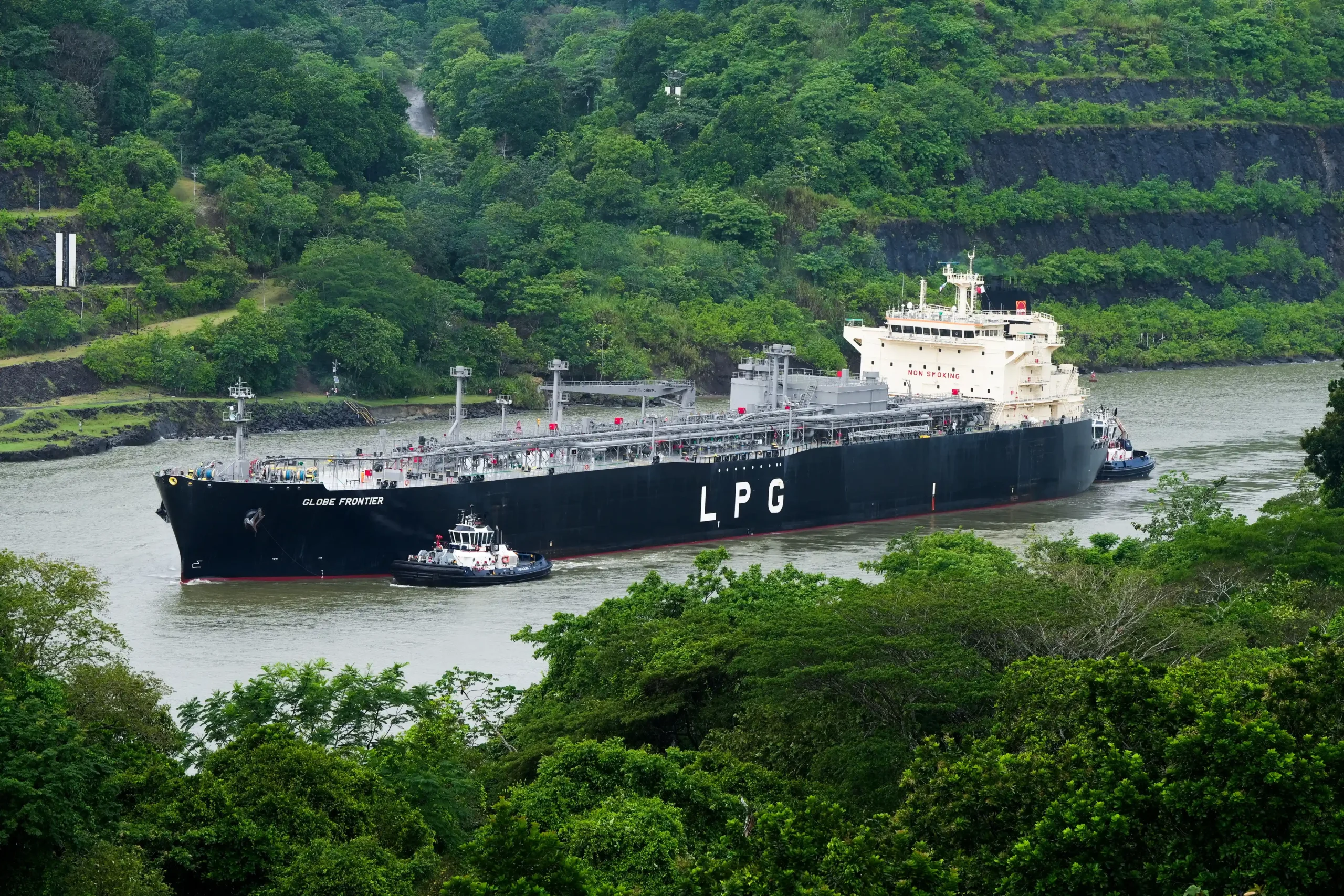
The South Korean company won an auction for the northbound transit of LPG carrier G. Spirit as constrained capacity and changing energy routes sharply increased the value of guaranteed passage
Transit-slot auction sets a new record
South Korea’s SK Gas submitted a record bid of $5.3 million to secure a northbound Panama Canal transit for the LPG carrier G. Spirit on 1 September 2026. The vessel is heading toward the US Gulf Coast, where it is expected to load another LPG cargo for delivery to Asia.
The bid surpassed the previous $4.6 million record set earlier in August by another gas carrier, G. Arete. The difference was $700,000, or approximately 15%.
The $5.3 million payment is not a new standard Panama Canal toll or the vessel’s total transit cost. It is an auction premium for a guaranteed slot, payable in addition to the regular canal toll and charges for tugs, security and other associated services.
It is therefore more accurate to describe the transaction as a record auction price for a booking slot, rather than a general increase in tariffs for all ships using the canal.
G. Spirit secures a 1 September transit
- Spirit is a very large gas carrier designed to transport substantial volumes of liquefied petroleum gas. The Panama-flagged vessel has a deadweight of approximately 54,500 tonnes and cargo capacity of about 83,864 cubic metres.
The vessel regularly operates between the US Gulf Coast and East Asian markets. A northbound passage through the Panama Canal allows it to enter the Caribbean and continue toward loading terminals around Houston.
Without a confirmed reservation, G. Spirit would have had to wait for an available opening. Delays for some vessels arriving without reservations have reached as much as 11 days. The auction allowed SK Gas to replace an uncertain waiting period with a confirmed transit date.
Schedule certainty is particularly valuable in energy logistics. A delayed gas carrier may miss an agreed loading window, incur additional chartering expenses and disrupt deliveries to customers.
Price was almost 100 times the previous median
Before demand intensified, the median price for a slot sold through the auction system was approximately $55,000. SK Gas’s winning bid was about 96 times that level.
The vessel must also pay the regular canal toll separately. For a gas carrier of this size, the basic Neopanamax transit charge can amount to several hundred thousand dollars, depending on its loading condition and the services required. G. Spirit’s final canal bill will therefore exceed $5.3 million.
The extraordinary bid reflects not only the value of the passage itself but also the commercial value of time. If a delay prevents the vessel from fulfilling its next contract, the resulting losses could exceed the auction premium.
Changing gas flows increase demand
Pressure on the Panama Canal is partly connected to shifts in global energy flows. Disruption to Middle Eastern supplies has increased Asian buyers’ interest in LPG exported from the United States.
US Gulf Coast terminals are consequently playing a larger role in supplying East Asian markets. For cargoes moving between the United States and South Korea, China or Japan, the Panama Canal generally provides a considerably shorter route than sailing around South America.
The growing number of gas carriers operating between the United States and Asia is increasing competition for Neopanamax lock capacity. Northbound slots are especially valuable to vessels returning to US terminals to load their next cargo.
Panama Canal administrator Ricaurte Vásquez has highlighted the unusual intensity of competition in recent auctions.
“At the peak, we had 18 bidders for one slot. That’s a lot. Normally, you have two to three per day,” Ricaurte Vásquez said
Water shortage constrains canal capacity
Challenging hydrological conditions are adding to the pressure. Rainfall in the canal watershed between May and August was approximately 34% below the historical average, while water inflows were 44% lower.
The Panama Canal locks depend on freshwater stored in Gatun and Alhajuela lakes. Each vessel transit releases water toward the oceans, meaning prolonged dry conditions can force the canal authority to regulate both daily transits and vessel draft.
Daily capacity is expected to fall to 34 transits in early September and then to 32 from the middle of the month. Fewer available slots could maintain strong competition, particularly among gas carriers and other vessels transporting time-sensitive cargo.
Auctions complement the reservation system
Most ships use advance reservations to secure canal passage. Longer-term access to the Neopanamax locks is also distributed through the Long-Term Slot Allocation programme, whose terms are published by the Panama Canal Authority.
Daily auctions are used by vessels without confirmed bookings and by operators requiring a specific date or faster passage. The available slot is awarded to the highest bidder.
The canal authority has previously stressed that individual multimillion-dollar auction results reflect the urgency of specific voyages and short-term market conditions. They should not be interpreted as a new standard transit price for all vessels.
Canal access becomes a critical energy asset
SK Gas’s record bid demonstrates how much energy-market participants are prepared to pay for schedule reliability. Guaranteed passage allows a cargo owner to plan US loading operations, vessel employment and deliveries to Asian customers with greater certainty.
For shipping companies, rising auction prices increase the importance of booking early and comparing the cost of waiting with the price of guaranteed passage. If capacity constraints persist, these additional expenses could eventually affect freight rates and the delivered cost of energy cargoes.
The $5.3 million payment remains an exceptional auction transaction rather than a new general tariff. However, it shows how water scarcity, limited transit capacity and the reorganisation of global energy supplies have transformed Panama Canal access into an increasingly valuable logistics asset.
Read also: Panama Canal Emerges as the Main Alternative Route for Global Trade