

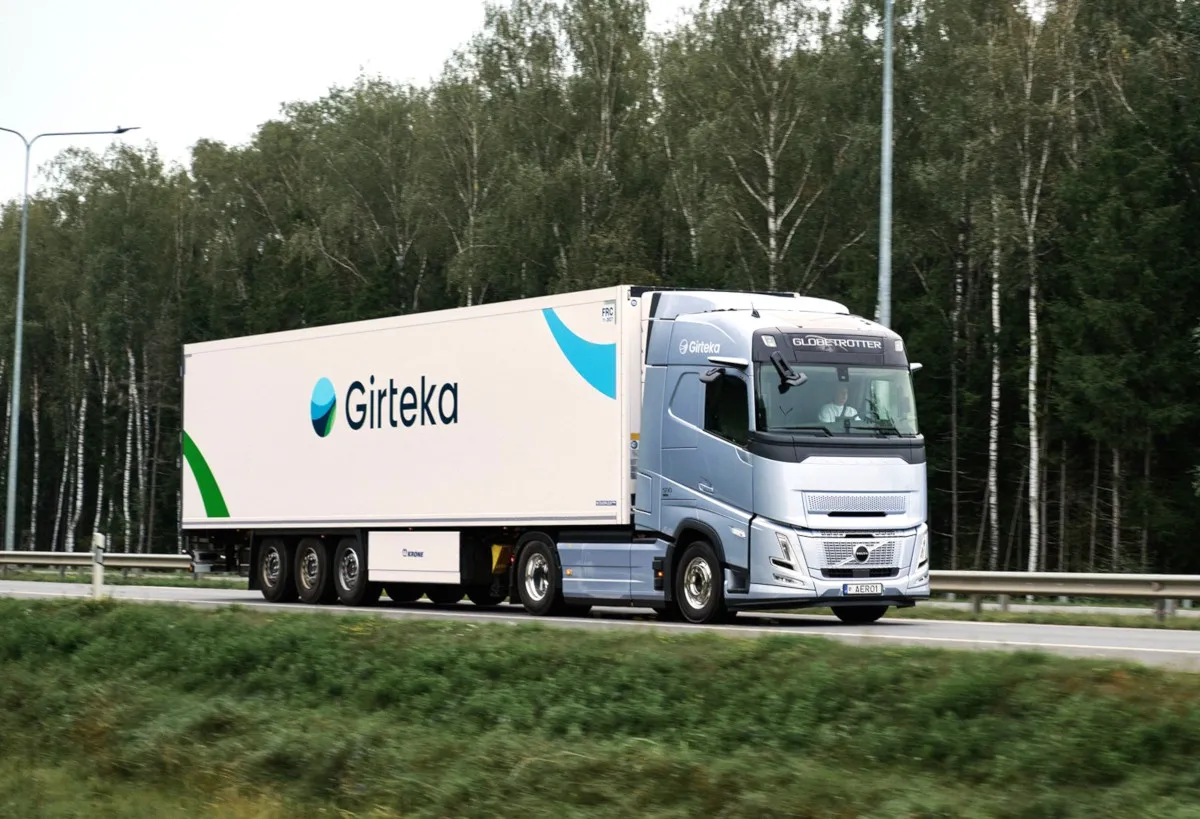
The Lithuanian logistics group is expanding its European operating network to improve driver recruitment and preserve the transport capacity available to customers
Latvian Operation Is Already Active
Girteka is transferring part of its transport operations to Latvia and Romania. According to the company’s official announcement, the new entities will register trucks, employ drivers and manage transport operations within the group’s wider European network.
Latvia is currently the more advanced of the two projects. Nearly 100 Girteka trucks have already been registered locally, while the company is recruiting drivers as well as transport and management personnel in Riga.
Latvian registration does not mean that these vehicles will operate exclusively in Latvia. The trucks will be deployed across Girteka’s European network according to customer demand and freight flows.
Oradea Base Prepares for Its First Trucks
The second operation is being established in Oradea, Romania, close to the Hungarian border. The location provides convenient access to major road freight corridors connecting Central and Southeastern Europe.
Truck registration and driver employment in Romania had not yet started when the expansion was announced. The operation will initially focus on receiving vehicles and employing drivers. Local transport management and administrative functions are expected to grow as the Oradea fleet expands.
Girteka has not disclosed how many trucks will ultimately be registered in Romania or when the new operation is expected to reach full capacity.
Driver Availability Is the Main Reason
Girteka says the expansion is primarily intended to provide greater recruitment flexibility. According to the International Road Transport Union, Europe has approximately 502,000 unfilled truck driver positions, equivalent to around 13% of the required workforce.
“The availability of professional drivers remains a key constraint,” Girteka Transport CEO Mindaugas Paulauskas said.
Operating legal entities in several EU countries gives the company access to additional national labour markets and international recruitment channels. However, Girteka has not identified the nationalities of future employees or linked the move to bypassing Lithuanian quotas or immigration requirements.
Girteka Rejects a Tax-Driven Explanation
Differences in taxation, social contributions and employment rules inevitably raise questions about why trucks are being registered in other countries. Girteka, however, says the decision is not based on a specific tax advantage.
“The decision is not based on any specific regulatory or tax distinction,” the company said.
The group says it considers the wider business environment, including driver availability, recruitment procedures, local infrastructure and the ability to maintain sufficient fleet capacity.
The development should therefore be viewed as a redistribution of selected operations rather than Girteka’s departure from Lithuania. The company has not announced a headquarters relocation or a complete withdrawal of Lithuanian-registered vehicles.
Girteka Extends Its Decentralised Operating Model
The Riga and Oradea bases continue Girteka’s strategy of distributing fleet operations across several European markets. The group already has a major operation in Poznań, Poland, supporting approximately 3,000 trucks and more than 4,000 employees, including drivers.
Additional operating companies allow Girteka to spread recruitment across multiple countries and reduce its dependence on a single labour market. For customers, the model is intended to improve transport availability and reduce the risk of loads being rejected because crews cannot be found.
The expansion also creates additional compliance responsibilities. Girteka will need to maintain consistent standards for driver pay, posting rules, vehicle maintenance and EU transport legislation regardless of where each truck is registered.
For the European road freight market, the decision by one of the continent’s largest asset-based carriers demonstrates that the driver shortage is now influencing not only wages and freight rates, but also where companies register and manage their fleets.
Read also: EU to Train 600 African Drivers for Jobs in Europe