

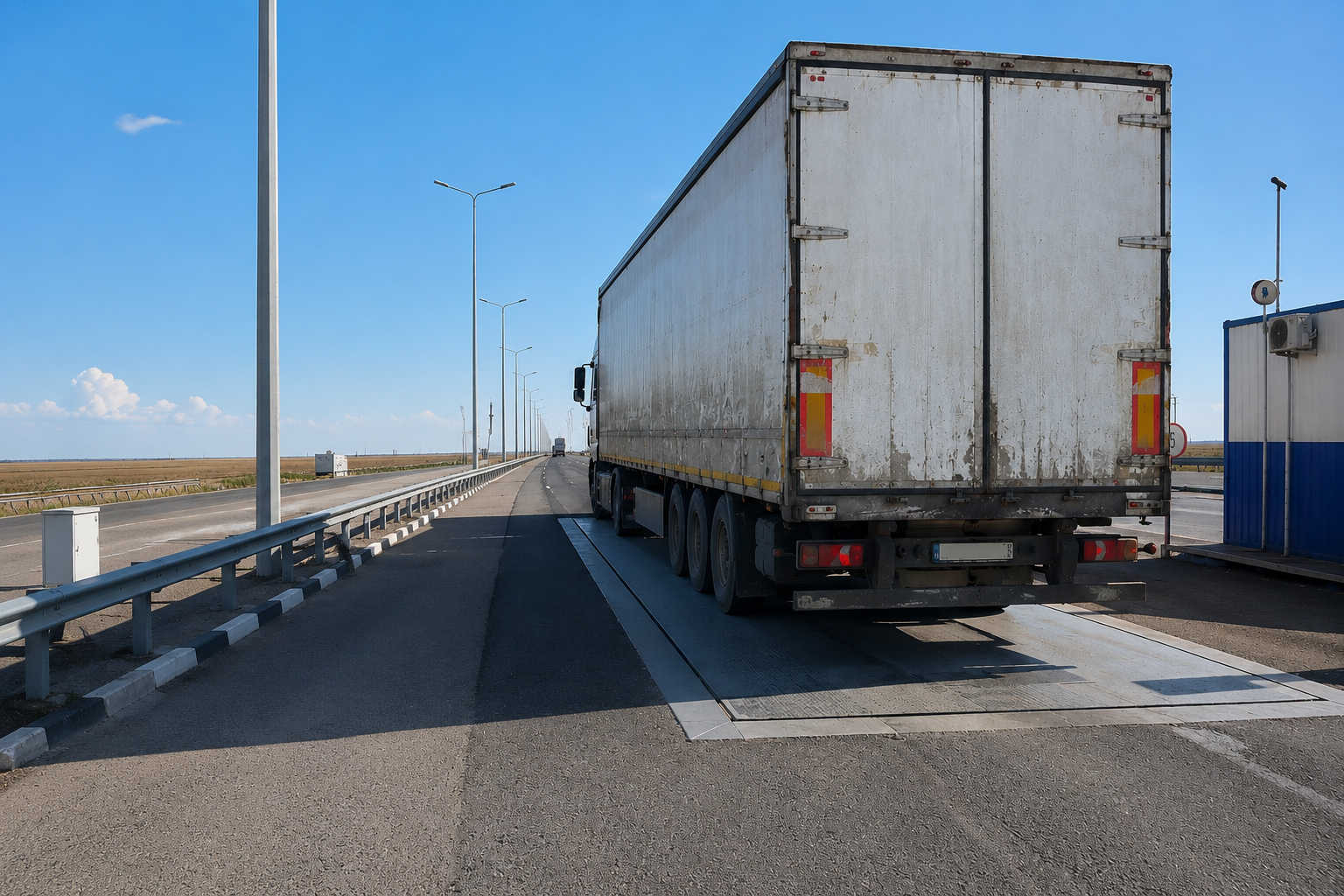
Kazakhstan launches a nationwide inspection campaign
Kazakhstan’s Ministry of Transport has intensified controls on heavy and oversized vehicles. A preventive campaign entitled “Attention! Heavy Transport!” is being conducted across the country from July 10 to August 10.
The inspections are intended to protect the road network and ensure that carriers comply with national transport legislation.
Inspectors are paying particular attention to actual vehicle weight, axle loads, truck dimensions and the availability of permits required for heavy or oversized cargo.
The campaign coincides with exceptionally high temperatures. Kazakhstan’s road services continue to operate under an intensified regime because extreme heat increases the risk of pavement deformation and damage.
More than 500 trucks inspected
Territorial transport control authorities have already inspected more than 500 heavy vehicles under the campaign.
The checks identified 281 violations of transport legislation. In 116 cases, the actual weight of a vehicle exceeded the permitted limit.
Weight violations place additional pressure on road surfaces, bridges and other transport infrastructure. Regular operation of overloaded trucks accelerates the formation of ruts, cracks and structural damage.
The danger becomes particularly serious during hot weather, when asphalt softens and becomes less resistant to pressure from heavy vehicles.
Movement of 302 trucks restricted during the heat
Kazakhstan is also applying a seasonal temperature regime that temporarily restricts certain categories of freight vehicles during the hottest hours of the day.
Inspectors have restricted the movement of 302 trucks for failing to comply with these requirements.
The measures apply when the air temperature exceeds +25°C. Exact operating hours and conditions may vary depending on the region, weather and characteristics of individual roads.
Carriers should not assume that restrictions apply only during a fixed daytime period. During prolonged heat, road authorities may assess the actual condition of the pavement and adjust traffic arrangements accordingly.
Why high temperatures threaten roads
During hot weather, pavement temperatures can rise significantly above the recorded air temperature. Asphalt becomes softer and more vulnerable to deformation under the wheels of heavy vehicles.
Overloaded trucks and vehicles exceeding axle-load limits cause particularly serious damage. The pressure is concentrated on a relatively small section of pavement, leading to rutting and subsidence.
The resulting damage can remain after temperatures fall. Deformed road surfaces reduce vehicle stability, collect water during rainfall and increase the risk of accidents.
Seasonal restrictions reduce pressure on roads during the most dangerous hours and help limit future infrastructure repair costs.
Not all transport operations are affected
The seasonal temperature regime includes several exemptions. The restrictions do not apply to international or passenger transport operations.
Vehicles carrying perishable products, dangerous goods and humanitarian cargo may also continue operating.
Exemptions are also provided for vehicles involved in emergency response, road construction and maintenance, and military transport.
However, exemption from the temperature regime does not release a carrier from complying with maximum weight, axle-load, dimensional and other transport requirements.
Drivers and transport companies must have documents confirming the nature of the cargo and their right to operate during restricted periods.
Overloading remains a major problem
Exceeding a vehicle’s permitted weight or axle load is often connected with attempts to carry more cargo in a single journey and reduce transport costs.
Such savings create significant risks. An overloaded truck has a longer braking distance, reduced stability and greater pressure on its tyres, suspension and braking system.
Excessive weight may also cause cargo to shift, damage the vehicle or lead to loss of control.
The consequences for infrastructure are also substantial. A regularly overloaded truck can cause considerably more damage than several vehicles operating within permitted limits.
Carriers face administrative penalties
Kazakhstan’s Ministry of Transport said carriers responsible for the identified violations had been held administratively liable.
The penalties depend on the nature of the offence, the extent to which the permitted limits were exceeded and other circumstances.
In addition to a fine, the truck may be prohibited from continuing its journey until the violation has been corrected. The carrier may need to redistribute the cargo, unload part of it or bring in another vehicle.
This can lead to serious delivery delays and additional expenses, including transloading costs, vehicle downtime and route changes.
Territorial authorities conduct the checks
Compliance with weight and dimensional limits and the seasonal temperature regime is monitored by territorial transport control authorities.
Inspections may take place at permanent and mobile control points. Officers measure the vehicle’s total weight, the load on individual axles and its actual dimensions.
Particular attention is given to roads with intensive freight traffic, industrial routes and corridors used to transport construction materials, bulk products and other heavy cargo.
Checks are also intensified on sections where the pavement is particularly vulnerable because of high temperatures or existing damage.
International trucks remain subject to weight controls
Although international road transport is exempt from seasonal temperature restrictions, both foreign and Kazakh carriers must comply with weight and dimensional limits.
An international truck exceeding the permitted parameters may be stopped under the same rules as a vehicle performing a domestic transport operation.
Heavy or oversized transport may require a special permit specifying the approved route, permitted parameters and additional operating conditions.
Departing from the approved route or exceeding the figures stated in the permit may be treated as a separate violation.
Carriers should plan routes in advance
The Ministry of Transport has urged carriers to plan their routes and operating schedules in advance, taking the seasonal restrictions into account.
Before starting a journey, transport companies should check temperature forecasts, regional regulations, road conditions and possible temporary bans.
Cargo distribution must also be verified. Even when the truck’s total weight is within the permitted limit, incorrect loading may cause an excessive load on an individual axle.
Carriers should allow additional time for stops during restricted periods. Attempting to continue a journey during prohibited hours may result in a fine, compulsory downtime and missed delivery deadlines.
Inspections will continue until August 10
The preventive campaign will remain in force until August 10. During this period, transport authorities will continue inspecting heavy and oversized vehicles.
The enhanced controls are intended to reduce the number of overloaded trucks and prevent further damage to road infrastructure during the period of high temperatures.
For carriers, the main precautions are compliance with weight limits, correct cargo distribution and planning journeys outside the hours covered by seasonal restrictions.
Read also: Kazakhstan Restricts Registration of Foreign Freight Railcars