

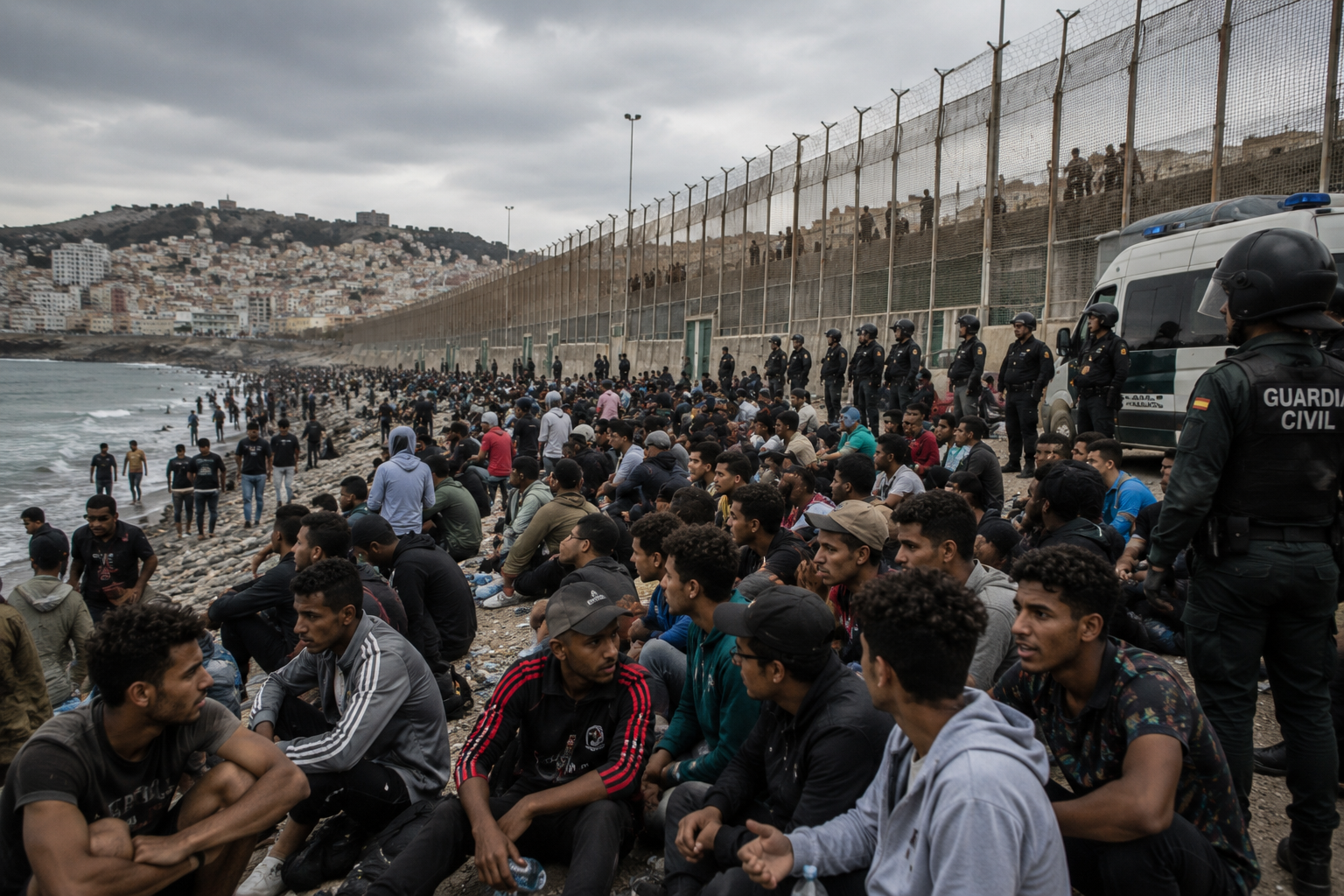
The Spanish enclave of Ceuta, located on the northern coast of Africa, continues to struggle with the aftermath of a large-scale migration crisis. According to local authorities, between 3,000 and 5,000 migrants remain in the city, while temporary reception centers are operating well beyond their capacity. Particular concern surrounds the situation of 862 unaccompanied minors, who are protected under Spanish law and cannot be deported through expedited procedures.
According to official figures, Spain and Morocco have returned approximately 69,500 migrants over the past few days. However, the humanitarian situation in the enclave remains highly critical.
How the Crisis Began
The mass influx of migrants began on July 31, when tens of thousands of people attempted to enter Ceuta simultaneously by land and by sea from Morocco.
According to Moroccan authorities, the sudden surge was driven by several factors, including:
- the spread of misinformation on social media;
- the activities of human trafficking networks;
- the misinterpretation of a Spanish court ruling concerning the return of migrants intercepted at sea.
Meanwhile, Spanish media, citing intelligence sources, reported that Moroccan border controls had been gradually relaxed throughout July and were effectively suspended on the day of the mass crossing. Moroccan authorities deny allegations that they deliberately allowed the crisis to unfold, but the issue remains at the center of political debate.
Why the Situation Remains Critical
Despite the large-scale operation to return migrants to Morocco, authorities have not yet been able to fully stabilize the situation.
Hundreds of migrants continue to live on beaches and in makeshift camps, as reception facilities have exceeded their capacity. Many hope to reach mainland Spain, but the authorities have blocked their onward movement.
The large number of unaccompanied minors presents an additional challenge. Under Spanish law and international regulations, children are entitled to special legal protection, making both their accommodation and any potential return procedures significantly more complex and time-consuming.
What the Crisis Could Mean for Europe
The migration crisis has already expanded beyond Ceuta itself. Spain has called on European Union member states to demonstrate solidarity and provide support in addressing the situation, while EU interior ministers are holding emergency consultations on strengthening the bloc’s external borders.
At the same time, the crisis has heightened diplomatic tensions between Spain and Morocco. Madrid is demanding explanations as to why border controls proved insufficient, while Rabat insists that criminal smuggling networks spreading misinformation among migrants were the primary cause of the mass crossings.
Experts believe that pressure on the Spanish enclaves of Ceuta and Melilla will continue even after the current operation ends. Both territories remain among the European Union’s main land entry points for migrants from Sub-Saharan Africa, and any changes in Morocco’s border policy could quickly trigger new attempts at mass border crossings.
Read also: HD Hyundai to Modernize U.S. Shipyard with AI and Robotics