

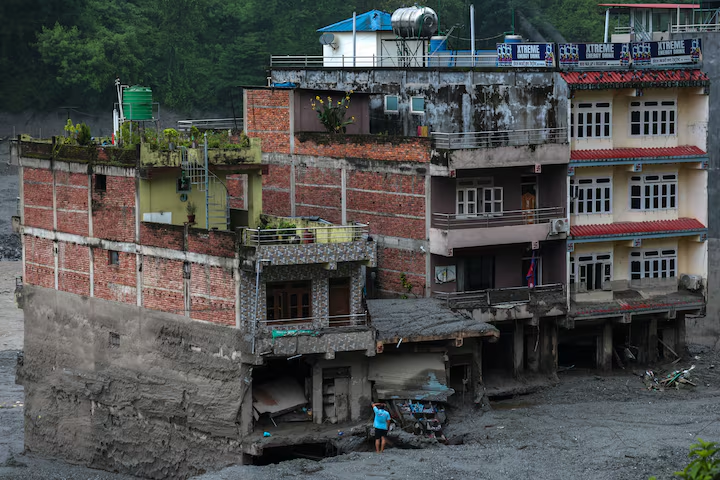
After devastating floods, Nepal could need up to $5 billion for reconstruction — nearly a tenth of the country’s economy. The disaster has wiped out entire towns.
The devastating floods that struck Nepal could cause billions of dollars in economic damage. According to a preliminary estimate by Finance Minister Swarnim Wagle, the country will need $4 billion to $5 billion for reconstruction — nearly a tenth of Nepal’s economy.
The disaster began after a glacial collapse triggered a powerful surge of rocks, ice, mud and debris. Floodwaters swept through the Himalayan river systems, destroying everything in their path. More than 600 people have been killed in Nepal and Chinese Tibet, while more than 200 remain missing.
The impact on infrastructure has also been severe. Floods and landslides destroyed roads and bridges, wiped out entire settlements and damaged major hydropower facilities. Large-scale projects accounting for more than 12% of the country’s total power generation capacity were affected.
For Nepal, this is a particularly painful blow: the economy relies heavily on tourism, hydropower and remittances. The final cost of the disaster remains preliminary, as authorities are still assessing the damage and losses.
According to the finance minister, however, the current disaster will require less funding for reconstruction than the 2015 earthquake. At the time, Nepal spent around $9 billion on recovery, while the overall damage was estimated at roughly one-third of the country’s economy.
Still, the current $4–5 billion bill will be a major challenge for Nepal. The country has a long road ahead: rebuilding destroyed infrastructure and energy facilities, restoring damaged communities and doing all of this while search-and-rescue operations are still underway.
Read also: Aircraft and Drones Protect Crops Ahead of China’s Autumn Harvest