

Uzbekistan is importing more fuel as domestic energy production continues to decline and demand remains strong across the economy. According to data from the National Statistics Committee, the country imported oil and petroleum products worth $1 billion in January–May 2026.
This is $130 million, or 15%, more than in the same period of 2025. The sharpest increase was recorded in gasoline imports, which rose from $200 million to $370 million, an increase of 85.1%. Diesel imports grew more moderately, from $222 million to $226 million, or by 2%.
The region in question is Uzbekistan, one of Central Asia’s largest consumer markets and a landlocked economy whose logistics depend heavily on stable road, rail and fuel supply chains.
The fuel import figures are especially important because they come at a time when domestic production of energy resources is declining. According to local statistical data cited by regional media, natural gas production in Uzbekistan fell by 14.1% in the first five months of 2026, from 18.4 billion cubic meters to 15.8 billion cubic meters. Oil production also decreased by 3.2%, from 270,800 tonnes to 261,900 tonnes.
For the logistics sector, these numbers matter because fuel availability and fuel prices directly affect road transport, agriculture, construction, retail distribution and industrial supply chains.
As K2Cargo News previously reported in Trans-Afghan Railway Project Estimated at $7 Billion, Uzbekistan is actively developing international transport corridors to strengthen its access to global markets. But corridor development also requires stable energy and fuel supply for domestic transport operations.
Gasoline Imports Show the Sharpest Growth
The most notable change is the rapid increase in gasoline imports.
Between January and May 2026, Uzbekistan’s gasoline purchases from abroad rose from $200 million to $370 million. This 85.1% increase shows that domestic demand is growing faster than local supply can cover.
Gasoline is closely linked to consumer mobility, urban transport, small business activity and regional distribution. When imports grow so quickly, it usually points to a combination of rising consumption, limited domestic refining output and the need to maintain market stability through external supply.
For transport companies, gasoline is not the main fuel for heavy trucks, but it remains important for light commercial vehicles, courier operations, passenger transport, service fleets and last-mile delivery. As Uzbekistan’s retail and e-commerce sectors develop, gasoline demand can rise through a larger number of smaller vehicles working inside cities and regions.
The increase also suggests that fuel logistics will become more important for importers, distributors and fuel station networks. Higher import volumes require reliable border procedures, storage capacity, rail and road delivery, and predictable supply contracts.
Diesel Growth Is Moderate but Strategically Important
Diesel imports increased only slightly, from $222 million to $226 million, or by 2%.
At first glance, this looks modest compared with gasoline. However, diesel remains the key fuel for freight transport, agriculture, construction machinery and many industrial operations.
Even a small increase in diesel imports matters because diesel supply is directly connected to the cost of moving goods. If diesel availability becomes unstable, the impact can quickly spread across food distribution, construction materials, agricultural logistics and intercity freight transport.
For Uzbekistan, stable diesel supply is especially important because the country is trying to strengthen its role as a regional logistics hub. Railways, trucks, warehouses and border crossings all depend on predictable operating costs. Fuel uncertainty can weaken the competitiveness of transport corridors, even when infrastructure investment continues.
This is why the diesel figure should not be viewed only as a trade statistic. It is also an indicator of how much pressure the transport system may face if domestic production does not keep pace with demand.
Gas Imports Also Increased Sharply
The growth was not limited to oil products.
In January–May 2026, Uzbekistan imported gas worth $720 million. This was $330 million, or 84.1%, more than in the same period of 2025.
The increase in gas imports is directly linked to the broader energy balance. Uzbekistan has historically been a major gas producer, but declining output has forced the country to rely more heavily on imports to meet domestic needs.
This has implications for industry and logistics. Gas is used in power generation, heating, industrial processes and some transport-related operations. If gas imports rise sharply, energy security becomes a more important factor in economic planning.
For businesses, energy costs influence warehouse operations, cold storage, manufacturing, transport maintenance and distribution centers. If the energy system is under pressure, logistics costs may become more difficult to predict.
Domestic Production Decline Changes the Balance
The decline in domestic production is one of the key reasons behind the import trend.
Regional media citing statistics data reported that Uzbekistan’s natural gas production fell by 14.1% in the first five months of 2026. Oil production also declined by 3.2%, while production of gas condensate and coal also decreased.
This means that Uzbekistan is facing a double challenge: meeting current demand while managing a shrinking domestic supply base.
In the short term, imports can close the gap. In the long term, however, dependence on external fuel supply creates new risks. These include price volatility, currency pressure, border delays, supplier concentration and transport capacity constraints.
For a landlocked country, every imported fuel shipment depends on routes through neighboring states or regional transport networks. This makes logistics not just a supporting function, but a central part of energy security.
Transport Corridors Need Stable Energy Supply
Uzbekistan is investing in transport corridors, rail modernization and international connectivity. But logistics infrastructure cannot work efficiently without stable fuel and energy supply.
Road freight needs diesel. Urban delivery needs gasoline and alternative fuels. Warehouses need electricity and heating. Rail corridors require energy for operations, maintenance and terminals.
This is why the growth of fuel imports should be considered alongside Uzbekistan’s wider logistics strategy. The country wants to become more connected to Central Asia, Afghanistan, Pakistan, China, the Caspian region and global markets. But stronger connectivity also increases the importance of domestic supply stability.
If fuel imports remain high, logistics companies may need to pay closer attention to fuel procurement, route efficiency and cost control. Fleet operators may also become more interested in modern vehicles, fuel monitoring systems and more efficient dispatch planning.
What This Means for Logistics Companies
For logistics companies, the increase in fuel imports creates both risks and opportunities.
The main risk is cost volatility. If more fuel is imported, domestic prices may become more sensitive to external market conditions, exchange rates and transport costs. This can affect freight rates and contract planning.
Another risk is supply disruption. If fuel imports rely on limited routes or suppliers, any delay can affect distribution and transport operations.
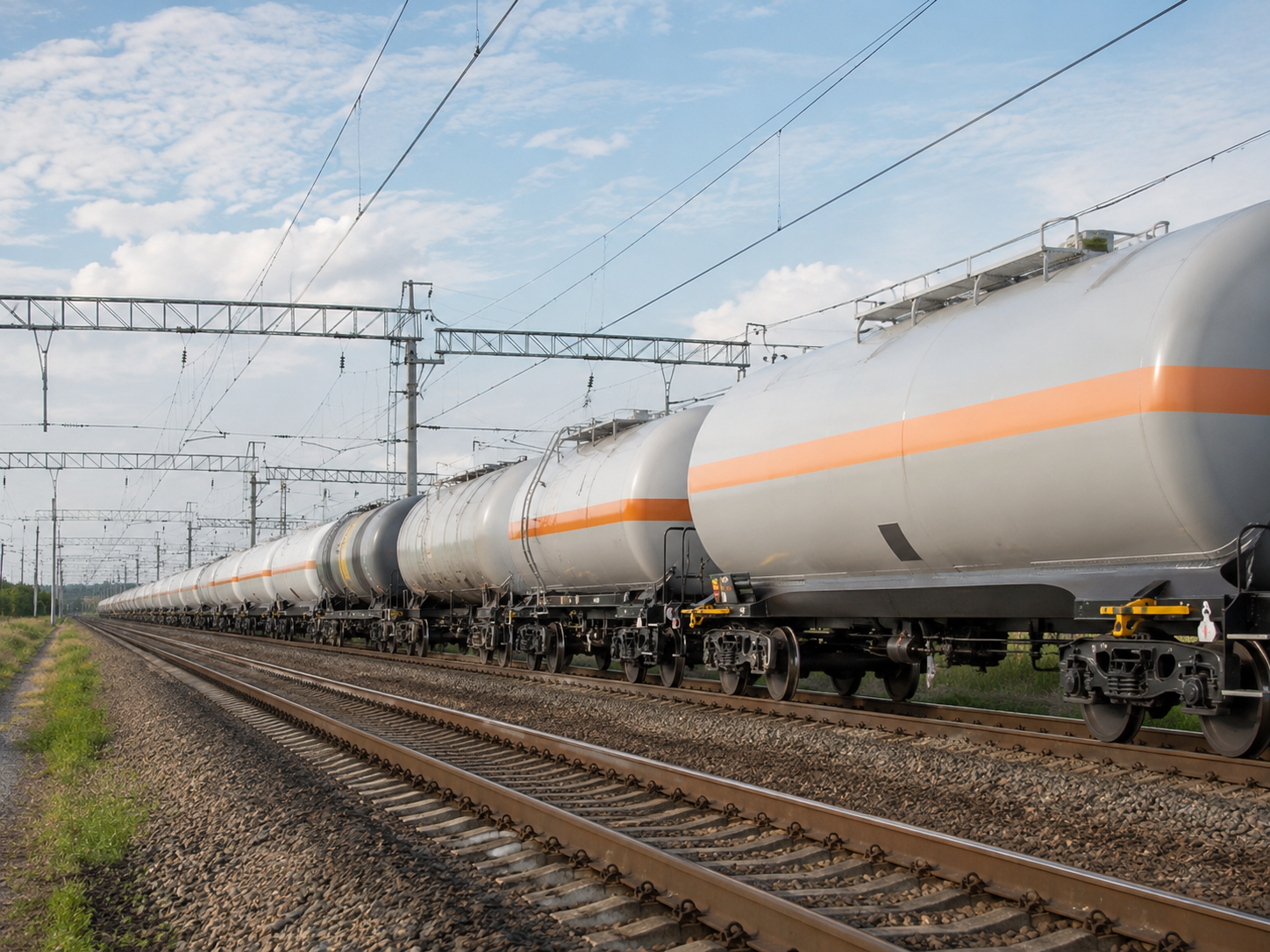
At the same time, rising import volumes create demand for fuel logistics. This includes rail transport of petroleum products, storage terminals, tanker truck distribution, customs services, documentation, safety compliance and regional delivery networks.
Companies able to manage energy logistics efficiently may find new opportunities as Uzbekistan’s fuel import dependence grows.
A Signal for the Wider Economy
Uzbekistan’s rising fuel imports are not only an energy story.
They reflect broader economic change. The country’s population is growing, consumer markets are expanding, transport demand is increasing and industrial activity requires stable energy. At the same time, domestic production is not fully covering demand.
This creates a new operating environment for logistics companies. Fuel, energy and transport infrastructure are becoming more closely connected. The ability to move goods efficiently will depend not only on roads and railways, but also on the stability of fuel supply.
For Uzbekistan, the key challenge will be balancing imports, domestic production, refining capacity and logistics infrastructure. If the country can manage that balance, fuel imports can support economic growth. If not, higher dependence on external supply may increase cost pressure on transport and business.
The latest data show that Uzbekistan’s logistics market is becoming more energy-sensitive. For carriers, fuel distributors and industrial companies, this means that energy planning is no longer separate from supply chain strategy. It is becoming one of its core elements.
Read also: Trans-Afghan Railway Project Estimated at $7 Billion
