

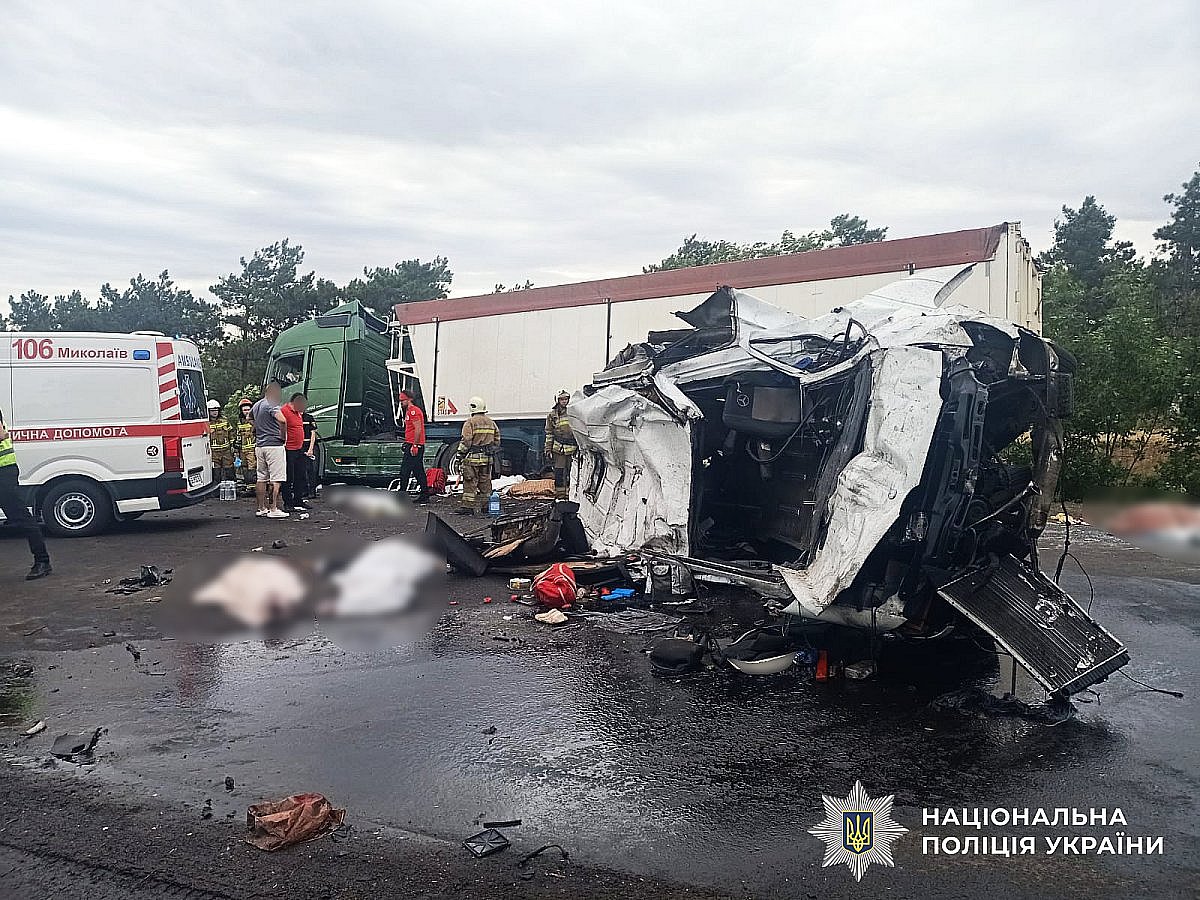
A major road tragedy occurred on July 4 in southern Ukraine on the M-14 highway, also known as the Odesa–Melitopol–Novoazovsk road. The accident happened in Mykolaiv region, between the villages of Krasne and Nechaiane, on the busy route connecting Odesa and Mykolaiv.
According to Ukrainian police and regional prosecutors, a passenger Mercedes Sprinter minibus traveling from Odesa toward Mykolaiv was involved in a crash with a Volvo truck. The initial reports spoke of nine dead and several injured, but the number of victims later rose to 12 after three injured people died in hospital.
Six people were reported injured. They were taken to medical facilities in Mykolaiv with injuries of varying severity. Among the injured were passengers and the truck driver.
The tragedy was reported to Ukrainian President Volodymyr Zelensky by Interior Minister Ihor Klymenko. Zelensky confirmed that rescue workers, police officers and medical teams were working at the scene, while law enforcement authorities were establishing the full circumstances of the crash and identifying the dead and injured.
For Ukraine’s road transport sector, the accident is not only a human tragedy. It also raises serious questions about road safety on intercity routes where passenger minibuses, private cars and heavy trucks share the same traffic corridor.
What Is Known About the Accident
The crash occurred in the morning of July 4 on the M-14 highway in Mykolaiv region.
The route is one of the important road links in southern Ukraine. It connects Odesa, Mykolaiv and further directions toward the east and southeast of the country. Even during wartime, such routes remain essential for passenger movement, regional logistics, humanitarian transport and commercial freight.
According to preliminary information from police, the Mercedes Sprinter minibus was carrying passengers from Odesa to Mykolaiv. At some point, the vehicle left the roadway, overturned and ended up in the opposite lane, where it collided with a Volvo truck.
The impact was severe. The driver of the minibus and multiple passengers died. Other people were taken to hospital. Later updates brought the total number of fatalities to 12.
Authorities have opened a criminal investigation. The case is being handled under the procedural supervision of the Mykolaiv regional prosecutor’s office.
Possible Cause: Police Investigate Nissan Murano Driver
The main question is what caused the minibus to lose control and collide with the truck.
According to police, witness statements suggest that the accident may have been triggered by the driver of a Nissan Murano traveling in the opposite direction relative to the minibus. The driver allegedly violated traffic rules, which may have forced the minibus driver to change trajectory.
After the crash, the Nissan driver reportedly left the scene.
Police launched a special operation to locate the vehicle. Several hours later, officers stopped a Nissan Murano on the Blahovishchenske–Mykolaiv road. The driver was identified as a 45-year-old man from another region.
Ukrainian media reported that investigators are questioning the driver and assessing the legal qualification of his actions. At this stage, the cause of the accident remains part of the official investigation, and final conclusions have not yet been announced.
This distinction is important. The available information points to a possible chain of events, but investigators still need to establish the precise sequence: vehicle speeds, lane position, road conditions, driver actions, technical condition of the vehicles and witness evidence.
Report to Zelensky Shows National Attention
The scale of the tragedy brought the accident to the national level.
President Zelensky said he received a report from Interior Minister Ihor Klymenko about the crash in Mykolaiv region. According to Zelensky, the accident involved a truck and a minibus on the Mykolaiv–Odesa route, with 12 people confirmed dead and six injured.
He expressed condolences to the families and relatives of the victims and said that all necessary services were working at the scene. Law enforcement officers were tasked with clarifying the full circumstances of the accident and identifying the victims and injured.
The presidential reaction underlines how serious the crash is for Ukraine. A road accident involving 12 deaths is not a routine traffic incident. It becomes a national safety issue, especially when it involves public passenger transport and a freight vehicle on an important intercity corridor.
Why Accidents With Trucks Are So Dangerous
Crashes involving passenger vehicles and heavy trucks are often among the most severe road accidents.
The reason is simple: the difference in mass, height and structure between a minibus and a heavy goods vehicle leaves very little margin for error. When a passenger vehicle loses control and enters the path of a truck, the consequences can be catastrophic even if the truck driver has little time to react.
This is why road safety on mixed-traffic highways depends on several factors at once: driver discipline, lane control, safe overtaking, vehicle condition, road design, visibility, speed management and enforcement.
The Mykolaiv–Odesa tragedy again shows how one dangerous maneuver can affect not only the vehicle that performed it, but also other road users who suddenly become part of an unavoidable chain reaction.
As K2Cargo News previously reported in Euro NCAP Calls for Stronger Trailer Rear Guards, safety risks involving trucks and passenger vehicles remain a major concern in Europe. Although that study focused on rear underrun crashes, the broader lesson is similar: interaction between heavy vehicles and lighter passenger transport requires stronger preventive measures.
What This Means for Passenger and Freight Transport
For passenger carriers, the crash highlights the need for strict control over driving behavior, speed, vehicle condition and route safety.
Intercity minibuses often operate on roads shared with trucks, private cars and regional freight flows. Drivers must respond to unpredictable situations quickly, but their ability to avoid disaster depends on road geometry, traffic behavior and available space.
For freight operators, the tragedy is also relevant. Truck drivers may become involved in crashes triggered by other vehicles, even when they are not the cause of the incident. This increases the importance of defensive driving, dashcam use, technical inspections and route risk assessment.
For authorities, the accident may renew discussion about dangerous sections of the Mykolaiv–Odesa route, road markings, overtaking conditions, speed control and roadside enforcement.
One of the key questions for investigators will be whether the road environment itself contributed to the severity of the crash. If a route carries heavy passenger and freight traffic, road safety measures must reflect that level of risk.
Investigation Will Define Responsibility
The criminal investigation is expected to determine who bears legal responsibility for the accident.
According to regional reports, prosecutors are investigating the crash under the article of the Criminal Code related to violations of road safety rules that caused multiple deaths. The driver of the Nissan Murano has been found and questioned, but final conclusions will depend on evidence collected by police and prosecutors.
Investigators will likely examine witness statements, vehicle traces, road camera data if available, technical condition of the vehicles, speed calculations, braking marks and driver testimony.
Until the investigation is completed, the cause should be described as preliminary. The available information indicates that the Nissan driver may have triggered the emergency situation, but the legal assessment belongs to investigators and the court.
A Tragedy That Demands Road Safety Lessons
The Mykolaiv region crash is a painful reminder that road safety is part of national transport resilience.
Ukraine’s roads are carrying civilian passengers, commercial cargo, humanitarian traffic and wartime logistics under difficult conditions. Every major accident reduces trust in road transport and creates new pressure on emergency services, local authorities and carriers.
The immediate priority is support for the injured and the families of the victims. The next priority is a transparent investigation that establishes what happened and why.
But the wider lesson is already clear. High-risk roads need stronger prevention: safer overtaking conditions, better enforcement, reliable passenger transport standards, driver accountability and infrastructure that reduces the chance of fatal head-on or side-impact collisions.
The July 4 crash on the Mykolaiv–Odesa route shows how quickly one traffic violation can become a national tragedy. For Ukraine’s transport system, the response must go beyond identifying one driver. It must also focus on preventing similar accidents on routes where buses, cars and trucks move side by side every day.
