

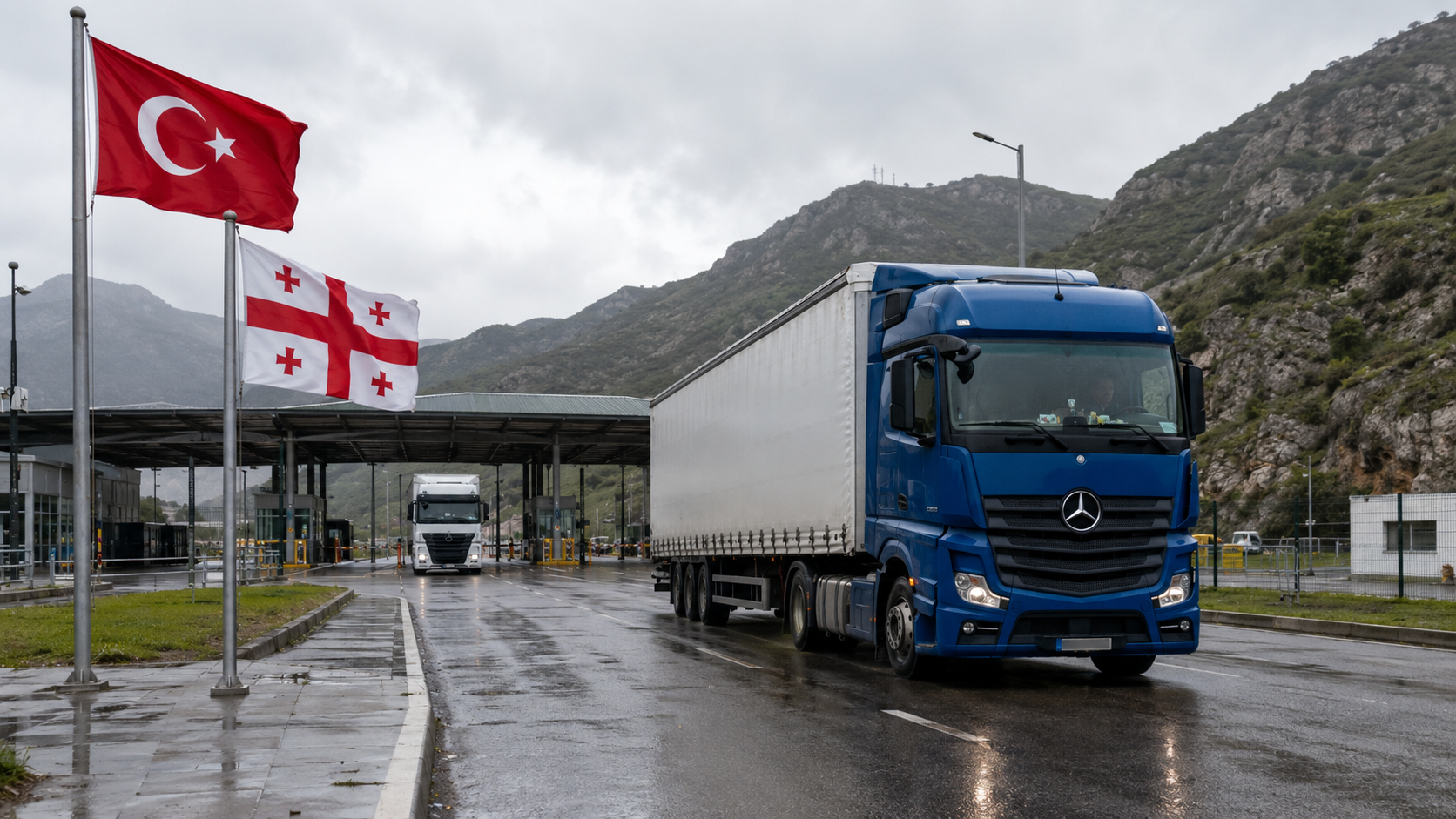
Georgia and Türkiye have taken another step toward the digitalization of international road freight. Georgia’s Land Transport Agency has launched a new electronic permit system for cargo transport between the two countries, allowing carriers to work with permits entirely in digital format.
The reform is aimed at simplifying administrative procedures, reducing the use of paper documents and speeding up both the issuance and verification of permits. For transport companies, this can mean fewer delays, less paperwork and more predictable cross-border operations.
The new system is based on a bilateral principle. This means that Georgia and Türkiye use a unified electronic platform for exchanging and registering permit documents. According to Bakur Mikadze, Director of Georgia’s Land Transport Agency, the platform enables fast and secure data exchange, reduces technical and administrative delays and creates a more transparent mechanism for managing international road freight.
For Georgia, the project is not only a technical update. It is part of a wider strategy to strengthen the country’s role as a regional transit hub between Europe, Türkiye, the South Caucasus, the Black Sea and Central Asia.
As K2Cargo News previously reported in Why Kazakhstan and Georgia Are Becoming Key Hubs of Eurasia’s New Logistics Network, Georgia’s importance in Eurasian logistics is growing as cargo owners look for more flexible and reliable transport links across the region.
Why Digital Permits Matter
International road freight still depends heavily on documents.
Permits define whether a carrier can perform a specific international trip, transit operation or bilateral transport movement. When these documents are paper-based, the process can be slow and vulnerable to errors, loss, misuse or delays during checks.
Digital permits change the logic of the process. Instead of carrying and presenting physical documents, carriers and authorities can work through an electronic platform. This makes it easier to issue, register, verify and control permits.
For transport operators, the main advantage is time. If a permit can be obtained and checked digitally, companies can reduce administrative waiting and better plan routes. For drivers, it can mean fewer problems during roadside or border inspections. For authorities, it improves oversight and reduces the risk of document manipulation.
Georgia and Türkiye Are Important Road Partners
The Georgia–Türkiye road link is one of the key corridors in the South Caucasus.
Türkiye is Georgia’s direct neighbor and one of its most important trade and transport partners. Road freight between the two countries supports bilateral trade, regional distribution and transit flows moving further toward Azerbaijan, Armenia, Central Asia and Europe.
For carriers, this route is especially important because it connects Georgian logistics infrastructure with Turkish ports, industrial centers and European road networks. It also provides access to Black Sea and Mediterranean trade routes.
This is why digitalizing permits on the Georgia–Türkiye corridor can have a practical effect beyond one bilateral route. If the system works efficiently, it can become a model for similar mechanisms with other partner countries.
Link With the ECMT Digital System
Georgia’s Land Transport Agency also links the new mechanism with the successful implementation of the electronic ECMT multilateral permit system.
ECMT permits are used in international road freight across many European and neighboring countries. The move toward electronic ECMT permits reflects a broader trend: international road transport is gradually leaving paper procedures behind.
For carriers, the transition means that digital readiness is becoming a competitive requirement. Companies will need trained staff, updated internal procedures and reliable access to electronic platforms. Drivers will also need to understand how digital permits are checked and used during inspections.
The Georgia–Türkiye system fits into this broader transition. It shows that digitalization is no longer limited to large EU markets. It is spreading across the South Caucasus and wider Eurasian transport space.
What Changes for Carriers
For international hauliers, the reform should simplify daily operations.
Instead of processing paper permits through traditional administrative channels, carriers will be able to work with digital documents. This can reduce the risk of lost paperwork, incomplete forms or delays caused by manual checks.
The system may also improve transparency. When a permit is registered electronically, authorities can see whether it is valid, who issued it and how it is being used. This helps prevent misuse and makes the transport process easier to audit.
For companies operating regular Georgia–Türkiye routes, the biggest benefit may be predictability. Faster permits and faster verification can support better scheduling, reduce idle time and improve service reliability for customers.
Georgia Strengthens Its Transit Role
Georgia has been actively positioning itself as a regional transport and logistics hub.
The country’s location makes it important for routes connecting Türkiye, the Black Sea, Azerbaijan, Central Asia and Europe. This role is becoming more visible as the Middle Corridor and other Eurasian logistics routes gain attention.
However, infrastructure alone is not enough. Modern transit also depends on administrative speed, digital services, customs efficiency and predictable rules.
The digital permit system with Türkiye directly supports this agenda. It reduces friction in one of Georgia’s most important road freight directions and shows that transport modernization can happen not only through ports and railways, but also through smarter document management.
The Next Step: More Partner Countries
According to the Land Transport Agency, Georgia plans to gradually transfer existing permit systems with other partner countries to digital formats.
This will be important for the long-term development of the sector. A single digital route is useful, but a wider network of electronic permits can create a much stronger effect. The more countries recognize and exchange digital permit data, the easier it becomes for carriers to operate across borders.
For the logistics market, this could mean fewer administrative bottlenecks, better route planning and stronger integration between national transport systems.
At the same time, digitalization will require careful implementation. Authorities must ensure cybersecurity, platform reliability, data protection and clear rules for drivers and inspectors. Carriers will need time to adapt, especially smaller companies that may have fewer digital resources.
A Practical Step Toward Modern Road Freight
The launch of digital permits between Georgia and Türkiye is a practical reform with strategic meaning.
It does not build a new highway or open a new border crossing, but it improves the way freight transport is administered. In modern logistics, that can be just as important. Delays often happen not only because of infrastructure limits, but also because of documents, approvals and checks.
For Georgia, the system supports its ambition to become a more efficient transit hub. For Türkiye, it simplifies road freight with a key South Caucasus partner. For carriers, it promises less paperwork and faster processes.
If the mechanism proves reliable and expands to other countries, it could become part of a wider digital transport network across the region. The direction is clear: the future of international road freight will depend not only on trucks and roads, but also on electronic platforms, data exchange and transparent permit management.
Read also: Why Kazakhstan and Georgia Are Becoming Key Hubs of Eurasia’s New Logistics Network