

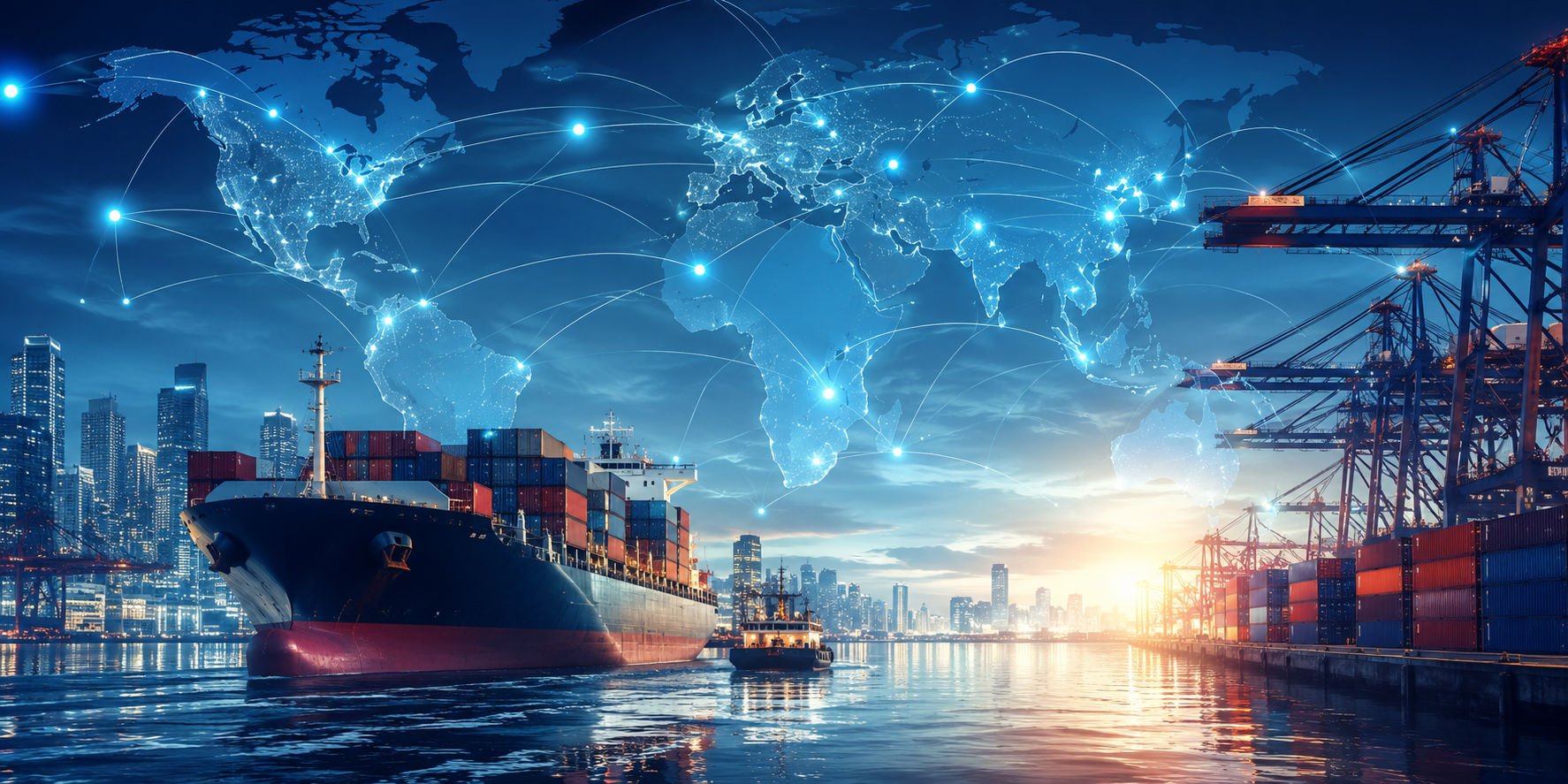
Although the world’s largest container shipping companies have become significantly more resilient to crises, the global logistics system remains highly vulnerable due to its heavy reliance on a small number of major Asian ports. This is the conclusion reached by industry experts after analyzing the current state of the global container shipping network.
The study places particular emphasis on Singapore, one of the world’s most important maritime hubs. Simulation results show that disruptions at the port of Singapore could have the greatest impact on international supply chains. Even the development of alternative shipping routes and cargo rerouting strategies would only partially mitigate the resulting disruptions.
Additional pressure on the industry comes from vessels rerouting around Africa, chronic terminal congestion, and declining schedule reliability. According to analysts, shipping delays have effectively removed approximately 1 million TEU of container capacity from the global market.
Experts argue that the future resilience of global logistics will depend on the development of alternative transport corridors and a reduced reliance on a limited number of critical hubs. For Asian countries, home to many of the world’s largest container ports, strengthening the resilience of maritime infrastructure is becoming a key priority for maintaining the stability of international trade.
Read also: Shanghai to Host the Largest World Artificial Intelligence Conference in History