

For decades, global supply chains were optimized through planning.
Companies invested billions of dollars in enterprise software, demand forecasting and transportation management systems, believing that better data would produce better decisions.
But the past several years have fundamentally changed that assumption.
Geopolitical tensions, disruptions in the Red Sea, labor shortages, port congestion, climate events and rapidly shifting trade policies have exposed the limits of traditional planning. In today’s environment, supply chains are no longer struggling because companies cannot build better plans—they struggle because those plans become outdated almost as soon as they are created.
As a result, logistics leaders are shifting their focus from planning to execution, investing in technologies that manage physical operations in real time rather than simply predicting future events.
The Warehouse Yard Has Become the New Battleground
While supply chain planning has undergone significant digital transformation over the last two decades, physical execution has changed far more slowly.
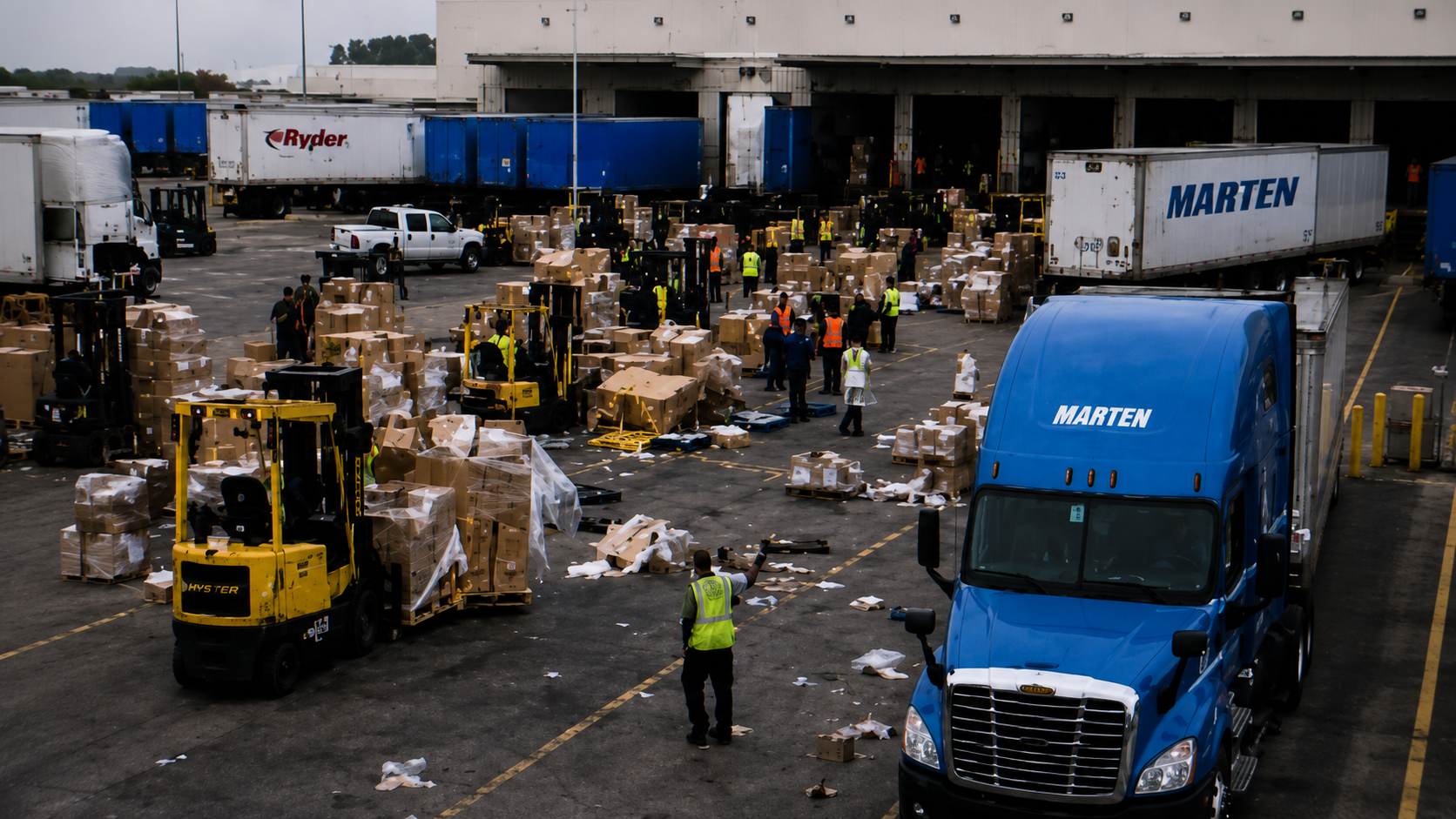
Across many distribution centers, trailer movements are still coordinated manually, dispatchers continue relying on spreadsheets and radio communication, and truck drivers spend hours waiting for available dock doors.
These bottlenecks create ripple effects across transportation networks, manufacturing plants and retail supply chains.
Industry experts increasingly argue that warehouse yards, distribution centers and loading docks—not planning software—have become the industry’s largest untapped opportunity for productivity gains.
“The supply chain industry has spent decades building planning tools and execution tools separately, then wondering why they do not talk to each other,” said Matt Elenjickal, founder and CEO of FourKites.
“Supply chains move in real time. Planning must move in real time as well. When disruption happens, planners need to immediately understand the operational impact, receive a recommended response and execute it without delay.” turn0search0
FourKites recently expanded its Inventory Twin platform, designed to connect planning systems directly with real-time execution data from warehouses, shipments and inventory networks. The company says the goal is to eliminate one of the industry’s longest-standing gaps between strategic planning and operational execution. turn0search0turn0search5
Artificial Intelligence Is Moving Beyond Visibility
The logistics industry has spent years discussing real-time visibility.
Now the conversation is changing.
Instead of simply tracking freight, companies increasingly want artificial intelligence capable of recommending—and in some cases executing—the next operational decision.
That shift is becoming visible across the logistics software market.
Project44, one of the world’s largest supply chain visibility providers, now describes the next phase as Decision Intelligence, where AI evaluates disruptions, predicts downstream business impact and recommends the optimal course of action before supply chain managers intervene.
According to Project44 founder and CEO Jett McCandless, logistics is entering an entirely new competitive era.
“The next era isn’t about seeing more. It’s about doing more—and reacting faster than your competitors. Visibility alone is no longer enough. Companies need decision advantage.” turn0search1
McCandless argues that global supply chains are undergoing what he calls the “Great Re-Shuffle,” a structural transformation driven by tariffs, geopolitical fragmentation and the relocation of manufacturing capacity rather than temporary market disruption. turn0search1
From Visibility to Orchestration
The evolution taking place across the logistics technology market reflects a broader industry trend.
Traditional visibility platforms informed companies about problems after they occurred.
The next generation of supply chain platforms aims to orchestrate responses automatically.
Digital twins, AI agents and autonomous workflow engines are increasingly coordinating warehouse operations, dock scheduling, trailer assignments and transportation decisions without requiring continuous human intervention.
FourKites describes this transition as a move from visibility to orchestration, where artificial intelligence automates routine operational decisions while employees focus on exceptions and strategic decision-making. turn0search4turn0search6
Not Every AI Solution Is Ready
Despite rapid innovation, analysts caution against assuming that fully autonomous supply chains already exist.
Research firm Gartner says many technology vendors are overstating the maturity of so-called agentic AI solutions.
According to Gartner Senior Director Analyst Jan Snoeckx, organizations should prioritize practical operational use cases, strengthen data quality and establish governance before expecting fully autonomous planning.
“Supply chain leaders should prepare for an agentic AI future, but they need to separate meaningful capability from market noise,” Snoeckx said during Gartner Supply Chain Symposium/Xpo 2026. turn0search2
Gartner believes truly autonomous end-to-end planning remains several years away, although AI-powered decision support, digital twins and workflow automation are already delivering measurable operational improvements. turn0search2
Why It Matters
The next competitive advantage in logistics is unlikely to come from larger fleets or bigger warehouses.
Instead, it will come from the ability to connect planning, execution and artificial intelligence into a single operational ecosystem capable of adapting continuously to disruption.
For global manufacturers, retailers and logistics providers, warehouse yards are rapidly becoming the place where digital transformation delivers its greatest financial return.
Companies that can reduce truck waiting times, automate trailer movements, optimize dock scheduling and make operational decisions in real time will likely outperform competitors still relying on static planning cycles.
As geopolitical uncertainty continues reshaping international trade, the industry’s focus is shifting from forecasting disruption toward responding to it instantly.
The future of supply chain management is no longer being defined by better spreadsheets or more accurate forecasts.
It is being built where physical operations meet artificial intelligence—on warehouse yards, distribution centers and transportation terminals.
