

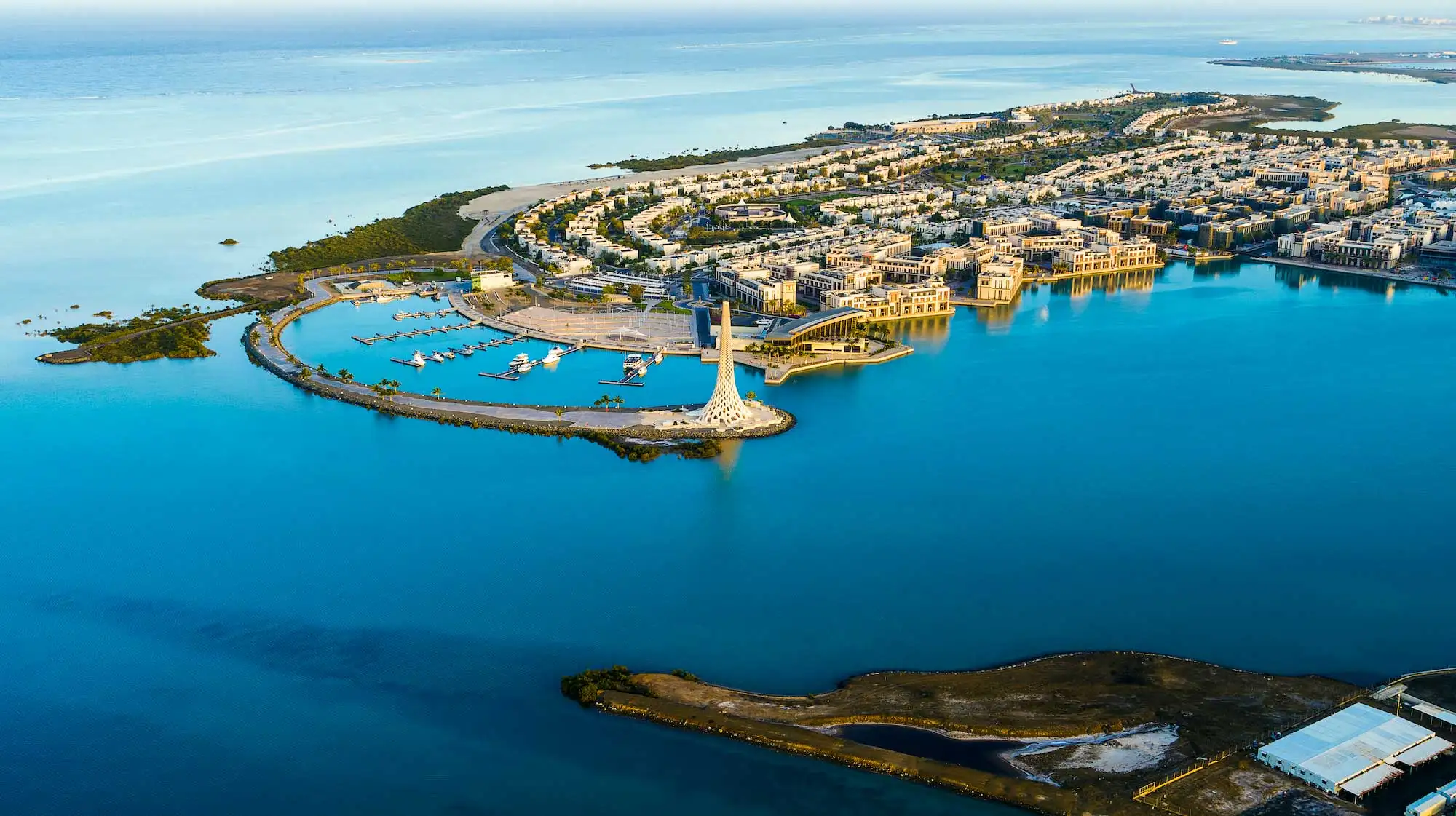
The AI boom, access to energy resources and coordinated infrastructure policies could turn Gulf countries into major global centers of computing capacity
The Middle East is expected to become the world’s fastest-growing data center investment market. According to a new PwC forecast, cumulative capital expenditure on building and equipping data centers across the region could reach $1.1 trillion through 2050.
In absolute dollar terms, the Middle Eastern market will remain substantially smaller than those of the United States, Asia-Pacific and Europe. However, it is expected to record the highest compound annual growth rate, supported by artificial intelligence, government digitalization programs and the region’s ability to coordinate energy and construction projects.
Global Spending Could Reach $31.6 Trillion
Under the central scenario in the PwC Global Data Centre Outlook 2026–50, cumulative global data center capital expenditure is projected to reach $31.6 trillion through 2050.
If AI adoption accelerates, spending could approach $50 trillion. A slower adoption scenario would reduce the total to approximately $22 trillion.
These figures refer to cumulative investment through 2050 rather than annual expenditure. Under the central forecast, yearly spending is expected to rise from approximately $800 billion in 2026 to $1.1 trillion in 2030 and $1.8 trillion by 2050.
Most of the capital will not be spent on buildings themselves. Servers, storage systems, networking equipment, central processing units and graphics processing units will account for a growing share of expenditure.
PwC expects information and communications technology equipment to increase from 70% of total data center capex in 2026 to 93% by 2050.
AI Creates a Recurring Investment Cycle
Unlike many traditional infrastructure assets, data centers require continuous replacement of expensive equipment. Servers and GPUs used to train and operate AI models generally need to be refreshed every four to six years.
Constructing a data center is therefore only the first step in a long-term investment cycle. PwC estimates that every dollar spent on the building can effectively commit the market to approximately $12 of future spending on computing and communications equipment.
“AI-related infrastructure is becoming one of the defining capital allocation challenges of the next generation,” PwC Global Infrastructure Leader Clara Cutajar said.
Data center development affects energy, construction, real estate, logistics, semiconductor manufacturing, regulation and finance. Investors must therefore consider not only the cost of the building but also access to electricity, cooling, network connectivity and advanced chips.
Why the Middle East Is Growing Faster
The Middle East’s projected $1.1 trillion in cumulative investment represents a relatively small share of the global total. PwC expects the Americas to attract $16.5 trillion, Asia-Pacific $8.2 trillion and Europe $5.6 trillion through 2050.
However, Gulf countries have several advantages. The region is starting from a comparatively limited installed base, meaning that each major new facility can produce a significant increase in market capacity.
Governments in Saudi Arabia, the UAE and Qatar can also coordinate land allocation, power connections, financing, construction permits and development programs through centralized policy frameworks.
PwC believes this approach could shorten the period between an investment decision and a data center becoming operational. Projects in Europe and North America are increasingly delayed by grid constraints, lengthy approval procedures and local opposition.
Saudi Arabia Accelerates Capacity Development
Saudi Arabia is emerging as one of the region’s principal digital infrastructure markets. Official figures cited by regional publications indicate that the Kingdom’s operational and planned data center capacity exceeded 467 MW in the first quarter of 2026, compared with approximately 68 MW in 2021.
Investment in data centers and associated digital infrastructure has reportedly exceeded 56.2 billion Saudi riyals, equivalent to about $14.9 billion.
The expansion forms part of Saudi Arabia’s Vision 2030 economic diversification program. The country is seeking to attract international technology companies, cloud operators and AI developers while establishing sufficient capacity to store and process government and commercial data domestically.
The UAE is developing a similar model using its established energy, financial and telecommunications infrastructure. Qatar is also treating data centers as a foundation for cloud services and sovereign AI capacity.
Electricity Is the Main Constraint
Access to stable and competitively priced electricity could provide the Middle East with an important advantage. Modern AI facilities consume considerably more power than conventional data centers.
However, energy resources alone are insufficient. Projects require substations, high-voltage transmission lines, backup generation and advanced cooling infrastructure. Delivery times for transformers and other grid components can already extend over several years.
The region’s hot climate also increases server-cooling costs. Operators will need to introduce liquid cooling and other efficient technologies while managing the facilities’ potentially substantial water consumption.
Over the longer term, markets that combine computing growth with low-carbon power generation are likely to gain an advantage. This will be particularly important for international customers that impose emission requirements across their supply chains.
Expansion Will Reshape Technology Logistics
New data centers will require continuous deliveries of server racks, processors, cooling systems, generators, cables and electrical equipment. Much of this technology will be imported from North America, Europe and Asia.
For logistics operators, this will create additional volumes of high-value and sensitive cargo. Transporting GPUs and servers requires enhanced security, precise delivery schedules, specialized insurance and, in some cases, temperature-controlled conditions.
Demand will also grow for technology warehouses, air cargo services and urgent spare-parts deliveries. Ports, airports and free zones in Saudi Arabia and the UAE could become major consolidation points for this equipment.
Chip Restrictions Are the Main Supply Chain Risk
Dependence on imported advanced processors remains the most significant weakness in the region’s strategy. A substantial part of planned capacity is intended not only to meet domestic demand but also to attract internationally mobile AI workloads.
PwC modeled a scenario in which export controls on advanced semiconductors intensify and retaliatory restrictions affect critical raw materials. Under those conditions, cumulative Middle Eastern data center capex could fall 29% below the central forecast.
Saudi Arabia, the UAE and Qatar would face the greatest impact because their planned projects rely heavily on access to modern GPUs and international computing customers.
Global cumulative investment under this scenario would decline from $31.6 trillion to $25.5 trillion. Spending could initially fall to approximately half the central-case level before recovering as semiconductor supply chains adapt.
Growth Will Depend on International Confidence
Buildings and electricity alone will not make the Middle East a global computing hub. International clients will require strong data protection, predictable regulation, cybersecurity and reliable access to purchased equipment.
Sovereign infrastructure will also become increasingly important. Governments, banks, healthcare providers and other regulated sectors are demanding that critical data be processed within national borders.
This trend could provide data centers with stable domestic demand even if international AI workloads are redistributed among different regions. Under PwC’s digital-sovereignty scenario, cumulative Middle Eastern capex falls only moderately, from $1.1 trillion to approximately $1 trillion.
As K2Cargo.News previously reported, Middle Eastern countries continue to invest in transport, energy and digital infrastructure as they seek to turn their geographic position and financial resources into a long-term competitive advantage.
Read also: AI and CMR in Logistics: How to Cut Freight Costs by Up to 20%